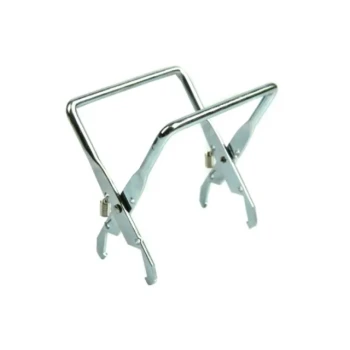
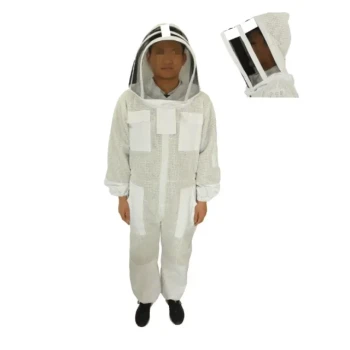
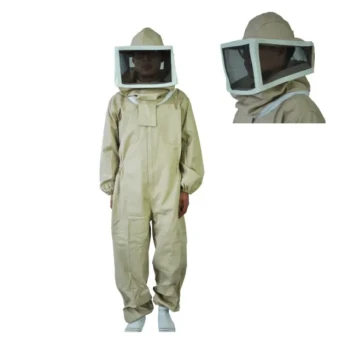
Apis dorsata requires a higher protection category than routine beekeeping. Its coordinated shimmering displays, wing-hissing, mass pursuit, and alarm-pheromone recruitment mean that professional operators should specify full-body, sting-resistant suits, sealed veils, reinforced gloves, protective footwear, and durable smokers capable of producing consistent cool smoke. The equipment must reduce both direct sting exposure and the escalation of colony-wide defensive behavior.
The correct specification is an integrated system, not a suit or smoker alone: heavy-duty physical barriers protect the operator when bees make contact, while controlled cool smoke disrupts alarm communication and helps prevent defensive recruitment.
Why Apis dorsata Changes the Equipment Requirement
Defense is coordinated rather than localized
Giant honeybees can respond collectively when a colony is disturbed. Shimmering behavior, sharp wing-hissing, and rapid recruitment of additional workers create a defensive response that can extend well beyond the immediate hive entrance.
This makes lightweight protective clothing or face-only protection unsuitable for routine professional work around aggressive or semi-wild colonies.
Alarm pheromones amplify the threat
When bees sting, are crushed, or otherwise perceive an intruder, alarm pheromones signal nearby workers to focus on the threat. The referenced alarm compound, 2-decen-1-yl acetate, can contribute to persistent recruitment and pursuit behavior in Apis dorsata.
In practical terms, a single sting can increase the probability of additional attacks. Protective systems must therefore remain effective even after the first defensive contact.
Pursuit distance affects site safety
Reports of giant honeybees pursuing threats over significant distances mean that operators cannot rely only on stepping a short distance away from the colony. The work area should support controlled withdrawal, unobstructed movement, and access to a safe zone.
Protective clothing must remain secure during movement, rather than exposing wrists, ankles, neck, or the face when the wearer runs or bends.
Protective Gear Specifications for Professional Use
Full-body coverage is the baseline
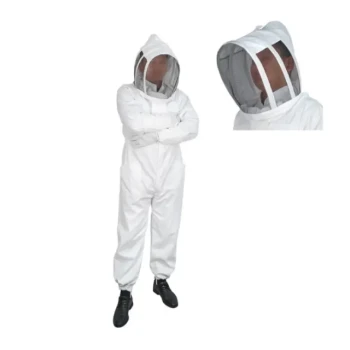
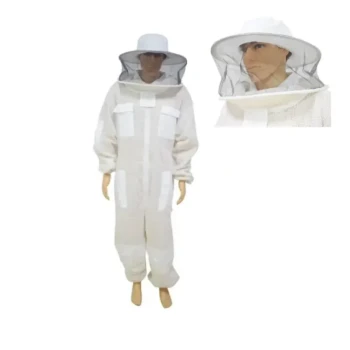
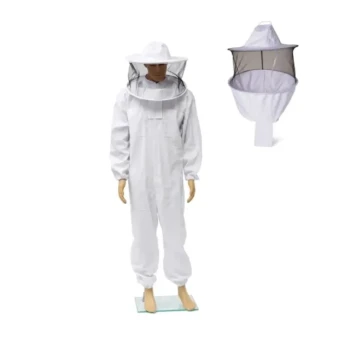
Professional equipment should use a full-body bee suit with sting-resistant, multi-layer construction rather than a simple jacket or hood. Coverage should include the torso, arms, legs, neck, and connection points between the suit and veil.
The material should resist stinger penetration while remaining sufficiently breathable for hot field conditions. “Sting-proof” should be treated as a performance objective, not a guarantee against every posture, pressure point, or repeated contact.
The veil must be securely integrated
The face and neck require the highest level of protection because bees may target the head and exposed skin. A professional veil should provide:
- Rigid, high-visibility mesh that holds its shape away from the face
- Secure attachment to the suit or hood
- Reliable closures around the neck and head
- Adequate ventilation to reduce heat and condensation
- Clear vision for locating frames, tools, and escape routes
An unsecured veil can turn a suitable suit into a serious exposure risk.
Gloves need both penetration resistance and dexterity
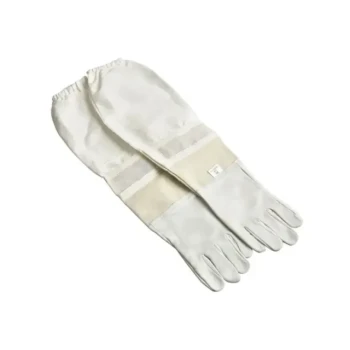
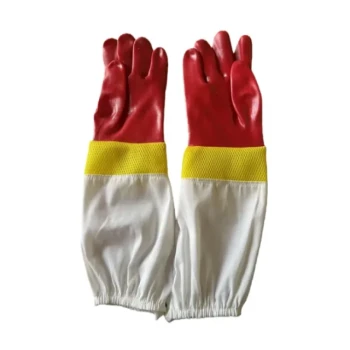
Reinforced leather or comparable high-density gloves should protect the hands, wrists, and lower forearms. Gauntlet-style cuffs are preferable because they reduce the gap between gloves and sleeves.
Excessively bulky gloves can increase the chance of crushing bees, dropping frames, or making abrupt movements. The best specification balances stinger resistance, grip, flexibility, and secure sleeve overlap.
Footwear and closures complete the barrier
Protective boots or securely covered footwear should prevent bees from entering through trouser cuffs. Elasticated or sealed leg openings, robust zippers, and covered fasteners are important details for aggressive colonies.
Distributors should evaluate the entire closure system—not just fabric thickness—because gaps at wrists, ankles, zippers, and veil interfaces are common failure points.
Smoker Specifications for Alarm-Control
Consistent cool smoke matters more than maximum heat
A professional smoker should generate a steady stream of cool smoke, not uncontrolled hot smoke. Excessive heat can injure bees, damage comb, increase operator risk, and make the colony more agitated.
The objective is controlled behavioral management: smoke can interfere with alarm-pheromone communication and trigger a feeding response that temporarily reduces defensive activity.
High output supports rapid escalation control
Because Apis dorsata can recruit large numbers of defenders quickly, a household or low-capacity smoker may not provide enough smoke during inspection or harvesting. Professional units should prioritize:
- High-output bellows performance
- Stable smoke production
- Sufficient fuel capacity for extended work
- Fast relighting and recovery
- A heat shield or protected firebox
- A secure lid and spark-control design
- A comfortable grip for continuous operation
“High output” should not mean uncontrolled smoke volume. Operators need controllable output that can be applied progressively as colony behavior changes.
Fuel compatibility is an operational requirement
The smoker should work reliably with locally available, clean, slow-burning fuel that produces cool smoke. Fuel selection must avoid toxic, oily, synthetic, or heavily treated materials that could contaminate honey, harm bees, or expose workers to hazardous fumes.
For distributors and commercial buyers, fuel availability and replenishment should be considered alongside the smoker itself. A technically capable smoker is of limited value if teams cannot keep it operating in the field.
Smoke must be applied before aggression peaks
Smoke is most effective as a preventive management tool rather than a rescue measure after widespread attack has begun. Operators should apply it calmly and monitor bee behavior before opening or manipulating the colony.
A smoker should therefore be designed for one-handed, immediate access, allowing the user to maintain smoke while handling frames or tools.
Designing the Equipment as a Safety System
The suit handles contact; the smoker manages behavior
Protective clothing provides a physical barrier when bees land, strike, or sting. The smoker reduces the likelihood and intensity of those contacts by interrupting the colony’s defensive communication.
Neither device replaces the other. A smoker cannot compensate for exposed skin, and a heavy suit cannot prevent a colony from becoming difficult to manage.
Movement and heat management affect safety
Multi-layer suits offer greater sting resistance but can create heat stress, particularly in tropical environments where Apis dorsata is commonly encountered. Ventilated panels, breathable construction, and moisture management are therefore important professional specifications.
Heat stress can cause fatigue, slower reactions, and poor handling technique. Protection must be wearable for the full duration of inspection, harvesting, or conservation work.
Standardization improves team performance
Commercial apiaries, research teams, and honey-harvesting operations should standardize suit types, glove interfaces, smoker operation, and replacement procedures. Consistency reduces the chance that one worker uses lighter equipment in a high-risk situation.
For B2B supply programs, bundled kits can include suits, spare veils, replacement gloves, smokers, bellows components, fuel, and cleaning or maintenance items.
Understanding the Trade-offs
Maximum protection can reduce dexterity
Thicker suits and gloves improve resistance to stings but may reduce precision when manipulating comb or equipment. Buyers should match the protection level to the colony’s defensiveness, task duration, and handling complexity.
For Apis dorsata, the risk profile generally justifies heavy-duty protection, but poor fit or excessive bulk can still create operational hazards.
More smoke is not always better
Over-smoking can stress colonies, contaminate work areas, obscure visibility, and create unnecessary heat or respiratory exposure. The correct specification is a smoker with controlled, cool, sustained output, supported by trained use.
Smoke also does not eliminate the need for deliberate handling. Alarm pheromones may continue to be released if bees are crushed or repeatedly disturbed.
No protective suit is absolutely impenetrable
Stingers can penetrate vulnerable areas where fabric is compressed against the skin, such as elbows, knees, cuffs, and veil edges. Suit quality, fit, posture, and handling technique all affect real-world performance.
Suppliers should avoid absolute claims and instead provide clear information about material layers, seam construction, closure design, ventilation, sizing, and intended use.
Field conditions can exceed product assumptions
Wild colonies, robbing periods, hot weather, poor visibility, and difficult access can all increase risk. A specification suitable for calm managed colonies should not automatically be marketed as suitable for giant honeybee harvesting.
Professional users should combine equipment with site assessment, communication procedures, first-aid readiness, and a defined retreat plan.
How to Apply This to Your Product and Procurement Decisions
Equipment selection should reflect both the biological threat and the commercial operating environment.
- If your primary focus is maximum operator protection: Specify multi-layer full-body suits, securely integrated veils, reinforced gauntlet gloves, covered footwear, and reliable closures at every access point.
- If your primary focus is colony-control performance: Choose a durable smoker with high-capacity, controllable bellows and consistent cool-smoke output rather than simply selecting the largest model.
- If your primary focus is distributor or wholesale supply: Build complete product packages that combine protective clothing, spare components, smokers, compatible fuel, and rapid replacement support.
- If your primary focus is field productivity: Prioritize breathable construction, clear vision, dexterous gloves, comfortable fit, and one-handed smoker operation so protection does not impede safe handling.
- If your primary focus is risk management: Treat smoke as a behavior-management aid—not a guarantee—and pair it with trained personnel, safe withdrawal routes, and task-specific operating procedures.
For Apis dorsata, premium protective gear and a dependable smoker should be specified as one coordinated professional safety solution.
Summary Table:
| Aspect | Specification | Purpose |
|---|---|---|
| Suit | Full-body, sting-resistant, multi-layer | Prevent stinger penetration and provide complete coverage |
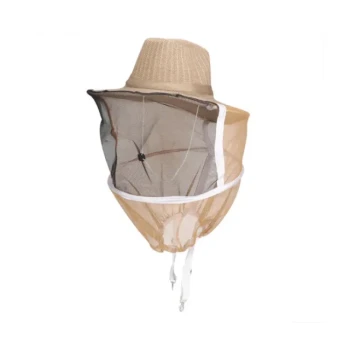
| Veil | Rigid mesh, securely integrated | Protect face and neck, maintain clear vision |
| Gloves | Reinforced leather, gauntlet-style | Shield hands and wrists while allowing dexterity |
| Footwear | Protective boots, sealed closures | Prevent bee entry and complete the barrier |
| Smoker | High-output, cool smoke, durable | Disrupt alarm pheromones and control defensive behavior |
| Fuel | Clean, slow-burning, non-toxic | Produce cool smoke without contaminating honey |
Equip your team with the highest level of protection for aggressive bee species. At HONESTBEE, we provide a comprehensive range of professional beekeeping gear, from heavy-duty suits and reinforced gloves to high-capacity smokers, all tailored to meet the demands of commercial apiaries and distributors. Our one-stop sourcing, rapid response, and expert support ensure you get the right equipment, fast. Contact us today to discuss your wholesale needs and benefit from our OEM/ODM services and reliable supply chain.
Related Products
- Goatskin Leather Beekeeper Gloves with Vent Long Sleeve for Beekeeping Honey Bee Sting Proof Protection
- Premium Cotton Beekeeper Suit with Reinforced Fencing Veil
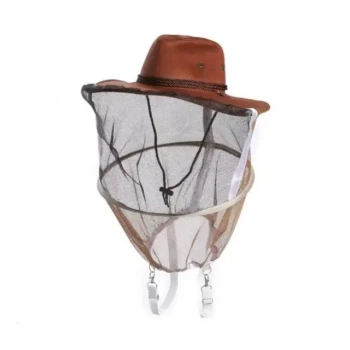
- Premium Cowboy Beekeeper Hat with Visibility Veil Outdoor Professional Beekeeping Protective Gear
- White Cotton Beekeeping Jacket and Veil for Bee Keepers
- Beekeeping Jacket with Hood and Veil for Beekeepers
People Also Ask
- What are the characteristics of goatskin beekeeping gloves? Enhance Dexterity and Protection in Your Apiary
- Why is it important to have gloves available even if not always worn? Essential Risk Management for Beekeepers
- What are the primary purposes of using beekeeping gloves? Protect Your Hands and Ensure Apiary Hygiene
- Why do some experienced beekeepers opt not to wear gloves? Discover the Benefits of Tactile Precision
- Why is it important for beekeepers to wear gloves? Essential Safety and Confidence for Hive Management