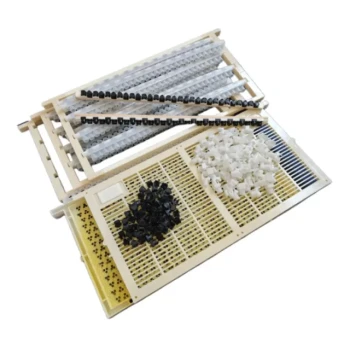
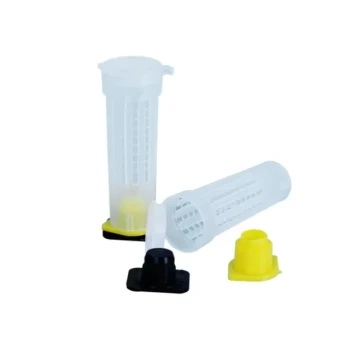
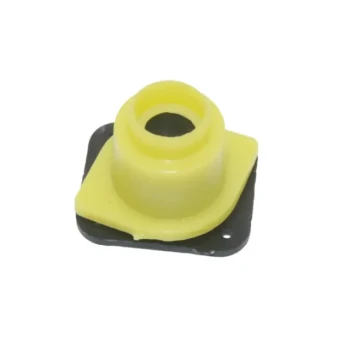
The Jenter and Nicot systems utilize a graft-free approach to queen rearing by controlling precisely where the queen lays her eggs. Instead of manually moving delicate larvae with a needle, you enclose the queen in a special box fitted with removable brown cell cups, allowing for a mechanical rather than manual transfer of the developing brood.
The core advantage of these systems is the elimination of physical contact with the larvae. By allowing the queen to lay directly into removable cups, you can transfer the brood to a builder colony using specialized hardware rather than manual dexterity.
The Mechanics of the System
The Confinement Box
The foundation of this method is a special box attached to a standard brood frame. This unit serves as a temporary cage that confines the queen to a specific area of the hive.
The Removable Grid
Inside the box, there is a grid containing removable brown cell cups. The system is designed so that the queen lays her eggs directly into these cups rather than into natural wax comb.
Worker Access and Care
While the queen is confined, she is not isolated from care. Worker bees can freely enter and exit the box, ensuring they can feed the queen and tend to the young larvae immediately after the eggs hatch.
The Transfer Process
From Egg to Larva
Once the queen has laid eggs in the grid, the process relies on natural timing. You wait for the eggs to hatch into larvae within the brown cups while they are still inside the confinement box.
Attaching to Cell Bars
After the eggs hatch, the brown cell cups containing the larvae are removed from the box. These cups are then attached to customized equipment that fits onto a cell bar.
Introduction to the Colony
The final step involves placing these cell bars into a specialized frame. This frame is then introduced to a cell builder or starter colony, where nurse bees will finish rearing the queen cells.
Understanding the Trade-offs
Equipment Dependency
Unlike traditional grafting, which requires minimal tools, this method relies heavily on customized equipment. You must have the specific box, the removable brown cups, and the matching cell bars and frames for the system to function.
Manipulation Requirements
While you avoid touching the larvae, you must still manipulate the frame components. The transfer process involves disassembling the grid and moving the cups to the cell bars, which requires a steady hand with the hardware rather than the insect.
Making the Right Choice for Your Goal
These systems are engineered to bridge the gap between biological necessity and mechanical convenience.
- If your primary focus is avoiding manual grafting: This system is ideal because it eliminates the risk of damaging larvae with a grafting needle or poor eyesight.
- If your primary focus is equipment standardization: Be aware that this method requires investing in specialized frames and components that are distinct from standard hive equipment.
The Jenter and Nicot systems transform queen rearing from a test of fine motor skills into a standardized, hardware-based procedure.
Summary Table:
| Feature | Jenter & Nicot Systems | Traditional Grafting |
|---|---|---|
| Technique | Mechanical/Hardware-based | Manual dexterity (Needle) |
| Larval Contact | No physical contact | High risk of larval injury |
| Skill Level | Accessible for beginners | Requires high precision/vision |
| Main Components | Confinement box, removable cups | Grafting tool, wax cups |
| Workflow | Standardized mechanical transfer | Delicate manual manipulation |
| Equipment Need | Specialized proprietary kits | Minimal standard tools |
Scaling Your Queen Production with HONESTBEE
Transitioning to professional-grade queen rearing requires more than just technique—it requires the right infrastructure. HONESTBEE specializes in supporting commercial apiaries and distributors by providing a comprehensive wholesale catalog.
Whether you are upgrading to advanced hive-making machinery, looking for high-efficiency honey-filling solutions, or need a steady supply of specialized queen rearing consumables, we have the expertise to scale your operations.
Maximize your apiary's potential and streamline your production today.
Contact our specialist team to explore our wholesale solutions
Related Products
- Jenter Queen Rearing Kit Complete Set for Bee Breeding
- No Grafting Queen Rearing Kit: System for Royal Jelly Production and Queen Rearing
- Nicot Queen Rearing Kit for Beekeeping and Grafting in Nicot System
- Premium Nicot Style Queen Rearing Kit with Hair Roller Bee Cages
- Premium Nicot Style Cell Bar Holder and Queen Cell Cup Holder System
People Also Ask
- What is the primary function of a queen rearing kit? Eliminate Manual Grafting for Superior Bee Breeding
- What are some alternative methods to grafting for queen cell production? Discover Graft-Free Queen Rearing Systems
- How do specialized queen rearing kits and queen management tools improve the success rate of bee colony expansion?
- How do you prepare the frame for the Queen Rearing kit? Boost Queen Acceptance & Larval Quality
- How is 'active' queen rearing defined in beekeeping? Master Intentional Colony Management & Genetic Control