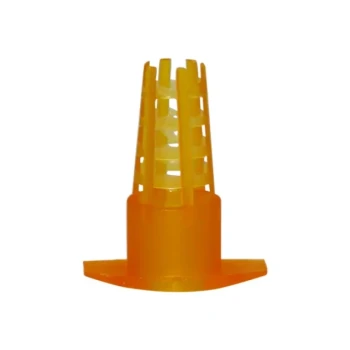
Wide Cell-Bars function as high-density production platforms designed to drastically increase the carrying capacity of hive frames. By utilizing optimized spatial designs, such as triple-row staggered arrangements, these bars allow a single frame to accommodate significantly more queen cell cups—potentially up to 180 in a strong colony. This increase in cup density directly translates to higher total royal jelly output per colony.
By shifting to the optimized layout of Wide Cell-Bars, beekeepers can maximize the "real estate" within a hive frame. This approach increases the total number of production units without reducing the royal jelly yield generated by each individual cup.
The Mechanics of Increased Capacity
Optimized Spatial Layout
Standard cell bars often utilize simple, linear arrangements that leave wasted space on the frame. Wide Cell-Bars resolve this by implementing triple-row staggered arrangements.
This geometric configuration allows for a tighter packing of cell cups. It transforms the empty space between cups into usable production areas.
Scaling Production Volume
The primary contributor to yield is the sheer number of cups a colony can service at once. Wide Cell-Bars turn a standard frame into a high-volume carrier.
In a robust production environment, this design enables a single frame to hold up to 180 cell cups. This massive increase in "production units" is the central driver for the higher total yield.
Understanding the Operational Requirements
Dependency on Colony Strength
While the hardware allows for high density, the biological limit is determined by the bees. The reference specifies that the 180-cup capacity is achievable in a strong bee colony.
Installing high-density bars in a weak colony will likely result in failure. The colony must have sufficient population and resources to nurse the increased number of larvae simultaneously.
Maintaining Per-Cup Efficiency
A common concern with increasing density is the dilution of resources (less jelly per cup). However, Wide Cell-Bars are noted for maintaining high production per individual cup.
This means the increase in total quantity does not come at the expense of individual cup volume, provided the colony strength prerequisite is met.
Making the Right Choice for Your Goal
To effectively utilize Wide Cell-Bars, you must balance equipment capacity with biological capability.
- If your primary focus is Maximizing Yield: Implement triple-row staggered Wide Cell-Bars to fit the highest possible number of cups onto your existing frames.
- If your primary focus is Colony Management: Assess your colony strength first; only fully load the bars to 180 cups if the colony population is robust enough to nurse them all.
Wide Cell-Bars effectively scale your operation by optimizing the density of production rather than requiring additional hives.
Summary Table:
| Feature | Standard Cell-Bars | Wide Cell-Bars (Triple-Row) |
|---|---|---|
| Arrangement Type | Simple, linear | Triple-row staggered |
| Cup Capacity | Low to moderate | Up to 180 cups per frame |
| Space Utilization | High amount of wasted space | Optimized high-density layout |
| Colony Requirement | Standard strength | Strong colony (high population) |
| Yield Impact | Individual output only | Maximum total colony output |
Boost Your Commercial Yield with HONESTBEE
Are you looking to scale your royal jelly production without increasing hive count? HONESTBEE specializes in empowering commercial apiaries and distributors with professional-grade beekeeping tools and machinery. From high-density Wide Cell-Bars that maximize your frame real estate to specialized honey-filling machines and hive-making hardware, we provide the full spectrum of equipment needed for high-volume operations.
Partner with HONESTBEE to enhance your efficiency and profitability. Whether you are stocking essential industry consumables or upgrading your production line, our comprehensive wholesale offering is tailored to your success.
Contact our expert team today to discuss your bulk equipment needs!
References
- Mohamed Ali. Relationship Between Number of Grafted Queen Cell Cups and Amount of Produced Royal Jelly in Honey Bee Colonies Apis mellifera L.. DOI: 10.21608/eajbsa.2017.12651
This article is also based on technical information from HonestBee Knowledge Base .
Related Products
- Premium Nicot Style Cell Bar Holder and Queen Cell Cup Holder System
- JZBZ Type Wide Base Plastic Queen Cell Cups for Base Mounting and Queen Rearing
- JZBZ Langstroth Queen Rearing Frame for Beekeeping
- JZBZ Style Push-In Cell Protector for Professional Queen Rearing Kits
- JZBZ Style Shipping Cell Protector for Queen Rearing Kit
People Also Ask
- What roles do specialized queen cell cups play in royal jelly production? Optimize Your Hive's Secretion and Yield
- What role do specialized queen rearing tools play in developing mite-resistant honeybee stock? Master Genetic Selection
- What materials are used to make artificial queen cell cups for grafting? Beeswax vs. Plastic Guide
- Why is a diluted royal jelly solution applied to queen cell cups? Boost Acceptance in Artificial Grafting
- How does the standardized depth of queen cell cups affect larval acceptance? Boost Success with 6mm Precision