Using honey sticks for tea is a straightforward process designed for maximum convenience. To sweeten your beverage, simply tear off the sealed end of the straw-like packet. Squeeze the honey directly into your cup and stir thoroughly to ensure it dissolves completely.
Honey sticks function as single-use, pre-measured sweeteners that prioritize portability over precision. They eliminate the mess of jars and spoons, though they offer less control over quantity than traditional methods.
The Mechanics of Application
Opening the Package
Honey sticks, also known as honey straws, are sealed at both ends. To open one, hold the stick vertically and tear off the tip of the straw.
Dispensing the Sweetener
Once the seal is broken, position the open end over your tea. Squeeze the tube from the bottom upward to force the contents out.
Ensuring Proper Mixture
Honey is naturally viscous and will sink to the bottom of the cup immediately. You must stir the beverage well to distribute the sweetness evenly.
Understanding the Trade-offs
Convenience vs. Control
The primary advantage of a honey stick is its pre-measured nature, but this is also its main limitation. Unlike a reusable honey dipper, which allows you to drizzle exact amounts, a stick offers a fixed quantity.
Single-Use Limitations
Honey sticks are designed strictly for single-use applications. This makes them excellent for travel but less efficient for home use where variable sweetening is often desired.
Making the Right Choice for Your Goal
Select your sweetening method based on whether you need mobility or precision.
- If your primary focus is on-the-go convenience: Rely on honey sticks for a mess-free, portable solution that requires no utensils or cleanup.
- If your primary focus is precise flavor balance: Utilize a reusable honey dipper or spoon, which allows you to control exactly how much honey enters your tea.
Honey sticks offer a practical, no-fuss solution for sweetening tea when simplicity is your top priority.
Summary Table:
| Feature | Honey Sticks (Straws) | Traditional Honey Dipper |
|---|---|---|
| Portability | High (Ideal for travel) | Low (Best for home use) |
| Cleanliness | Mess-free, single-use | Requires washing/storage |
| Measurement | Pre-measured (fixed) | Variable/Precise control |
| Application | Squeeze and stir | Drizzle and swirl |
Elevate Your Beekeeping Business with HONESTBEE
Looking to scale your honey production or expand your wholesale inventory? HONESTBEE is your dedicated partner in professional beekeeping. We provide commercial apiaries and distributors with high-performance beekeeping machinery, including hive-making and honey-filling machines, as well as a complete range of tools and industry consumables.
Whether you need bulk hardware or honey-themed cultural merchandise to captivate your customers, we deliver quality at scale. Contact us today to explore our wholesale solutions and see how our expertise can streamline your operations.
Related Products
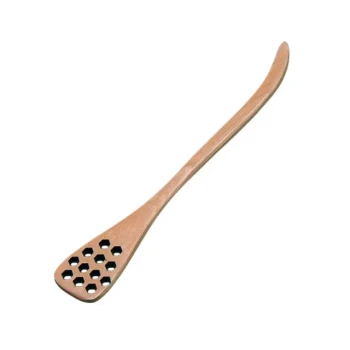
- Modern Honeycomb Pattern Wooden Honey Dipper for Stirring and Drizzling
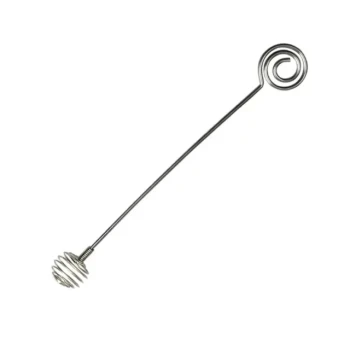
- Modern Stainless Steel Honey Dipper Stirrer
- Professional Plastic Honey Dipper for Easy Honey Drizzling
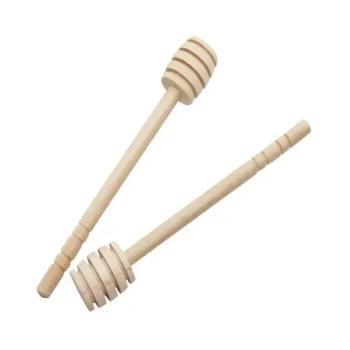
- Natural Wood Honey Dipper for Tea Coffee and Desserts
- Heavy Duty 304 Stainless Steel Honey Dipper
People Also Ask
- What is the proper method for cleaning a honey dipper? Maintain Pure Flavor with These Easy Pro Tips
- What is a honey dipper and what is it used for? A Guide to Mess-Free Drizzling
- What is a honey dipper? Master the Art of the Perfect Drizzle with This Essential Tool
- What is a honey taking spoon called? Discover the Tool for a Perfect, Mess-Free Drizzle
- How do you clean and store a honey dipper? Simple Steps for Long-Lasting Performance