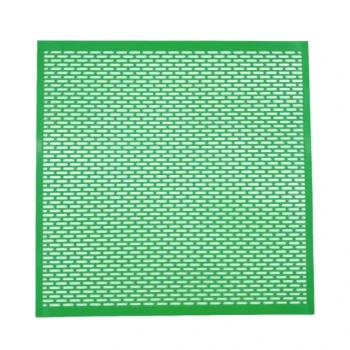
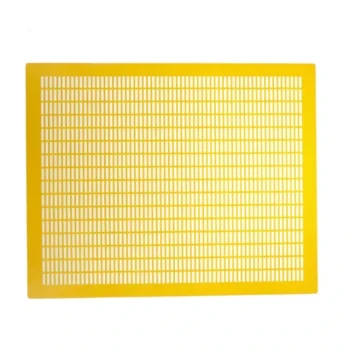
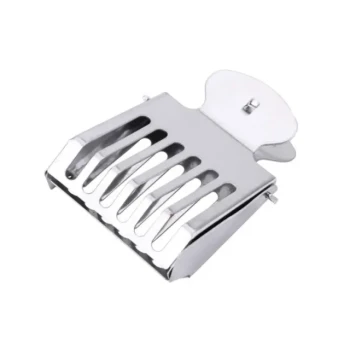
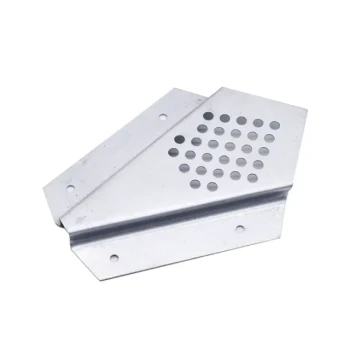
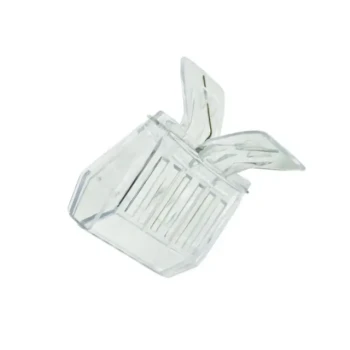
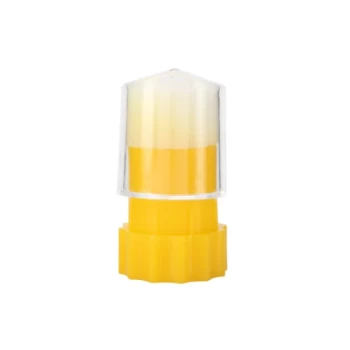
A queen excluder functions as a precise physical sieve dependent on the anatomical differences between bee castes. It utilizes a grid with specific gap dimensions—typically between 4.1 and 4.4 millimeters—that allows smaller worker bees to pass freely while blocking the larger thorax of the queen bee. This creates a mechanical barrier that confines the queen to the lower brood chambers, preventing her from laying eggs in the honey supers above.
By leveraging the specific size disparity between the queen's thorax and the worker's body, an excluder effectively segregates the hive into two distinct functional zones: a lower nursery for brood rearing and an upper reservoir strictly for honey storage.
The Mechanics of Hive Segmentation
The Thorax Size Differential
The function of the excluder relies entirely on the skeletal structure of the honeybee. While the queen has a long abdomen, her thorax (the middle section) is significantly wider and taller than that of a worker bee.
Because the thorax is rigid and cannot be compressed, it acts as the limiting factor for passage.
Precision Gap Engineering
To function correctly, the manufacturing tolerances of the excluder must be exact. The gaps are engineered to fall within the 4.1 to 4.4 millimeter range.
If the gaps are smaller, they impede the flow of worker bees, slowing honey production. If they are larger, the queen may squeeze through, rendering the device useless.
Impact on Drones
It is important to note that drones (male bees) are also larger than worker bees. Consequently, a queen excluder functions as a barrier for drones as well, preventing them from passing between the brood nest and the supers.
Operational Placement and Purpose
Vertical Stratification
The excluder is placed horizontally between the hive body (brood chamber) and the honey supers. This physically defines the ceiling of the brood nest.
Preservation of Honey Quality
The primary goal of this separation is to ensure the upper frames remain "brood-free." When the queen cannot access the upper levels, those frames are filled exclusively with honey.
This simplifies the extraction process, as there is no risk of finding larvae or eggs in the frames destined for harvest.
Understanding the Trade-offs
Restricted Colony Movement
While effective at stopping the queen, the excluder can sometimes be perceived as a barrier by the worker bees. In some cases, workers may be reluctant to pass through the grid, colloquially earning the device the nickname "honey excluder."
Potential for Swarming
The supplementary data indicates a correlation between excluder use and swarming. By confining the queen and potentially causing congestion in the lower brood box, the colony may perceive a lack of space.
This perceived crowding is a primary trigger for the swarming instinct.
Drone Entrapment
If an upper entrance is provided or if drones hatch from eggs laid before the excluder was installed, they cannot escape downwards through the screen. This can lead to dead drones accumulating on top of the excluder, which requires maintenance to clear.
Optimizing Excluder Usage for Your Apiary
To decide whether this tool serves your management style, consider your specific objectives:
- If your primary focus is maximum honey purity: Utilize the excluder to guarantee that your extraction frames contain 100% honey with zero brood contamination.
- If your primary focus is rapid colony expansion: Consider leaving the excluder off initially to allow unrestricted vertical movement, adding it only once the queen has established the brood nest below.
- If your primary focus is swarm prevention: Monitor the brood chamber closely for congestion, as the excluder artificially limits the queen's laying space.
The queen excluder is a tool of control that trades natural colony movement for the convenience of segregated resource management.
Summary Table:
| Feature | Specification/Detail | Function/Impact |
|---|---|---|
| Gap Dimension | 4.1mm - 4.4mm | Allows workers through; blocks larger queen thorax |
| Primary Placement | Between brood nest and honey supers | Creates a mechanical barrier for vertical stratification |
| Main Advantage | 100% Brood-free honey frames | Simplifies extraction and ensures honey purity |
| Drone Impact | Complete blockage | Drones are also excluded from supers due to size |
| Potential Risk | Congestion/Swarming | May lead to perceived crowding in the brood chamber |
Elevate Your Apiary Production with HONESTBEE
Maximize your honey harvest efficiency and maintain the highest purity standards with precision-engineered beekeeping tools. At HONESTBEE, we specialize in supporting commercial apiaries and distributors with a comprehensive wholesale range—from high-tolerance queen excluders to advanced honey-filling machines and hive-making equipment.
Whether you are scaling your operation or stocking the latest industry consumables, our expertise ensures your success. Contact us today to discover how our professional-grade equipment and global supply chain solutions can optimize your beekeeping business.
Related Products
- High Performance Plastic Queen Excluder for Beekeeping and Apiary Management
- Professional Plastic Queen Excluder for Modern Beekeeping
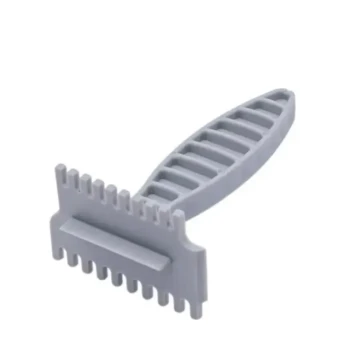
- Lightweight Durable Plastic Queen Excluder Scraper for Beekeeping
- Metal Queen Bee Excluder for Beekeeping
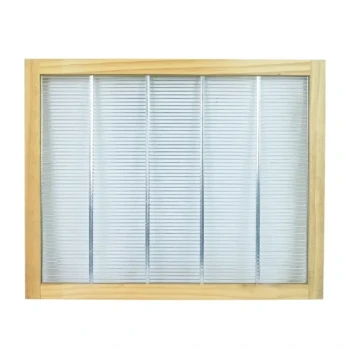
- Premium Wood Framed Metal Wire Queen Bee Excluder
People Also Ask
- What are the characteristics of a plastic queen excluder? Key Benefits for Cost-Effective Beekeeping
- What are the operational and cost advantages of using plastic queen excluders over metal or wire excluders in commercial hive management? Discover how they reduce labor, prevent wing damage, and lower total costs.
- What types of queen excluders are available for beekeepers? Choose the Right Tool for Your Hive
- Why are standardized hive frames and queen excluders essential for maintaining honey purity and quality? Scale Your Purity
- Do plastic queen excluders work? A Cost-Effective Solution for Modern Apiaries