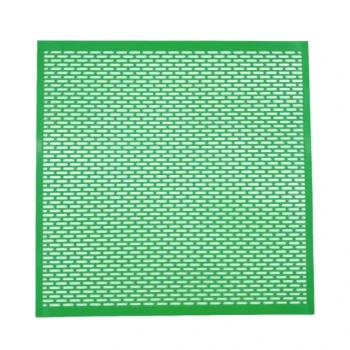
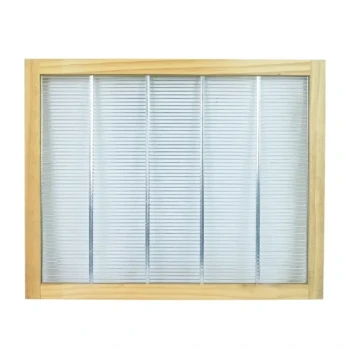
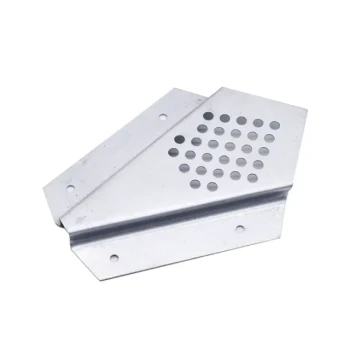
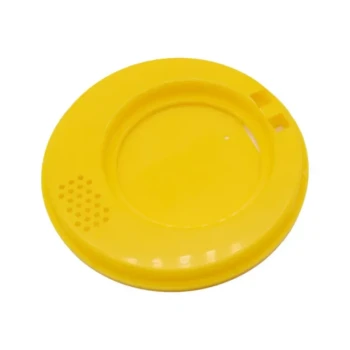
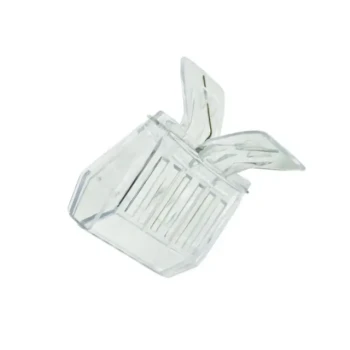
Functionally, a queen excluder operates as a selective biological barrier designed to enforce spatial organization within a beehive. It is a precision grid placed between the lower brood chamber and the upper honey supers. By leveraging the specific morphometric difference between castes, the device permits smaller worker bees to traverse the hive freely while physically restricting the larger queen to the lower levels, thereby preventing egg-laying in the honey harvest zones.
The queen excluder is the primary technical control for separating the biological processes of a colony. By confining brood rearing to the bottom of the hive, it ensures the upper reserves are dedicated exclusively to pure honey storage, eliminating the risk of larval contamination in the final product.
The Mechanics of Spatial Separation
Precision Aperture Engineering
The core technical feature of the excluder is its grid spacing.
The apertures are manufactured to precise dimensions that accommodate the thorax width of a worker bee but are too narrow for the larger thorax and abdomen of a queen. This functions as a passive filter, allowing the workforce to access all areas of the hive for nectar storage while mechanically blocking the reproductive engine of the colony from moving upward.
Zoning the Hive Environment
The excluder effectively establishes two distinct operational zones within a single vertical stack.
The lower zone (brood chamber) is designated for reproduction, pollen storage, and colony maintenance. The upper zone (honey supers) becomes a dedicated preservation facility. This zoning prevents the chaotic intermingling of brood (larvae and eggs) with food stores, which is the natural tendency of an unrestricted colony.
Impact on Production Quality
Ensuring Product Purity
The primary output of this control function is sanitary isolation.
Without an excluder, a queen will often move upward to lay eggs in the center of honey frames. This results in "brood contamination," where larvae and pupae are mixed with stored nectar. By technically blocking this migration, the excluder ensures that the frames removed for harvest contain only clean, pure honey and wax, free from biological impurities.
Streamlining Extraction
From a processing standpoint, the excluder acts as a workflow accelerator.
When honey frames are guaranteed to be free of brood, the extraction process is significantly simplified. Operators do not need to inspect individual frames for eggs or larvae before uncapping. Furthermore, spin-extraction becomes more efficient, as there is no risk of damaging developing brood or contaminating the honey filtration system with larval matter.
Understanding the Trade-offs
Potential for Flow Restriction
While technically effective, the excluder acts as a "traffic choke point."
If the grid edges are rough or if the spacing is slightly off, it can discourage worker bees from passing through to store nectar above. In high-velocity nectar flows, this friction can sometimes lead to what beekeepers call "honey bounding" in the brood nest, where workers store honey below because they are reluctant to pass the barrier.
Maintenance and Cleaning
The device introduces a new surface area for the accumulation of propolis and burr comb.
Worker bees often try to bridge the gap between the grid and the frames with wax or resin. If not regularly cleaned, this buildup can reduce the functional surface area of the excluder, further restricting ventilation and worker movement between the hive sections.
Making the Right Choice for Your Goal
Whether you employ this technical control depends on your specific production objectives.
- If your primary focus is Commercial Extraction: Use an excluder to guarantee brood-free frames, allowing for rapid, bulk harvesting without individual frame inspection.
- If your primary focus is Comb Honey Production: Use an excluder as an absolute necessity, as consumers demand a visually perfect product with zero tolerance for eggs or larval cocoons in the wax.
- If your primary focus is Maximum Wax Drawing: You may choose to remove the excluder temporarily to encourage faster movement, accepting the risk that you will need to sort frames manually later.
Ultimately, the queen excluder is the industry standard for converting a biological organism into a structured production unit, prioritizing product purity over unrestricted colony movement.
Summary Table:
| Feature | Technical Function | Production Benefit |
|---|---|---|
| Precision Apertures | Passive filtering based on bee thorax size | Restricts queen movement while allowing worker access |
| Spatial Zoning | Segregates hive into brood and storage zones | Prevents larval contamination in honey supers |
| Sanitary Isolation | Blocks egg-laying in harvest zones | Guarantees 100% pure honey and clean wax extraction |
| Workflow Control | Eliminates manual frame sorting | Accelerates extraction and simplifies processing |
Maximize Your Harvest Efficiency with HONESTBEE
As a commercial apiary or distributor, maintaining product purity is critical to your bottom line. HONESTBEE specializes in professional-grade beekeeping solutions tailored for large-scale operations. From precision-engineered queen excluders and hive-making machinery to high-capacity honey-filling lines, we provide the full spectrum of equipment needed to turn biological processes into a structured, profitable production unit.
Why Partner with HONESTBEE?
- Wholesale Excellence: Comprehensive supply of tools, machinery, and consumables.
- Industry Expertise: Specialized hardware designed for durability and workflow optimization.
- Global Reach: Serving distributors with reliable, high-volume manufacturing.
Ready to upgrade your extraction facility or restock your inventory? Contact us today to explore our wholesale catalog and see how our technical solutions can enhance your honey production quality.
References
- Miguel Ángel Magaña Magaña, Carlos E. Leyva Morales. Costs and profitability of beekeeping production process in Mexico. DOI: 10.1016/0002-9378(56)90799-2
This article is also based on technical information from HonestBee Knowledge Base .
Related Products
- High Performance Plastic Queen Excluder for Beekeeping and Apiary Management
- Lightweight Durable Plastic Queen Excluder Scraper for Beekeeping
- Premium Wood Framed Metal Wire Queen Bee Excluder
- Professional Plastic Queen Excluder for Modern Beekeeping
- Metal Queen Bee Excluder for Beekeeping
People Also Ask
- What are the characteristics of a plastic queen excluder? Key Benefits for Cost-Effective Beekeeping
- What are the operational and cost advantages of using plastic queen excluders over metal or wire excluders in commercial hive management? Discover how they reduce labor, prevent wing damage, and lower total costs.
- What types of queen excluders are available for beekeepers? Choose the Right Tool for Your Hive
- Why are standardized hive frames and queen excluders essential for maintaining honey purity and quality? Scale Your Purity
- Do plastic queen excluders work? A Cost-Effective Solution for Modern Apiaries