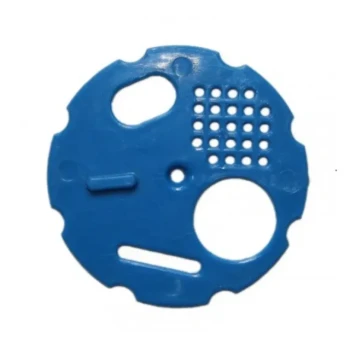
During the hot summer months, an entrance reducer protects a beehive primarily by fortifying it against biological threats rather than environmental ones. Specifically in late summer, when natural nectar sources become scarce, the reducer limits the size of the entry point, allowing the resident colony to defend their honey stores against aggressive "robbers" like wasps and bees from other colonies.
Core Takeaway While often associated with winter insulation, the entrance reducer is a critical summer defense tool. It constricts the hive opening to a size that the colony's guard bees can easily manage, preventing resource theft during the dangerous "nectar dearth" period of late summer.
The Threat of the Summer Dearth
Scarcity Triggers Aggression
In late summer, the abundant flowers of spring often fade, leading to a shortage of nectar known as a "dearth."
During this period, bees from other hives and predatory wasps become desperate for food. They turn their attention to weaker hives, attempting to infiltrate and steal honey.
Vulnerability of the Colony
Without a reducer, a wide-open entrance presents a massive surface area that requires many guard bees to watch.
If the colony is outnumbered or the entrance is too wide, intruders can slip past the guards, leading to a frenzy of robbing that can destroy the hive.
How the Reducer Enhances Defense
Concentrating Defensive Force
The entrance reducer physically blocks most of the entrance, leaving only a small opening (often just an inch or two wide).
This channels all traffic through a "choke point." Instead of patrolling a large gap, guard bees can concentrate their forces in this small area, easily repelling intruders one by one.
Protection for Weaker Colonies
This mechanical aid is particularly vital for younger or weaker colonies that lack the population numbers to defend a full entrance.
By artificially shrinking the gateway, you give a small colony the defensive advantage of a much larger one.
Understanding the Trade-offs
Balancing Defense with Ventilation
The user's question specifically highlights "hot" summer months. A common concern is that reducing the entrance might cause the hive to overheat by restricting airflow.
Managing Airflow
While the reducer restricts the volume of air, supplementary data suggests it helps maintain proper airflow and internal stability.
However, beekeepers must remain vigilant. If a hive is extremely strong and the weather is dangerously hot, a standard reducer might cause congestion; in these specific high-heat, low-robbery risk scenarios, adjustments may be necessary.
Making the Right Choice for Your Hive
When deciding how to configure your entrance during summer, assess the immediate environment and colony strength.
- If your primary focus is preventing robbery (Late Summer/Dearth): Install the reducer to the smallest or medium setting to maximize security against wasps and foreign bees.
- If your primary focus is supporting a weak colony: Keep the reducer installed throughout the summer to ensure the small population can defend their space.
- If your primary focus is extreme heat management: Monitor the entrance for "bearding" (bees hanging outside); if no robbing risk is present, you may slightly widen the gap while keeping it defensible.
Ultimately, the entrance reducer is your colony's first line of defense, converting a vulnerable open door into a heavily guarded fortress.
Summary Table:
| Summer Use Case | Benefit | Beekeeping Action |
|---|---|---|
| Nectar Dearth | Prevents robbing by wasps and foreign bees | Use smallest or medium setting |
| Colony Weakness | Allows small populations to guard the hive | Maintain reducer all summer |
| Heat Management | Balances security with necessary airflow | Monitor for 'bearding' and adjust |
| Defense Strategy | Creates a choke point for guard bees | Focus forces at a 1-2 inch opening |
Secure Your Apiary for the Summer Dearth with HONESTBEE
Protecting your honey yield requires professional-grade equipment that stands up to the pressures of the season. At HONESTBEE, we cater specifically to commercial apiaries and distributors, providing a comprehensive wholesale selection of high-quality beekeeping tools, hive-making machinery, and essential consumables.
Whether you need precision-fit entrance reducers, automated honey-filling machines, or specialized hardware, our portfolio is designed to enhance your operational efficiency and hive security. Partner with us to bring the best industry solutions to your business.
Ready to upgrade your wholesale supply? Contact HONESTBEE Today
Related Products
- Steel Round Disc Entrance Reducer for Flexzion Bee Hive Nuc Box Gate
- Beehive Entrance Reducer Guardian Metal Hive Entrance for Bees
- Professional Hive Front Entrance Bee Feeder
- HONESTBEE Entrance Bee Feeder Efficient Hive Front Liquid Feeding Solution for Beekeeping
- HONESTBEE Entrance Bee Feeder Professional Hive Nutrition Solution for Beekeeping
People Also Ask
- What is the purpose of an entrance reducer for a beehive? Strengthen Colony Defense and Prevent Robbery
- Why are entrance reducers used to counter hornet infestations? Protect Your Hive with Strategic Choke Points
- Why is it critical to maintain a smaller entrance for a newly established bee hive? Boost Colony Growth and Security
- Under what conditions should a beekeeper adjust the size of a beehive entrance? Seasonal & Defense Management Tips
- What is the function of an entrance reducer on a beehive? Strengthen Colony Defense and Climate Control