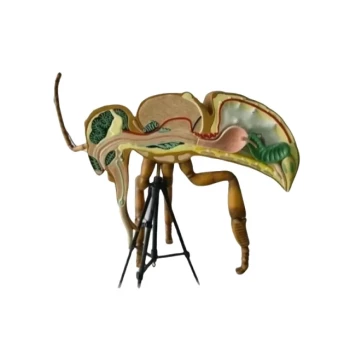
An oviposition controller is a specialized management tool designed to physically restrict the movement of the queen bee within a hive. By confining the queen to specific experimental honeycombs, the device forces egg-laying to occur in a designated location, providing researchers with absolute control over the timeline of brood development.
In biological research, the validity of data often hinges on temporal accuracy. An oviposition controller removes the variable of random egg-laying, ensuring that all samples in a study group are synchronized to the exact same developmental clock.
The Mechanics of Controlled Laying
Restricting the Queen's Range
In a natural hive setting, a queen moves freely, depositing eggs across various frames at different times. An oviposition controller acts as a physical barrier.
It confines the queen to a specific area chosen by the researcher. This restriction prevents her from wandering and laying eggs on non-experimental frames.
Forcing Targeted Deposition
Because the queen's movement is limited, she is compelled to lay eggs on the experimental honeycombs enclosed within the controller.
This allows the researcher to dictate exactly which comb will house the next generation of brood. It transforms the honeycomb from a passive storage unit into a controlled scientific instrument.
Achieving Experimental Precision
Establishing a Definite "Time Zero"
The primary scientific advantage of this device is the ability to accurately record the age of eggs.
By introducing the queen to the comb at a known time and removing her shortly after, researchers establish a precise starting point. There is no ambiguity regarding when development began.
Synchronizing Sample Collection
Many experiments require biological samples at specific developmental stages, such as six-day-old larvae.
Without a controller, finding larvae of the exact same age is a labor-intensive search. With the controller, the entire batch of brood develops in synchronization, allowing for efficient, mass collection of uniform samples.
Understanding the Trade-offs
Artificial Constraints
While essential for precision, this method imposes an artificial constraint on the colony's natural behavior. Restricting the queen forces a density of egg-laying that may differ from her instinctive patterns in a free-roaming environment.
Operational Rigor
Using an oviposition controller increases the management intensity required for the hive. Researchers must adhere to a strict schedule for inserting and releasing the queen to ensure the timing remains accurate.
Making the Right Choice for Your Goal
To determine if an oviposition controller is necessary for your specific research, consider your data requirements:
- If your primary focus is developmental biology: Use the controller to ensure all larvae and pupae samples are exactly the same age, eliminating temporal variables.
- If your primary focus is large-scale population dynamics: You may not require this level of precision, as general colony growth can often be observed without restricting the queen.
Mastering the use of the oviposition controller turns the chaotic nature of a beehive into a predictable, measurable laboratory environment.
Summary Table:
| Feature | Function in Experiments | Research Benefit |
|---|---|---|
| Queen Restriction | Limits movement to specific frames | Prevents random laying and data loss |
| Targeted Deposition | Forces eggs into experimental combs | Concentrates samples for easy collection |
| Temporal Control | Establishes a definite "Time Zero" | Guaranteed accuracy of brood age |
| Batch Synchronization | Uniform larval development | Enables mass collection of same-age samples |
Elevate Your Apiary Management with HONESTBEE
Precision is the backbone of successful beekeeping, whether you are conducting rigorous scientific research or scaling a commercial honey operation. HONESTBEE is dedicated to supporting commercial apiaries and distributors by providing a full spectrum of high-quality tools and machinery.
From precision oviposition controllers and specialized hive-making hardware to advanced honey-filling machines and industry consumables, our portfolio is designed to enhance your efficiency and yield. Partner with us to access professional-grade equipment tailored to your specific needs.
Ready to optimize your production? Contact us today to discuss your wholesale needs!
References
- Qingxin Meng, Kun Dong. Impact of Brood Cell Cocoons on Metal Accumulation and CYP450 Detoxification Gene Expression in Apis cerana cerana. DOI: 10.3390/toxics12020131
This article is also based on technical information from HonestBee Knowledge Base .
Related Products
- Heavy-Duty Ergonomic Grip Galvanized Pollen Shovel
- Honey Bee Lifecycle Model: A Detailed Honeycomb Display of Bee Development
- Professional Queen Catcher and Introduction Queen Cage
- Professional Dual Action Queen Excluder Scraper for Beekeeping
- Portable Queen Bee Incubator with 12V Car Adapter for Safe Transport
People Also Ask
- For what reasons do beekeepers collect bee pollen? Boost Hive Health and Unlock New Revenue Streams
- Why should commercial apiaries focus on the collection of diversified bee products? Maximize Your Hive’s Profit Potential
- How do bee pollen collection tools affect the quality of bee pollen used in functional dairy ice cream production?
- How does a specialized pollen collector facilitate the harvesting of diverse bee products? Automate High-Value Yields
- What is the impact of pollen collectors and associated equipment on the cost structure of pollen production? Maximize ROI