Extreme heat and drought reduce apiary productivity by diverting colony energy from foraging, brood rearing, and honey processing toward cooling, water collection, and nest protection. Rising temperatures and evapotranspiration also reduce nectar availability, while shifting rainfall patterns shorten or disrupt forage periods. The most effective equipment response combines insulated hive covers, shade, controlled ventilation, reliable water access, and weather-resistant hive components.
Core takeaway: Insulation slows heat transfer, while ventilation and water support evaporative cooling and humidity control. Used together—and matched with sound forage and apiary management—these measures help preserve brood-chamber conditions and reduce heat-driven colony decline.
How Extreme Heat and Drought Reduce Productivity
Colonies redirect energy toward cooling
Honey bees regulate hive temperature by fanning, collecting water, and using evaporative cooling. During severe heat, that work consumes energy and labor that would otherwise support nectar collection, honey processing, and brood care.
When temperatures exceed approximately 35°C, water becomes particularly important because bees use it to cool the hive and dilute stored honey for brood feeding. A nearby water source reduces the distance and energy required for these trips.
Heat disrupts brood development
The brood nest requires a stable microclimate. Extreme external temperatures can make it harder for colonies to maintain the conditions needed for brood survival and the normal development of adult bees.
Advanced hive construction can reduce the rate of heat transfer through the walls and roof. This physical buffer is especially valuable in semi-arid and arid regions, where direct solar exposure and high daytime temperatures create intense thermal loads.
Drought reduces forage and nectar flow
Drought and altered rainfall patterns reduce flowering intensity, shorten nectar flows, and create longer dearth periods. Colonies may therefore have less nectar and pollen available even when temperatures remain suitable for flight.
Reduced forage can also increase competition among colonies and force beekeepers to provide supplemental support. Hive hardware cannot replace forage, but it can prevent avoidable energy losses caused by poor thermal control.
Severe heat can trigger colony decline
In extreme conditions, bees may be forced to remain inside the hive, beard heavily at the entrance, or allocate substantial labor to ventilation. Prolonged thermal stress can weaken the colony and, in severe hot and arid environments, contribute to absconding or migration.
The objective of heat-management equipment is not to eliminate the colony’s natural thermoregulation. It is to reduce the environmental burden so that bees can maintain the nest with less energy expenditure.
Equipment That Helps Mitigate Thermal Stress
Insulated outer covers
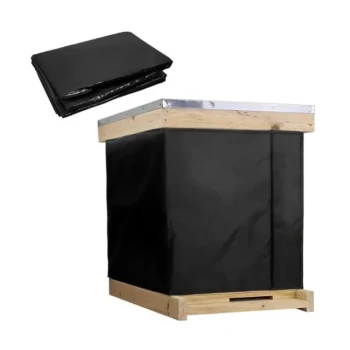
Insulated outer covers reduce heat transfer through the top of the hive, which is often exposed to direct solar radiation. They help moderate temperature swings and reduce the amount of cooling work required from the colony.
For distributors and resellers, insulated covers are a practical high-demand product because they can be offered as upgrades for existing hive fleets. They also complement standard brood boxes, nucleus hives, and weather-resistant hive covers.
Hive shade and shaded stands
Partial shade is one of the simplest ways to reduce solar heat gain. Shaded hive stands or placement under suitable overhead shade can lower the thermal load on the roof and hive walls while preserving adequate airflow around the colony.
In extreme conditions approaching 45°C–47°C, relocating hives to shaded areas becomes especially important. Covers may also be shielded with wet gunny bags or rice matting where local management practice and airflow conditions make this appropriate.
Ventilated inner covers and screened top boards
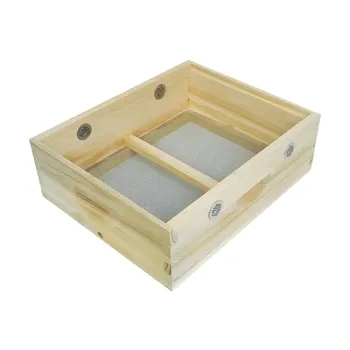
Ventilated inner covers and screened top boards allow excess heat and humidity to escape without leaving the colony completely exposed. They support air exchange while helping maintain a more stable brood-chamber microclimate.
Ventilation must be designed carefully. Openings should provide airflow without creating easy access for pests or encouraging robbing.
Ventilation spacers
A controlled ventilation gap can be created with suitable wooden splinters or ventilation spacers between the brood and super chambers. The gap should remain narrow enough to prevent bees from passing through while allowing warm, humid air to move out.
This approach is useful where beekeepers need additional airflow but do not want to leave a large opening. Spacers should be used as part of a complete hive-management plan rather than as a substitute for shade or insulation.
Entrance reducers and weather-resistant components
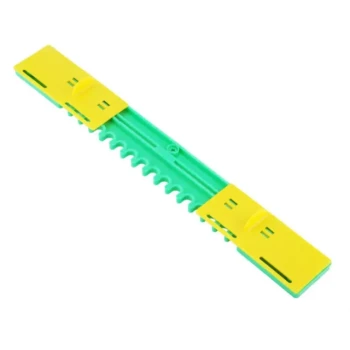
Entrance reducers and properly designed hive hardware help regulate access, airflow, and exposure to pests. Weather-resistant covers and robust brood boxes protect the colony from direct environmental stress and improve equipment longevity.
These components are particularly suitable for commercial operations because standardized, durable hardware simplifies maintenance across multiple apiary locations.
Apiary watering stations
A dedicated watering station near the hives gives bees a reliable source for evaporative cooling and brood-related water use. It also reduces unnecessary flight distance during heatwaves and droughts.
Watering stations should be established before severe heat arrives so that colonies learn to use them. Their inclusion in an apiary equipment portfolio is valuable because thermal management depends on both hive design and access to water.
How to Combine Insulation and Ventilation
Use insulation to slow heat gain
Insulation is most effective when it reduces the rate at which external heat enters the hive. An insulated cover, shaded roof, and suitable wall construction work together to protect the brood nest from rapid temperature increases.
Insulation should not be treated as a sealed enclosure. In hot weather, a well-insulated hive still needs sufficient ventilation to remove accumulated heat and humidity.
Use ventilation to control heat and moisture
Ventilation allows warm, humid air to leave the hive and helps support evaporative cooling. Inadequate ventilation forces more bees to fan, reducing the workforce available for foraging and honey processing.
The design should balance airflow with colony security. Excessive openings can expose colonies to pests, robbing, wind, or uncontrolled drafts.
Preserve seasonal flexibility
Ventilation requirements differ between hot and cold conditions. In cold weather, properly designed ventilation helps excess humidity escape and reduces the risk of condensation dripping onto the bee cluster.
For this reason, adjustable or seasonally configurable equipment is generally more useful than a permanently open design. Beekeepers should be able to modify airflow as temperature, humidity, colony strength, and forage conditions change.
Management Practices That Improve Equipment Performance
Provide water before colonies are stressed
Water is most effective when it is continuously available and positioned close to the apiary. During severe dearth periods, internal hive feeders may also be used to support hydration and humidity management.
The cited management practice of feeding a thin sugar solution—approximately one part sugar to eight or ten parts water—may be used where appropriate, but feeding decisions should account for local conditions, colony needs, and the risk of robbing.
Maintain continuous forage where possible
Planting or preserving continuous-blooming, single-flowered pollinator flora can reduce the productivity losses associated with disrupted nectar flow. Better forage availability allows colonies to spend more time collecting nectar and pollen rather than searching across increasingly large areas.
This strategy is complementary to hive equipment. Insulation and ventilation protect the colony’s energy budget; forage management supplies the resources needed to convert that energy into colony growth and honey production.
Inspect colonies without adding unnecessary stress
Heatwaves and droughts require closer monitoring of brood condition, food reserves, water access, ventilation, and signs of overheating. Smokers, protective suits, and suitable inspection tools help beekeepers work efficiently while minimizing disturbance.
Inspection should be adapted to weather conditions. Opening a hive during the hottest part of the day can temporarily worsen thermal stress, particularly in weak colonies or poorly shaded locations.
Understanding the Trade-offs
Too little ventilation increases cooling costs
A hive that is heavily insulated but poorly ventilated can retain excessive heat and humidity. Bees must then fan more intensively, which increases energy use and reduces the labor available for productive tasks.
Insulation and ventilation should therefore be specified as a matched system rather than purchased as unrelated components.
Too much ventilation can compromise colony security
Large or uncontrolled openings may provide access for pests, promote robbing, or expose the colony to wind and abrupt temperature changes. Ventilation openings should be screened, adjustable, or otherwise designed to maintain colony protection.
The correct airflow level depends on hive design, colony population, local weather, and seasonal conditions.
Shading and wet coverings require supervision
Shade reduces solar heating, but wet gunny bags or rice matting must not block ventilation or remain in a condition that damages hive components. These are situational measures for extreme heat, not replacements for durable insulated covers and appropriate apiary placement.
Equipment cannot compensate for severe forage failure
Thermal-control products can preserve colony strength, but they cannot create nectar or pollen during prolonged drought. If forage is unavailable, beekeepers may still need supplemental feeding, colony movement, reduced stocking density, or other operational responses.
Product selection must fit the operating environment
A product suitable for a hot, dry apiary may not be appropriate for a humid or cold region. Distributors should therefore offer a full range of covers, screens, spacers, entrance reducers, stands, brood boxes, feeders, and watering equipment rather than relying on a single universal configuration.
Making the Right Choice for Your Apiary or Product Portfolio
The best solution is a coordinated equipment package matched to local heat, drought, forage, and hive-management conditions.
- If your primary focus is reducing heat load: Prioritize insulated outer covers, shaded hive stands, weather-resistant hive components, and appropriate hive placement.
- If your primary focus is improving airflow: Use ventilated inner covers, screened top boards, or controlled ventilation spacers that deter pests and robbing.
- If your primary focus is maintaining colony productivity during drought: Combine nearby watering stations with forage planning and carefully managed supplemental feeding.
- If your primary focus is serving commercial beekeepers: Source standardized, durable hive components and complete thermal-management packages with rapid fulfillment and technical product support.
- If your primary focus is year-round colony stability: Select equipment that can be adjusted for hot summers, dearth periods, and cold-weather humidity control rather than relying on permanently open or sealed hives.
With the right combination of insulation, controlled ventilation, shade, water, and forage management, beekeepers can reduce thermal stress and keep more colony energy directed toward brood rearing, foraging, and honey production.
Summary Table:
| Equipment | Function | Benefits |
|---|---|---|
| Insulated outer covers | Reduce heat transfer through the top | Moderate temperature swings, less cooling work |
| Hive shade and shaded stands | Provide partial shade | Lower solar heat gain, preserve airflow |
| Ventilated inner covers and screened top boards | Allow heat and humidity escape | Support air exchange, stabilize microclimate |
| Ventilation spacers | Create controlled gap between chambers | Remove warm air while preventing passage |
| Entrance reducers | Regulate access and airflow | Improve security, pest control |
| Apiary watering stations | Provide close water source | Support evaporative cooling, reduce flight distance |
Ready to protect your apiary from extreme heat?
At HONESTBEE, we help commercial beekeepers and distributors source complete thermal-management packages, including insulated covers, ventilated screens, and watering stations. With our one-stop sourcing, rapid response times, and ultra-fast delivery, you can ensure your colonies stay productive even in the toughest climates. Contact us today to explore our full product portfolio and discover how we can support your business needs—get in touch now.
Related Products
- Stainless Steel Round Beehive Air Vents for Ventilation
- Inner Beehive Cover for Beekeeping Bee Hive Inner Cover
- Professional Insulated Winter Hive Wrap for Beekeeping
- Professional Insulated Plastic Bee Hives
- Professional Reversible Beehive Hive Entrance
People Also Ask
- How does ventilation affect colony health, and how should it be managed seasonally? A Guide to Preventing Moisture & Overheating
- Why is proper ventilation important in a beehive? Prevent Mold, Regulate Temperature, and Boost Colony Health
- How can a beekeeper provide proper ventilation for a beehive throughout the year? Seasonal Strategies for Bee Health
- How can ventilation be added to a beehive without using an inner cover? Simple, Effective Solutions for Healthy Hives
- Why is good ventilation crucial when transporting beehives? Protect Your Colony from Lethal Overheating