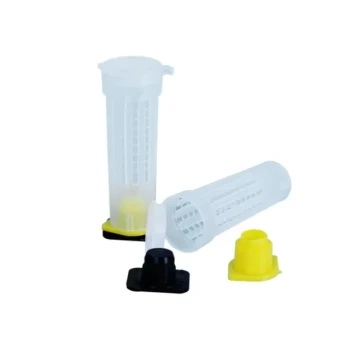
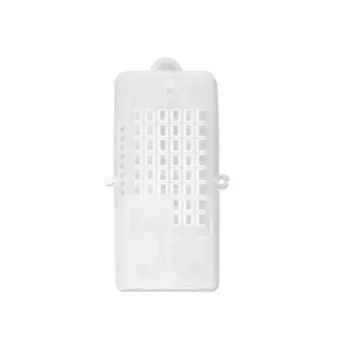
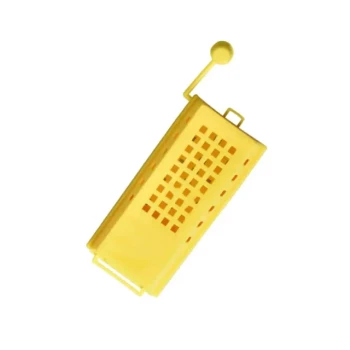
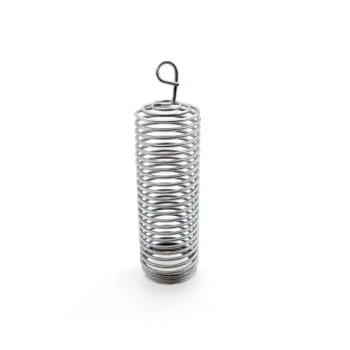
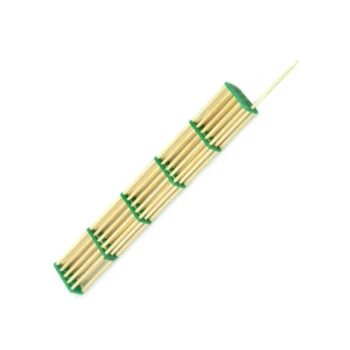
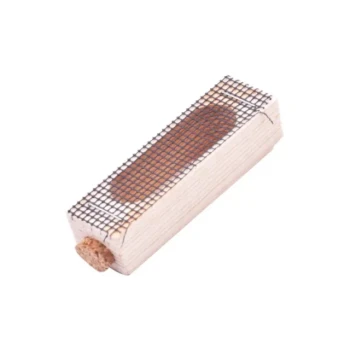
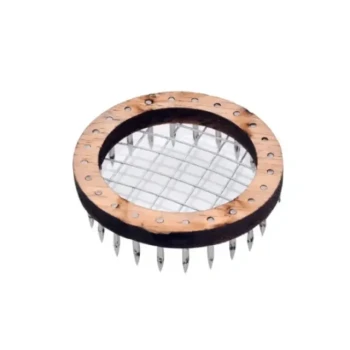
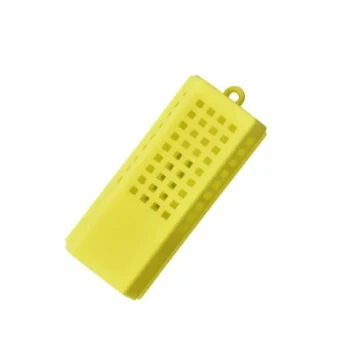
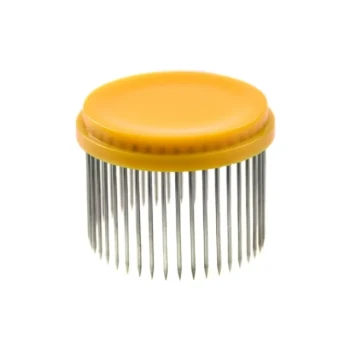
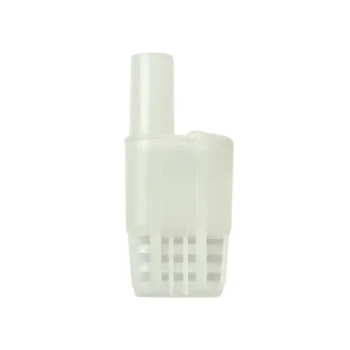
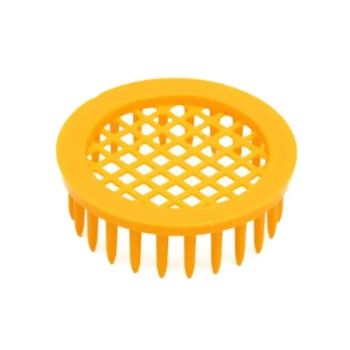
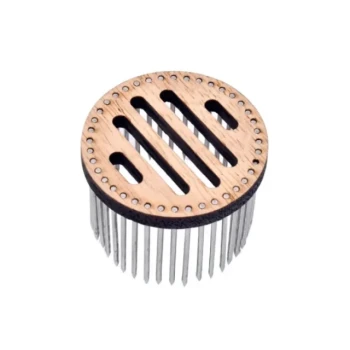
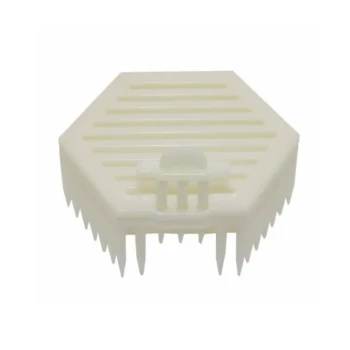
The hemispherical cavity design fundamentally changes the hive's micro-environment by creating a spacious internal buffer zone around the queen cell. Unlike flat mesh covers, this geometry reduces physical crowding, allowing a higher density of nurse bees to access the cell simultaneously without conflict, which directly enhances the care the developing queen receives.
By expanding the internal volume around the queen cell, the hemispherical design stabilizes temperature and humidity while facilitating efficient feeding arrays. This directly results in increased royal jelly deposition, leading to virgin queens with superior physical health and developmental markers.
Optimizing Nurse Bee Interaction
The Impact of Spatial Buffer Zones
Traditional flat mesh covers often restrict the movement of nurse bees, leading to congestion near the cell.
The hemispherical design provides a critical spatial buffer. This expanded internal volume reduces physical crowding, allowing nurse bees to work without interfering with one another.
Formation of Feeding Arrays
When crowding is reduced, nurse bee behavior shifts from chaotic competition to organized care.
The spacious environment encourages nurse bees to form efficient feeding arrays. This organized structure ensures that care is continuous and that the queen larva is not neglected due to traffic jams at the interface.
Environmental Stability and Queen Development
Stabilizing the Micro-Climate
Queen development is highly sensitive to fluctuations in the immediate environment.
The buffer zone created by the hemispherical cavity helps maintain stable local temperature and humidity levels. This stability is essential for the metabolic processes involved in queen maturation.
The Royal Jelly Correlation
The primary driver of queen quality is nutrition.
Because more nurse bees can access the cell and the environment is stable, there is a measurable increase in royal jelly deposition. This abundance of nutrition directly improves the physical health and overall development of the virgin queen.
Understanding the Limits of Design
Design Cannot Overcome Poor Placement
While the hemispherical cage improves local conditions, it cannot compensate for an incorrect location within the hive frame.
You must still prioritize the vertical placement of the rearing bars. Central placement remains critical because it offers the highest natural density of nurse bees and the most stable colony-level temperature.
The Biological Factor
A superior cage design optimizes the development of the larva you choose, but it cannot fix biological deficiencies.
The age of the grafted larva (ideally under 24 hours) remains the foundational factor for reproductive potential. The cage acts as an amplifier for potential, not a creator of it; it ensures a young larva reaches its maximum physical dimensions and fecundity.
Making the Right Choice for Your Goal
To maximize the benefits of hemispherical queen-rearing cages, you must align the hardware with proper biological and operational protocols.
- If your primary focus is maximizing queen size and health: Prioritize the hemispherical design to ensure maximum royal jelly deposition and environmental stability during the capping phase.
- If your primary focus is acceptance and emergence rates: Combine the hemispherical cage with central level bar placement to leverage the colony's highest natural density of nurse bees.
The hemispherical design transforms the rearing cage from a simple containment device into an active tool for biological optimization.
Summary Table:
| Feature | Traditional Flat Mesh | Hemispherical Cavity Design | Impact on Queen Development |
|---|---|---|---|
| Internal Volume | Restricted/Cramped | Spacious Buffer Zone | Reduced crowding and physical stress |
| Nurse Bee Access | High Congestion | Organized Feeding Arrays | Continuous care and efficient feeding |
| Micro-Climate | Prone to Fluctuations | Stable Temp & Humidity | Optimized metabolic maturation |
| Nutritional Input | Standard Deposition | Increased Royal Jelly | Superior physical health and fecundity |
Elevate Your Apiary's Productivity with HONESTBEE
At HONESTBEE, we understand that the success of commercial apiaries and distributors depends on the precision of their equipment. Our hemispherical queen-rearing cages are engineered to optimize biological outcomes, ensuring your virgin queens reach their maximum reproductive potential.
Whether you are looking for specialized hardware like hive-making machinery or essential beekeeping consumables at wholesale scale, we provide the full spectrum of industry-leading tools. Partner with us to bring superior quality to your customers and efficiency to your operations.
Ready to scale your queen production? Contact us today to explore our wholesale offerings!
References
- Ahmed Abouelnaga, A. Zohairy. A NEW DEVICE (HALF-BALL-CAGE WITH QUEEN EXCLUDER ) AND HONEYBEE QUEEN REARING METHOD WITH QUEENRIGHT.. DOI: 10.21608/jppp.2007.219410
This article is also based on technical information from HonestBee Knowledge Base .
Related Products
- Premium Nicot Style Queen Rearing Kit with Hair Roller Bee Cages
- Professional Multi-Functional Queen Bee Cage
- Professional Queen Cage with Sliding Gate and Feeder Plug
- Durable Galvanized Steel Spring Queen Bee Cage
- Professional Queen Bee Introduction and Transport Cage
People Also Ask
- What is the primary function of a queen rearing kit? Eliminate Manual Grafting for Superior Bee Breeding
- What are some alternative methods to grafting for queen cell production? Discover Graft-Free Queen Rearing Systems
- How do specialized queen rearing kits and queen management tools improve the success rate of bee colony expansion?
- How do modern queen bee rearing and breeding kits improve apiary management? Transition to Proactive Precision Breeding
- How is 'active' queen rearing defined in beekeeping? Master Intentional Colony Management & Genetic Control