Spiracle anatomy directly shapes both pest vulnerability and treatment safety. Honey bees breathe through 10 pairs of spiracles—three on the thorax and seven on the abdomen—that connect to internal tracheal tubes and air sacs. Tracheal mites exploit the first thoracic spiracle, while vapor and fumigant treatments must be distributed through hive air without creating concentrations that impair bee respiration.
The key principle is controlled exposure: hive treatments need enough uniformity and contact time to affect pests, but sufficient ventilation and accurate dosing to protect the bee colony’s spiracular breathing system.
Why Spiracles Matter in Pest Control
Spiracles are the bee’s respiratory interface
Honey bees do not breathe through lungs. Air enters through spiracles and travels through a branching tracheal network that delivers oxygen directly to tissues.
Valves can open and close the spiracles, while abdominal movement helps circulate air through the tracheae and expandable air sacs. This makes hive airflow, temperature, humidity, and treatment concentration closely connected to bee health.
Tracheal mites exploit a specific entry point
Acarine, or tracheal, mites can enter through the first thoracic spiracle and move into the bee’s tracheal system. There, they interfere with respiration and can weaken individual bees and the wider colony.
This biology supports the use of treatments designed for tracheal-mite control. However, not every vapor treatment is equally effective against internal tracheal pests, so product claims, registration, and application instructions must be checked carefully.
Spiracle anatomy is not the same as a treatment pathway
A vapor in the hive air space does not automatically provide reliable access to mites inside a bee’s tracheae. Treatment performance depends on the active ingredient, formulation, exposure conditions, pest location, and the product’s approved method of use.
This distinction is important for distributors and beekeepers: airborne treatment should not be marketed as universally penetrating the bee respiratory system. The correct strategy is to match the treatment product and equipment to the target pest.
How Anatomy Influences Vapor Treatment Equipment
Equipment must distribute treatment uniformly
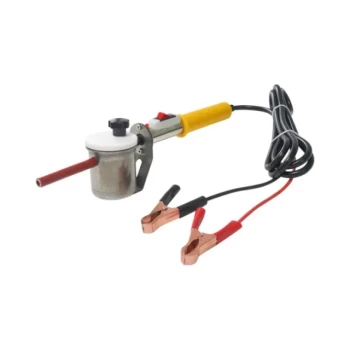
Vaporizing hardware, sublimation tools, and thermal foggers are intended to disperse a treatment through the hive environment. Poor distribution can leave untreated areas while creating excessive local concentrations near the application point.
Equipment selection should therefore consider chamber size, hive configuration, application position, heat control, sealing requirements, and the manufacturer’s operating specifications.
Calibration protects the colony
The dosage delivered by a vaporizer or fogger must be repeatable. Excessive heat, incorrect loading, extended exposure, or poor equipment maintenance can increase bee stress and may damage the product or hive components.
For commercial supply programs, calibrated equipment, compatible consumables, replacement parts, and clear operating instructions are as important as the treatment material itself.
Ventilation must be managed—not maximized blindly
Air exchange supports bee respiration and helps prevent heat and humidity buildup. Yet opening a hive too widely during treatment can dilute or remove the treatment before the required exposure is achieved.
The correct approach is to follow the product label and treatment protocol for sealing, exposure time, reopening, and post-treatment ventilation. Ventilation hardware should support that protocol rather than operate independently of it.
Hive design affects treatment consistency
Screened bottom boards, ventilated covers, and transport screens can improve airflow and thermal management. They also alter how vapor moves through the hive, so treatment procedures developed for one hive configuration may not transfer perfectly to another.
Distributors serving multiple markets should offer compatible equipment ranges and provide configuration guidance for common hive formats.
Managing the Bee’s Respiratory Risk
Avoid excessive airborne concentration
Because bees actively move air through their tracheal system, treatment vapors can expose respiratory openings as well as the target pest. This is one reason accurate dosing and controlled application are essential.
The goal is not to force vapor into the bees’ bodies. It is to achieve the approved pest-control exposure while minimizing unnecessary contact with the colony.
Consider heat, humidity, and colony density
Dense colonies, hot weather, transport conditions, and restricted airflow can already place pressure on bee respiration and thermal regulation. Adding a vapor treatment under those conditions may increase risk if ventilation and timing are poorly managed.
Commercial operators should coordinate treatment schedules with weather, colony condition, transport activity, and hive ventilation capacity.
Protect the bee cuticle and colony environment
The bee’s wax-containing outer cuticle helps limit water loss and acts as a protective barrier. Incorrectly applied acids, solvents, heat, or fogging formulations may stress bees or contaminate hive materials even when the intended target is a mite.
Treatment equipment should therefore be compatible with the formulation, resistant to the operating temperature, and easy to clean and inspect.
What This Means for Commercial Sourcing
Build a complete treatment package
A reliable supply program should cover more than the primary vaporizer. Depending on the approved treatment, the package may include:
- Vaporizing or sublimation equipment
- Compatible treatment consumables
- Sealing and ventilation components
- Screened boards and ventilated covers
- Transport ventilation equipment
- Replacement heating elements, chambers, and seals
- Personal protective equipment and handling accessories
- Cleaning and maintenance supplies
A one-stop portfolio reduces compatibility errors and helps customers deploy treatments consistently across apiaries.
Prioritize response and fulfillment
Seasonal pest pressure can create urgent demand for treatment equipment and consumables. Distributors and wholesalers should maintain clear stock visibility, rapid quotations, responsive technical support, and efficient order fulfillment.
Fast delivery is valuable only when the supplied products are compatible with the customer’s hive design, treatment method, and regulatory market.
Support customers with technical documentation
Product documentation should clearly distinguish between:
- The target pest
- The approved active ingredient
- The intended application method
- Required dose and exposure conditions
- Ventilation and reopening instructions
- Equipment compatibility
- Safety and protective-equipment requirements
This information helps resellers avoid overpromising and helps beekeepers apply products responsibly.
Understanding the Trade-offs
More ventilation versus treatment retention
Greater airflow improves respiration and thermal control but can reduce treatment concentration and contact time. Excessive sealing can preserve treatment levels but increase respiratory and heat stress.
The solution is protocol-based ventilation, not a universal preference for either maximum airflow or maximum enclosure.
Direct pest targeting versus colony safety
Treatments that contact pests in the hive air space may be practical for externally exposed mites, but internal tracheal mites present a different biological challenge. A method suitable for Varroa control should not automatically be assumed to control Acarine mites.
Product selection must follow the pest biology and the treatment’s validated label claims.
Thermal performance versus formulation stability
Thermal foggers and sublimation devices can produce rapid treatment dispersion, but excessive temperature may degrade an active ingredient or damage equipment. Low-quality or poorly maintained hardware can produce inconsistent output.
Professional buyers should evaluate temperature control, output consistency, material compatibility, serviceability, and spare-part availability—not only purchase price.
Standardization versus hive variation
A treatment program may be standardized across an operation, but hive volume, screen design, cover configuration, colony strength, and local climate can vary. Equipment and instructions should allow controlled adaptation without encouraging unauthorized changes to dose or exposure.
Making the Right Choice for Your Goal
Select treatment equipment as part of a complete respiratory, ventilation, and pest-management system.
- If your primary focus is tracheal-mite control: Choose a product specifically approved and documented for tracheal mites, rather than assuming that any hive vapor will reach mites inside the bee’s tracheal system.
- If your primary focus is vapor treatment consistency: Prioritize calibrated, temperature-controlled equipment with compatible chambers, seals, consumables, and replacement parts.
- If your primary focus is colony safety: Pair accurate dosing with label-compliant sealing, exposure, and post-treatment ventilation procedures.
- If your primary focus is commercial distribution: Offer a full-spectrum portfolio supported by compatibility guidance, technical documentation, responsive service, and dependable stock availability.
- If your primary focus is transport or high-density apiaries: Supply screened and ventilated hive components that preserve airflow while remaining compatible with the planned treatment protocol.
Understanding spiracles enables better pest targeting, safer vapor application, and more reliable sourcing decisions across the commercial beekeeping supply chain.
Summary Table:
| Aspect | Impact on Pest Control | Key Consideration |
|---|---|---|
| Spiracle Anatomy | Real space for pest entry (e.g., tracheal mites) | Target specific pests, not general assumptions |
| Vapor Distribution | Uniform coverage needed to reach pests | Equipment design and placement matter |
| Dosage Calibration | Prevents overexposure and bee stress | Use calibrated equipment with clear instructions |
| Ventilation Management | Balances respiration and treatment retention | Follow label protocols for sealing and ventilation |
| Hive Design | Alters airflow and vapor movement | Adapt procedures to hive configurations |
| Product Claims | Not all vapors treat internal mites | Check approval and documentation for target pest |
Ready to optimize your hive treatment strategy? At HONESTBEE, we supply a complete range of vaporization equipment, consumables, and ventilation components for commercial apiaries and distributors. Our one-stop sourcing, rapid delivery, and expert support ensure you get the right tools for safer, more effective pest control. Contact us today to discuss your needs — Get in touch now and let's boost your colony health and operational efficiency!
Related Products
- 12V Bee Mite Removal Evaporator Oxalic Acid Vaporizer for Bee Fumigation Treatment 180W Atomization
- Professional Reversible Beehive Hive Entrance
- Stainless Steel Honey Bee Smoker Hive and Honeycomb Smoker for Beekeeping
- Adjustable Formic and Acetic Acid Dispenser for Bee Mite Treatment
- Galvanized Beekeeping Smoker for Honey Bee and Apiculture
People Also Ask
- What should be done after applying the vapor? A Step-by-Step Guide to Sealing Your Hive
- What are the main advantages of using oxalic acid vaporization for Varroa mite control? Achieve 90%+ Efficacy Safely
- How can oxalic acid vaporization be used effectively in a hive that contains brood? Master Multi-Stage Mite Control
- What is the process of using an oxalic acid vaporizer? A Step-by-Step Guide to Safe Varroa Control
- Why is it necessary to control varroa mite infestations? Protect Your Colony with Oxalic Acid Vaporizers