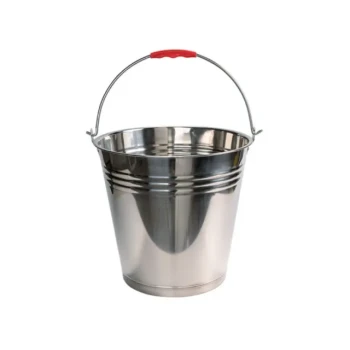
The lack of standardized Packaging Equipment represents a critical failure point in the industrialization of honey production. Without this machinery and associated food-grade containers, producers cannot effectively seal out environmental moisture or contaminants. This deficiency directly increases the risk of fermentation and spoilage, while simultaneously preventing the visual consistency and extended shelf life required to enter modern retail channels.
Standardized packaging is not merely about containment; it is the technological gateway to industrialization that ensures product stability through airtight sealing while enabling the high-volume consistency necessary for international market competition.
The Preservation Challenge: Quality and Chemistry
Controlling Moisture Ingress
Honey is hygroscopic, meaning it naturally absorbs water from the air. Without standardized packaging equipment to ensure a hermetic seal, environmental moisture infiltrates the product.
Preventing Fermentation
When moisture levels rise due to poor sealing, yeast activity within the honey accelerates. This leads directly to fermentation, which ruins the flavor profile and renders the product unfit for commercial sale.
Eliminating Contaminants
Manual or non-standardized packaging processes leave the product exposed to the open environment for longer periods. Industrial equipment creates a closed loop, blocking physical contaminants that would otherwise compromise food safety standards.
The Operational Impact: Efficiency and Scale
Breaking the Manual Bottleneck
Reliance on manual packaging creates a ceiling on production volume. Automated packaging machinery replaces these manual workflows with high-speed processing, allowing producers to meet large-scale demand during peak harvest seasons.
Ensuring Airtightness at Speed
Achieving a consistent vacuum or airtight seal is difficult and slow by hand. Industrial machines utilize standardized consumables to ensure every unit achieves the same level of airtightness, significantly reducing storage losses.
Improving Logistics and Warehousing
Standardized bulk containers, such as pressure-resistant drums, are designed to be stackable. This maximization of space is critical for lowering logistics costs and reducing the risk of damage during long-distance transportation.
The Market Barrier: Commercial Viability
Enhancing Visual Presentation
Modern retail channels demand uniformity on the shelf. Standardized equipment ensures that fill levels, labeling, and container clarity are identical across thousands of units, directly increasing the market value of the honey.
Extending Shelf Life
By effectively blocking moisture and oxidation, standardized packaging extends the viable shelf life of the product. This stability is a prerequisite for entering supply chains that involve long storage times or international shipping.
Enabling Traceability
Industrial packaging lines often integrate coding and labeling systems automatically. This capability supports full traceability of the production process, a non-negotiable requirement for high-end export markets.
Understanding the Trade-offs
The Capital vs. Volume Equation
While standardized equipment solves preservation issues, it requires significant upfront capital investment. For small-scale apiaries with low output, the cost of industrial packaging lines may outweigh the benefits of efficiency.
Loss of Artisanal Variation
Industrialization prioritizes consistency over unique batch characteristics. Standardizing the process ensures safety and uniformity, but it eliminates the "rough" or variable aesthetic that some niche boutique markets may prefer.
Making the Right Choice for Your Goal
To navigate the industrialization process effectively, align your equipment choices with your specific business objectives:
- If your primary focus is Product Stability: Prioritize equipment that guarantees hermetic, airtight sealing to prevent fermentation and extend shelf life.
- If your primary focus is Retail Expansion: Invest in machinery that ensures high visual uniformity and precise fill levels to meet the strict aesthetic standards of supermarkets.
- If your primary focus is Logistics Efficiency: Adopt standardized, stackable bulk containers to minimize storage loss and maximize transport density.
The transition to standardized packaging equipment is the definitive step that transforms honey from a raw agricultural commodity into a stable, globally tradeable consumer product.
Summary Table:
| Impact Category | Without Standardized Equipment | With Industrial Standardization |
|---|---|---|
| Product Quality | High risk of moisture & fermentation | Hermetic seals ensure long-term stability |
| Efficiency | Manual bottlenecks & low volume | Automated high-speed processing |
| Market Access | Inconsistent look; limited shelf life | Retail-ready uniformity & traceability |
| Logistics | High storage loss & fragile packing | Stackable, pressure-resistant containers |
Scale Your Honey Production with HONESTBEE
Transitioning from manual labor to industrial efficiency is a major milestone for any commercial apiary or distributor. HONESTBEE is your dedicated partner in this journey, offering a comprehensive suite of professional beekeeping solutions. We provide high-performance honey-filling machines, specialized hive-making equipment, and a full range of industry consumables designed to ensure your product meets the highest global standards.
Whether you are a large-scale distributor looking for high-speed automated lines or a commercial apiary seeking to eliminate spoilage through superior packaging, our expert team is here to help you optimize your workflow and maximize your market value.
Ready to industrialize your honey brand? Contact HONESTBEE today to explore our wholesale equipment and tools!
References
- Adino Andaregie, Tess Astatkie. Determinants of beekeeping adoption by smallholder rural households in Northwest Ethiopia. DOI: 10.1080/23311932.2021.1954817
This article is also based on technical information from HonestBee Knowledge Base .
Related Products
- Double Nozzle Small Honey Filling Machine Honey Sachet Packing Packaging Equipment
- Small Honey Filling Machine Sachet Packing Equipment Single Nozzle
- Automatic Single-Dose Snap & Squeeze Honey Sachets Packing Machine
- Fully Automatic Honey Filling Packaging Machine for Processing Line
- Precision Automated Packaging Turntable Honey Spoon Filling Sealing Packing Machine
People Also Ask
- What value do retail packaging equipment and filling technologies provide in the honey distribution process? Maximize ROI
- How does industrial honey-filling machinery support Robinia pseudoacacia stands? Maximize Your Acacia Honey Yield
- Why is high-precision honey filling equipment necessary? Secure the medicinal value and ROI of stingless bee honey.
- What role does precision filling equipment play in cost control? Maximize Honey Profits & Market Growth
- How does high-precision honey filling equipment protect honey's biological activity? Safeguard Purity & Premium Value