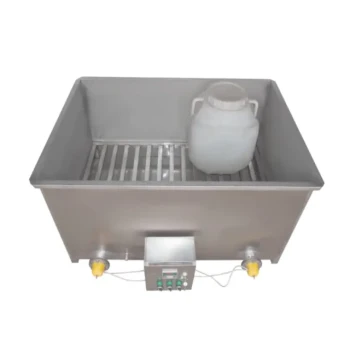
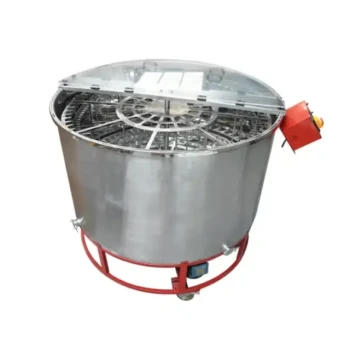
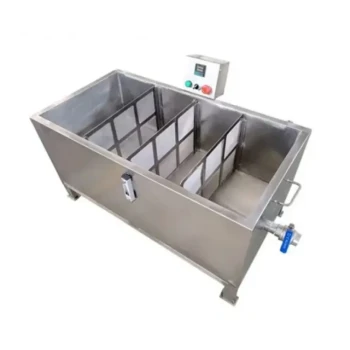
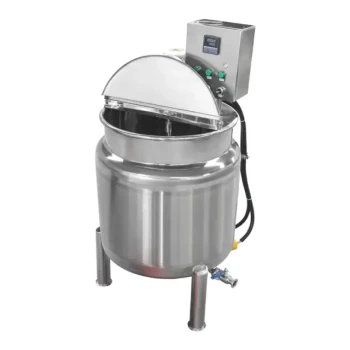
The hive provides a practical engineering model: bees reduce nectar moisture by spreading it across surfaces, manipulating it enzymatically, and fanning humid air away. Industrial equipment applies the same principles at higher throughput by increasing honey’s exposure to dry air or vacuum while controlling temperature, residence time, and final moisture—typically targeting below 18.5% water to reduce fermentation risk.
The key lesson is that honey dehumidification is not simply a heating problem. Machinery should reproduce the hive’s combination of surface exposure, controlled airflow, humidity removal, and gentle processing while protecting honey’s enzymes, flavor, and other heat-sensitive qualities.
What the Natural Hive Process Teaches
Moisture reduction is gradual and controlled
Fresh nectar may contain approximately 30–90% water, depending on its source and conditions. Bees progressively concentrate it through repeated oral manipulation and wing fanning before storing and sealing it in comb.
Natural ripening can take up to 36 days, depending on nectar volume and environmental humidity. Industrial systems are selected to shorten this timeline without sacrificing the stability and quality achieved by mature honey.
Surface exposure accelerates evaporation
Bees manipulate nectar droplets with their proboscis, increasing the area exposed to hive air. This improves contact between the liquid and moving air, allowing moisture to leave more efficiently.
Industrial machinery therefore benefits from designs that create thin films, expanded surfaces, controlled circulation, or carefully distributed product flow rather than treating honey as a static bulk liquid.
Dry airflow matters as much as airflow volume
Wing fanning works because bees move moisture-laden air away from the nectar and replace it with air capable of accepting more water vapor. Simply increasing fan speed is not sufficient if the incoming air is already humid.
Commercial dehumidifiers and moisture-extraction systems should therefore control relative humidity, airflow direction, and air exchange. This is particularly important for apiaries and processors operating in humid climates.
Biological ripening is not identical to mechanical drying
Bees add enzymes, including invertase, that help convert sucrose into glucose and fructose while the nectar is being concentrated. Machinery can accelerate moisture removal, but it does not fully replace the biological maturation that occurs in the colony.
For this reason, extraction should normally follow adequate ripening and comb capping. Processing immature nectar may produce a low-moisture product while still compromising the expected enzymatic development and quality profile.
How Hive Principles Guide Equipment Selection
Select equipment around the moisture target
The first specification should be the required final moisture level, not the nominal capacity of the machine. A system intended to deliver honey below 18.5% water must provide reliable measurement and control at the actual operating throughput.
Moisture targets may also depend on applicable standards, customer requirements, honey origin, and export-market specifications. Buyers should confirm the relevant limit before choosing equipment.
Match the technology to honey sensitivity
Honey contains enzymes and other bioactive components that can be affected by excessive heat or unnecessarily long exposure. Equipment should therefore prioritize low-temperature concentration, controlled heating, or vacuum-assisted evaporation where appropriate.
Vacuum concentration is useful because reducing pressure can support water removal at lower product temperatures than conventional high-temperature evaporation. The objective is not maximum evaporation speed; it is stable moisture reduction with minimal quality damage.
Prioritize humidity control in dehumidification systems
A honey dehumidifier should be evaluated for its ability to remove water from the process air, maintain consistent relative humidity, and operate under changing ambient conditions. This is more meaningful than fan capacity alone.
For high-humidity environments, a dedicated moisture-extraction system or vacuum-assisted unit may provide more dependable performance than relying on warm air circulation.
Ensure adequate product distribution and surface exposure
Equipment should distribute honey evenly across the available drying surface. Uneven flow can create areas that remain too wet while other areas experience unnecessary heat or residence time.
Useful design considerations include controllable feed rates, shallow product layers or films where suitable, accessible inspection points, and cleaning-friendly internal geometry.
Integrate moisture measurement and process control
Natural bees adjust fanning and storage behavior in response to hive conditions. Industrial machinery needs instruments and controls to perform the same function more precisely.
A complete system should support monitoring of:
- Honey moisture content
- Product temperature
- Air temperature
- Relative humidity
- Flow rate and residence time
- Batch-to-batch consistency
Moisture testing should occur before and after dehumidification, and ideally before filling, so that unstable honey does not enter storage or packaging.
How the Machinery Should Operate
Begin with properly ripened raw material
Uncapping and centrifugal extraction should generally follow sufficient ripening and capping of the comb. Harvesting too early increases the likelihood of high-moisture honey entering the processing line.
A dehumidifier should be treated as a control and finishing tool—not as a substitute for sound harvesting decisions or adequate colony maturation.
Remove moisture progressively
The process should use a controlled combination of product exposure, dry airflow, and—where appropriate—vacuum. Excessively aggressive operation can cause overheating, foaming, flavor changes, or loss of desirable honey characteristics.
Progressive moisture reduction also makes it easier to maintain uniformity across different batches, floral sources, and starting moisture levels.
Protect the product during transfer
Every transfer point after dehumidification should minimize the possibility of moisture reabsorption. Open tanks, humid rooms, poorly sealed piping, and extended holding times can undermine the result achieved by the machine.
Storage and filling areas should therefore be clean, dry, and appropriately controlled, especially when honey is being prepared for long-term storage or export.
Verify moisture before filling
Filling equipment performs most reliably when honey has the correct viscosity and moisture level. Excessively wet honey can ferment during storage, while inconsistent moisture can cause variation in flow, fill weight, and shelf stability.
Final moisture verification should be a release point before automated filling, labeling, and shipment.
Building a Complete Processing Line
Coordinate extraction and filtration
Uncapping machines and centrifugal extractors should feed a process designed for the actual honey volume and viscosity. Filtration and settling stages must be coordinated with dehumidification so that the system does not create bottlenecks or excessive holding time.
The goal is a continuous, hygienic flow from comb removal through moisture control, storage, and packaging.
Use food-grade, cleanable construction
Honey-contact surfaces should use suitable food-grade materials, commonly including 316L stainless steel where specified by the application. The equipment should have smooth surfaces, sanitary joints, accessible cleaning points, and a design that limits contamination and moisture retention.
Material selection and temperature control also help protect honey’s natural enzymes and antimicrobial characteristics.
Size the system for peak harvest conditions
Natural hive dehydration is slow and variable, while commercial harvests often arrive in concentrated seasonal peaks. Capacity should be based on the highest realistic incoming volume and moisture load, not only average annual production.
For distributors and resellers, this means matching customers to a complete capacity range—from smaller batch dehumidifiers to integrated industrial concentration and filling lines.
Offer compatible downstream equipment
A dehumidifier is most valuable when it integrates effectively with extraction, filtration, storage, heating, pumping, and filling equipment. Incompatible viscosity ranges, transfer temperatures, or control systems can reduce the benefit of an otherwise capable machine.
A one-stop equipment portfolio can simplify specification, installation, spare-parts support, and operator training for commercial apiaries and honey processors.
Understanding the Trade-offs
Faster processing can increase quality risk
Higher temperature, stronger airflow, or longer exposure may increase evaporation rate, but these settings can also affect flavor, color, enzymes, and other heat-sensitive qualities.
The correct operating point is the lowest-intensity process that consistently reaches the required moisture target at the required throughput.
Vacuum systems add complexity
Vacuum concentration can support lower-temperature moisture removal, but it introduces additional requirements for pumps, seals, controls, condensate handling, and operator training.
It is most appropriate when product quality, high humidity, or tight moisture specifications justify the additional system complexity.
Drying cannot correct every harvesting problem
Moisture reduction can lower fermentation risk, but it cannot automatically restore the full quality of properly ripened honey. Premature extraction, poor storage, contamination, or excessive processing may remain significant problems.
Equipment selection should therefore be accompanied by harvesting standards, incoming inspection, sanitation procedures, and documented moisture controls.
Over-drying is also undesirable
The objective is not to remove as much water as possible. Excessive concentration can alter viscosity, handling behavior, and product characteristics while consuming unnecessary energy.
The machine should stop or transition to holding once the validated target is reached.
Making the Right Choice for Your Goal
Select equipment and operating procedures based on both the honey’s starting condition and the commercial outcome required.
- If your primary focus is moisture stability: Choose a dehumidification or vacuum-concentration system with reliable moisture measurement and control capable of reaching the required sub-18.5% target.
- If your primary focus is preserving honey quality: Prioritize low-temperature operation, controlled residence time, food-grade construction, and protection against excessive thermal exposure.
- If your primary focus is high-volume harvest handling: Size the complete line around peak seasonal throughput and integrate extraction, filtration, dehumidification, storage, and filling.
- If your primary focus is humid-climate processing: Select equipment that actively controls relative humidity rather than relying on ambient air or airflow alone.
- If your primary focus is distribution and resale: Build a full-spectrum offering supported by rapid technical response, compatible downstream machinery, spare parts, and efficient fulfillment.
When industrial machinery follows the hive’s principles—controlled surface exposure, dry-air management, gentle concentration, and verified moisture control—commercial processors can achieve faster, more consistent, and more reliable honey production.
Summary Table:
| Principle from Hive | Industrial Application | Equipment Consideration |
|---|---|---|
| Gradual moisture reduction | Progressive dehumidification stages | Use controlled residence time and temperature |
| Surface exposure | Thin-film or spread product flow | Ensure even distribution for uniform drying |
| Dry airflow | Dehumidifiers that control RH | Select systems with humidity control, not just fans |
| Gentle processing | Low-temperature or vacuum methods | Protect enzymes and flavor |
| Biological ripening | Proper pre-processing and quality checks | Harvest only ripened honey; use machinery as finishing tool |
Looking for reliable honey processing equipment that mirrors nature's efficiency? At HONESTBEE, we offer a full-spectrum portfolio of beekeeping tools and machinery, including dehumidification systems designed for commercial apiaries and distributors. With rapid response, dedicated service, and ultra-fast delivery, we help you achieve consistent quality below 18.5% moisture. For OEM/ODM support and supply reliability, contact us today to discuss your specific needs.
Related Products
- High Quality Honey Dehumidifier Dryer Thickening Machine for Beekeeping
- 0.5T Capacity Honey Dehumidifier Dryer with Vacuum Heating and Thickening Filtering Machine
- Honey Concentrating and Filtering Dehumidifier Machine 2T Capacity for Honey
- Honey Concentrating Vacuum Heating Thickening Machine Dehumidifier for Honey
- Economy Small Scale Honey Dryer Dehumidifier Thickening Machine
People Also Ask
- Can you dehumidify honey? A Beekeeper's Guide to Preventing Fermentation
- How to dry up honey? The Safe Guide to Stabilizing Honey and Preventing Fermentation
- How can the moisture content of honey be reduced? A Guide to Safe, Effective Drying Methods
- How to remove humidity from honey? Protect Your Harvest from Fermentation
- How to decrease moisture in honey? Prevent Fermentation and Ensure Long-Term Quality