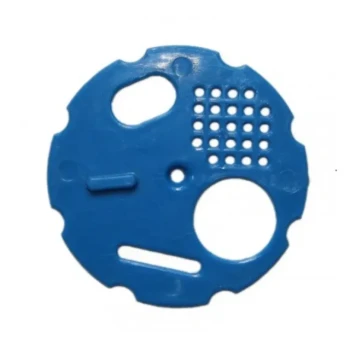
Entrance reducers act as a primary physical shield against Small Hive Beetle infestations. By mechanically narrowing the hive's entry specifications, these devices restrict the number of pathways available for adult beetles to infiltrate the colony. This simple adjustment serves as a critical "choke point," significantly decreasing the frequency of pest invasions and denying beetles free access to the hive interior.
By minimizing the physical area that must be defended, entrance reducers act as a force multiplier for the colony. They transform a wide, vulnerable entrance into a defensible gateway, allowing bees to utilize their natural defensive behaviors more effectively within an Integrated Pest Management (IPM) strategy.
The Mechanics of Physical Exclusion
Narrowing Invasion Pathways
The primary function of an entrance reducer is to limit accessibility. By obstructing the majority of the hive entrance, you drastically reduce the physical gap that adult Small Hive Beetles can use to enter.
Reducing Invasion Frequency
Small Hive Beetles are opportunistic pests that seek to bypass colony defenses. A reduced entrance minimizes the statistical probability of a beetle slipping past undetected. This physical restriction directly correlates to a decrease in the frequency of successful pest invasions.
Enhancing Biological Defenses
Consolidating Guard Bee Resources
A wide, fully open entrance spreads the colony's defensive resources thin. Guard bees are forced to patrol a large perimeter, leaving gaps in security that beetles can exploit.
Creating a Defensible Choke Point
When you install a reducer, you consolidate the colony’s primary line of defense. Guard bees can concentrate their efforts on a small, manageable opening, making it much harder for beetles to bypass them.
Protecting Vulnerable Colonies
This consolidation of force is particularly vital for weak or compromised colonies. A smaller population of bees may struggle to defend a full entrance, but a reducer allows them to maintain security integrity despite lower numbers.
Understanding the Limits of Mechanical Defense
The Necessity of IPM
While effective, entrance reducers are not a standalone cure for infestations. They function best as a delaying tactic within a broader Integrated Pest Management (IPM) strategy.
Reliance on Colony Strength
The reducer aids the colony, but it relies on the bees' natural defensive behaviors to be effective. If the colony is too weak to man even a reduced entrance, the physical barrier alone may not prevent the spread of pests throughout the apiary.
Strategic Implementation for Hive Health
To effectively utilize entrance reducers against Small Hive Beetles, consider your specific colony conditions:
- If your primary focus is routine prevention: Deploy reducers as a standard component of your IPM strategy to lower the baseline frequency of beetle intrusion.
- If your primary focus is protecting weak colonies: restrict the entrance immediately to the smallest setting to maximize the efficiency of the remaining guard bees.
By controlling the architecture of the hive entrance, you empower your bees to police their environment with maximum efficiency.
Summary Table:
| Feature | Mechanism of Action | Impact on Pest Control |
|---|---|---|
| Physical Obstruction | Narrows the hive entry specifications | Restricts beetle access and entry points |
| Invasion Frequency | Creates a mechanical "choke point" | Decreases the probability of successful beetle infiltration |
| Resource Allocation | Consolidates guard bee patrol areas | Empowers bees to defend the hive with fewer resources |
| Colony Protection | Reduces the defensible perimeter | Essential for safeguarding weak or stressed colonies |
| IPM Integration | Acts as a primary mechanical barrier | Functions as a crucial first line of defense in pest management |
Maximize Your Apiary Productivity with HONESTBEE
Protecting your colonies from pests like the Small Hive Beetle requires high-quality, precision-engineered tools. At HONESTBEE, we specialize in supporting commercial apiaries and distributors with a comprehensive range of wholesale beekeeping solutions.
From durable hive components and entrance reducers to advanced honey-filling machinery and specialized beekeeping hardware, our portfolio is designed to enhance your operational efficiency and hive health. Whether you are scaling your commercial operation or stocking essential consumables for your distribution network, we provide the expertise and equipment you need to succeed.
Ready to upgrade your beekeeping equipment? Contact HONESTBEE Today for a Wholesale Quote
References
- Ximena Araneda, Ximena Freire. SMALL HIVE BEETLE (Aethina tumida Murray), A POTENTIAL THREAT TO BEEKEEPING IN CHILE. DOI: 10.29393/chjaas37-1shxa30001
This article is also based on technical information from HonestBee Knowledge Base .
Related Products
- Steel Round Disc Entrance Reducer for Flexzion Bee Hive Nuc Box Gate
- Beehive Entrance Reducer Guardian Metal Hive Entrance for Bees
- Professional Hive Front Entrance Bee Feeder
- HONESTBEE Entrance Bee Feeder Efficient Hive Front Liquid Feeding Solution for Beekeeping
- HONESTBEE Entrance Bee Feeder Professional Hive Nutrition Solution for Beekeeping
People Also Ask
- What is the purpose of an entrance reducer for a beehive? Strengthen Colony Defense and Prevent Robbery
- Why are entrance reducers used to counter hornet infestations? Protect Your Hive with Strategic Choke Points
- Why is it critical to maintain a smaller entrance for a newly established bee hive? Boost Colony Growth and Security
- What is the function of an entrance reducer on a beehive? Strengthen Colony Defense and Climate Control
- Under what conditions should a beekeeper adjust the size of a beehive entrance? Seasonal & Defense Management Tips