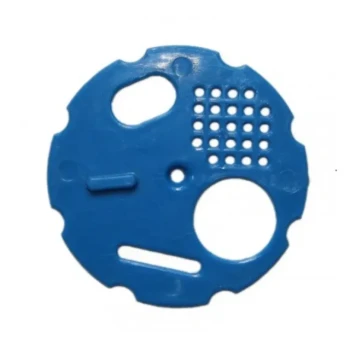
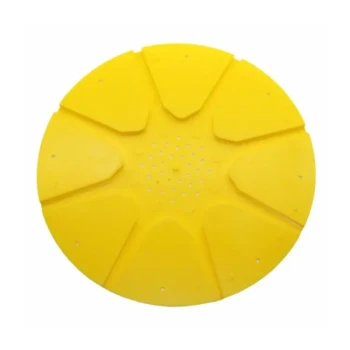
Entrance reducers function as a tactical force multiplier for honeybee colonies. By physically narrowing the hive’s opening, these wooden blocks or devices drastically reduce the perimeter that guard bees are required to monitor. This allows the colony to consolidate its defensive line, making it significantly harder for predators like hornets to bypass the guards and infiltrate the hive.
Beekeepers utilize entrance reducers to transform a wide, vulnerable frontline into a defensible choke point. By limiting the entry space, the colony can concentrate its guard population to effectively repel invaders and protect vital resources.
The Mechanics of Defensive Advantage
Concentrating the Guard Force
A standard, fully open hive entrance presents a wide area that requires a large number of bees to defend effectively. This spreads the colony's defensive resources thin, creating gaps that agile predators can exploit.
Installing an entrance reducer decreases the physical area of the opening. This allows the colony to pack its guard bees into a tighter formation. With guards standing shoulder-to-shoulder in a smaller gap, the defensive density increases, creating a formidable wall against intruders.
Denying Physical Access
Hornets are powerful predators that seek to enter the hive to steal honey or prey on bee larvae. An entrance reducer acts as a physical barrier that complicates this invasion.
By shrinking the entryway, the device forces the predator into a direct confrontation with the concentrated guard force. There are no "blind spots" or undefended edges for the hornet to slip through. This delay is often enough for the colony to mount a successful counter-attack or deter the predator entirely.
Strategic Application in Hive Management
Protecting Vulnerable Colonies
Strong, populous colonies may be able to defend a wide entrance through sheer numbers, but smaller or weakened colonies lack this manpower.
For these compromised colonies, entrance reducers are critical survival tools. They artificially level the playing field, allowing a smaller workforce to maintain a secure perimeter. This prevents the colony from being overrun while it recovers or builds strength.
A Component of Integrated Pest Management (IPM)
Entrance reducers are considered a low-cost, efficient mechanical control within a broader Integrated Pest Management strategy.
While the primary goal regarding hornets is immediate exclusion, this technique also limits the infiltration of other pests, such as Small Hive Beetles. By narrowing the pathways available for any adult pest to enter, the beekeeper reduces the overall frequency of invasions across the apiary.
Understanding the Trade-offs
Ventilation and Congestion Risks
While reducing the entrance aids defense, it restricts airflow and traffic. A very small opening can lead to congestion during peak foraging hours, slowing down nectar collection.
Furthermore, in hot climates, a severely restricted entrance may hamper the colony's ability to ventilate the hive. Beekeepers must balance the need for security against the colony's need for airflow and efficient movement.
Passive Barrier Limits
An entrance reducer is a passive physical barrier, not an active trap or chemical deterrent.
It relies on the presence of guard bees to be effective. If a colony is so weak that it has no guard force, an entrance reducer alone may not stop a determined infestation. It acts to delay and discourage, effectively buying time for the bees’ natural defensive behaviors to work.
Making the Right Choice for Your Apiary
When deciding how to configure your hive entrances, consider the current threat level and the strength of your colonies.
- If your primary focus is predatory defense: Install reducers to the smallest setting that still allows for foraging traffic, forcing hornets into a direct bottleneck.
- If your primary focus is supporting weak colonies: Use the smallest possible opening to minimize the defensive burden on the limited population until the colony expands.
By manipulating the physical architecture of the hive entrance, you empower the colony to defend itself with maximum efficiency.
Summary Table:
| Feature | Defensive Impact | Strategic Benefit |
|---|---|---|
| Entryway Size | Narrows the perimeter | Forces predators into a bottleneck |
| Guard Density | Concentrates bee population | Increases defensive wall strength |
| Physical Barrier | Restricts predator access | Prevents infiltration of hornets and beetles |
| Manpower Support | Reduces defensive burden | Essential for the survival of small/weak colonies |
Secure Your Apiary with HONESTBEE Professional Equipment
Protecting your colony from hornets requires the right tools and a strategic approach. HONESTBEE specializes in supporting commercial apiaries and distributors with a comprehensive range of high-quality beekeeping solutions.
From precision-engineered hive-making machinery to durable entrance reducers and essential consumables, we provide everything you need to scale your operations and safeguard your bees. Let us help you optimize your hive management with our full spectrum of wholesale beekeeping hardware and honey-themed merchandise.
Ready to fortify your business? Contact HONESTBEE today to explore our wholesale catalog and expert solutions!
References
- Micaela Buteler, Mariana Lozada. Interaction between Vespula germanica and Apis mellifera in Patagonia Argentina apiaries. DOI: 10.1007/s13592-021-00871-9
This article is also based on technical information from HonestBee Knowledge Base .
Related Products
- Steel Round Disc Entrance Reducer for Flexzion Bee Hive Nuc Box Gate
- Beehive Entrance Reducer Guardian Metal Hive Entrance for Bees
- Beehive Entrance Discs Plastic Bee Entrance Disc for Bee Hives
- HONESTBEE Entrance Bee Feeder Professional Hive Nutrition Solution for Beekeeping
- HONESTBEE Entrance Bee Feeder Efficient Hive Front Liquid Feeding Solution for Beekeeping
People Also Ask
- What is the purpose of an entrance reducer for a beehive? Strengthen Colony Defense and Prevent Robbery
- Why is it critical to maintain a smaller entrance for a newly established bee hive? Boost Colony Growth and Security
- Under what conditions should a beekeeper adjust the size of a beehive entrance? Seasonal & Defense Management Tips
- What is the function of an entrance reducer on a beehive? Strengthen Colony Defense and Climate Control
- What is the function of an entrance reducer for a beehive? Essential Guide for Profitable Beekeeping Distribution