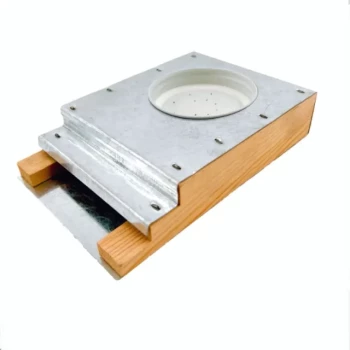
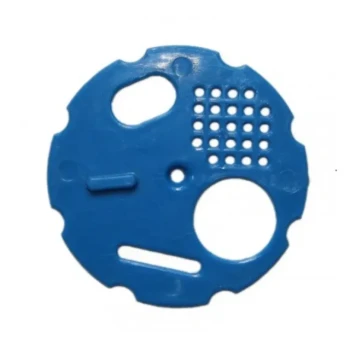
An entrance reducer is a specialized barrier, typically a notched strip of wood or plastic, placed at the bottom opening of a beehive to physically limit the size of the entrance. Its primary function is to give the beekeeper control over the hive's accessibility and ventilation, allowing you to adjust the opening to match the current strength and needs of the colony.
Core Takeaway The entrance reducer acts as a force multiplier for your colony's defenses. By narrowing the point of entry, it allows a smaller number of guard bees to effectively protect the hive from intruders, while simultaneously aiding in climate control during colder months.
Regulating Colony Defense
The most critical function of an entrance reducer is assisting the colony in defending its resources.
The "Choke Point" Strategy
In a natural setting, bees prefer smaller entrances that are easier to guard. A standard manufactured hive often has a very wide bottom entrance that can be difficult for a young or weak colony to patrol.
The reducer creates a "choke point." This minimizes the surface area that guard bees must monitor, ensuring that a small workforce can successfully repel a larger number of invaders.
Preventing Robbery and Intrusion
Weak hives are prime targets for robber bees (bees from other hives stealing honey), wasps, and yellow jackets.
By installing a reducer, you prevent these aggressive invaders from overwhelming the colony. The smaller opening forces intruders to enter one by one, giving the guard bees a tactical advantage to neutralize the threat.
Managing the Internal Environment
Beyond defense, the entrance reducer plays a vital role in regulating the hive's microclimate.
Temperature and Ventilation Control
Bees must work hard to maintain the internal temperature of the hive, especially in northern regions or during winter.
An entrance reducer limits the airflow entering the hive. In the winter, this prevents cold drafts from chilling the cluster, allowing the bees to conserve energy and heat. Conversely, in transitional seasons, it can be adjusted to balance ventilation needs.
Pest Deterrence
The reducer creates a physical barrier against larger pests. It is commonly used to stop small animals from entering the hive to seek warmth or food.
While often used as a deterrent against mice, it physically blocks them from squeezing through the wide summer entrance to build nests inside the hive during autumn and winter.
Common Pitfalls to Avoid
While essential, relying solely on a wooden entrance reducer has limitations you must be aware of.
The Mouse Guard Limitation
Standard entrance reducers are often made of wood. References indicate that determined mice can—and often do—chew through wooden reducers to gain entry.
For maximum protection against rodents, a metal mouse guard is superior to a wooden reducer, as it provides the ventilation and size restriction without being vulnerable to chewing.
Installation Considerations
The reducer is designed to fit snugly between the bottom board and the first deep super.
If it is loose or fitted incorrectly, it can leave gaps that defeat its purpose. Furthermore, leaving a reducer on the smallest setting during a heavy nectar flow or extreme heat can cause traffic jams and overheating, so it must be managed actively.
Making the Right Choice for Your Goal
When deciding how to position or when to use your entrance reducer, consider the current status of your colony.
- If your primary focus is establishing a new package or nucleus colony: Use the smallest opening setting to help the small population defend against robbers and conserve heat.
- If your primary focus is overwintering in a cold climate: Install the reducer (or a metal mouse guard) to minimize drafts and prevent rodents from nesting inside the hive.
- If your primary focus is maximum honey production in summer: Remove the reducer entirely or use the largest opening to allow heavy traffic flow and maximum ventilation for nectar curing.
The entrance reducer is not a "set it and forget it" tool; it is a throttle for your hive that should be adjusted as the colony grows and the seasons change.
Summary Table:
| Feature | Function & Benefit | Best For... |
|---|---|---|
| Defense Support | Creates a "choke point" for guard bees to repel robbers/wasps. | Weak colonies & new packages |
| Thermal Regulation | Minimizes cold drafts and maintains internal hive warmth. | Wintering & transitional seasons |
| Pest Deterrence | Acts as a physical barrier against larger pests like mice. | Autumn & winter storage |
| Traffic Management | Controls the flow of bees to match colony size. | Establishing nucleus colonies |
Maximize Your Colony's Potential with HONESTBEE
Protecting your hives starts with the right equipment. HONESTBEE serves commercial apiaries and global distributors by providing a comprehensive wholesale selection of premium beekeeping tools. From durable hardware and hive-making machinery to essential industry consumables and honey-themed cultural merchandise, we offer the full spectrum of equipment needed to scale your operations.
Ready to elevate your beekeeping business?
Contact our team today to learn how our high-quality wholesale solutions can support your growth and efficiency.
Related Products
- Steel Round Disc Entrance Reducer for Flexzion Bee Hive Nuc Box Gate
- Beehive Entrance Reducer Guardian Metal Hive Entrance for Bees
- Beehive Entrance Discs Plastic Bee Entrance Disc for Bee Hives
- HONESTBEE Entrance Bee Feeder Professional Hive Nutrition Solution for Beekeeping
- Professional Hive Front Entrance Bee Feeder
People Also Ask
- What is the purpose of an entrance reducer for a beehive? Strengthen Colony Defense and Prevent Robbery
- Why are entrance reducers used to counter hornet infestations? Protect Your Hive with Strategic Choke Points
- Why is it critical to maintain a smaller entrance for a newly established bee hive? Boost Colony Growth and Security
- Under what conditions should a beekeeper adjust the size of a beehive entrance? Seasonal & Defense Management Tips
- What is the function of an entrance reducer for a beehive? Essential Guide for Profitable Beekeeping Distribution