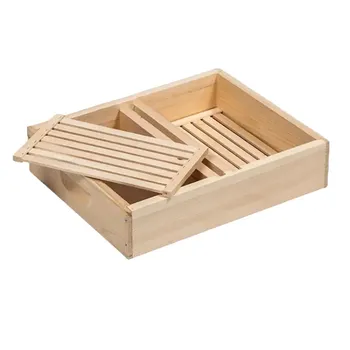
A bee colony typically needs 50–80 pounds of stored honey—or an equivalent sugar-based reserve—to survive from the end of fall brood rearing until spring nectar becomes available. Strong colonies commonly require about 60–80 pounds, although the exact amount depends on colony strength, climate, hive design, and the length of the forage gap. Hive-top and bucket feeders help beekeepers provide liquid syrup efficiently before cold weather limits feeding and foraging.
The central requirement is adequate carbohydrate storage before winter. Feeders make supplemental feeding faster and less disruptive, but liquid syrup should generally be provided before sustained cold conditions; fondant or hard sugar is more suitable when bees cannot safely process liquid feed.
How Much Food Does a Colony Need?
The Practical Winter-Store Range
A useful planning range is 50–80 pounds of honey or heavy sugar syrup equivalent per colony.
For a strong colony, targeting approximately 60–80 pounds provides a more conservative reserve through winter and into early spring. The lower end may be adequate in shorter or milder winters, while longer winters and limited early forage increase the need for stores.
What the Reserve Supports
Winter stores provide the colony’s primary carbohydrate energy while bees remain clustered and external nectar is unavailable.
Adequate reserves also support the colony as it begins raising brood before spring nectar flows are fully established. In addition to carbohydrates, colonies generally need pollen reserves for protein and other nutrients; a commonly cited target is at least two full frames of pollen.
Estimating Stores by Hive Weight
Total hive weight includes the bees, honey or syrup, frames, boxes, and other equipment. As a broad field reference, a fully prepared colony may weigh approximately 130–150 pounds, depending on the hive configuration and local conditions.
A beekeeper can also perform a simple lift test using the hive handle. If the rear of the lowest hive body is difficult to lift or tilt forward, the colony may have substantial stores; if it lifts easily, supplemental feeding may be necessary.
How Hive Feeders Help Build Winter Reserves
Hive-Top Feeders Increase Feeding Capacity
Hive-top feeders, including inverted pails and jar systems with perforated lids, are installed above the inner cover or directly over the upper hive area.
Their position allows bees to access syrup inside the hive while reducing the need for repeated hive opening. This is especially useful for apiaries feeding multiple colonies or delivering larger volumes before winter.
Bucket Feeders Support Efficient Apiary Operations
Bucket feeders are practical when colonies need substantial quantities of syrup in a short preparation window.
They can help distributors, commercial beekeepers, and apiary operators standardize feeding equipment across many hives. Consistent feeder formats also simplify procurement, replacement, inventory management, and field servicing.
Feeders Reduce Disruption
Feeding above the colony helps limit disturbance during supplemental feeding. It can also reduce the exposure associated with repeatedly opening brood boxes to add small quantities of feed.
This does not eliminate all management risks, but it makes it easier to provide reserves while preserving the colony’s internal organization.
In-Hive Feeding Supports Seasonal Nutrition
Feeders are useful not only for winter preparation but also during nectar shortages and early spring.
Liquid sugar syrup supplies carbohydrates, while protein supplements such as pollen patties can support brood development when natural pollen is scarce. This nutritional support is particularly important as the colony develops winter bees and resumes queen egg-laying.
Choosing the Right Feed During Winter
Use Liquid Syrup Before Sustained Cold
Liquid syrup is most useful while bees can access it and evaporate its excess moisture effectively.
Beekeepers should use hive-top or bucket feeders to build stores before cold weather sets in, rather than relying on liquid feeding after the colony has entered a tight winter cluster.
Use Fondant or Hard Sugar in Cold Conditions
When temperatures are too low for effective liquid feeding, fondant or hard sugar candy placed over the top frames can provide carbohydrates directly above the cluster.
This format avoids adding the same level of internal moisture associated with liquid syrup and is better suited to emergency winter feeding or late-season reserve supplementation.
Understanding the Trade-offs
Liquid Feeders Are Not a Complete Winter Strategy
Hive feeders are highly effective for building reserves, but they cannot compensate for poor timing. Supplying large amounts of liquid syrup during cold weather can create handling and moisture-management problems.
The main objective is to finish winter preparation early enough that bees can convert the feed into stable stores before sustained low temperatures arrive.
Overfeeding Can Create Management Problems
Feeding should be based on an assessment of existing stores, colony strength, and seasonal conditions.
Adding feed without evaluating the hive can reduce usable space, interfere with colony organization, or lead to unnecessary product consumption. The goal is an adequate reserve—not simply the maximum possible volume.
Feeding Does Not Replace Colony Assessment
A feeder cannot correct every wintering risk. Beekeepers must also consider queen status, colony health, population strength, pollen availability, hive condition, and protection from excessive moisture or exposure.
Weight checks and visual inspections, when weather permits, help determine whether additional feed is actually required.
Equipment Quality Affects Results
Leaking containers, poorly fitted lids, blocked access points, or unstable feeder placement can waste syrup and increase colony disturbance.
For commercial or wholesale purchasing, feeder compatibility, durability, replacement availability, and delivery reliability matter as much as nominal capacity. A consistent product portfolio and responsive fulfillment process can reduce delays during narrow winter-preparation windows.
How to Apply This to Your Apiary
Use the following priorities when planning winter feeding and feeder procurement:
- If your primary focus is winter survival: Aim for approximately 50–80 pounds of honey or equivalent stores, with strong colonies commonly targeted closer to 60–80 pounds, and confirm reserves through hive weight or a lift test.
- If your primary focus is efficient pre-winter feeding: Use hive-top or bucket feeders to deliver liquid syrup in volume before sustained cold weather, minimizing repeated hive disturbance.
- If your primary focus is cold-weather supplementation: Keep fondant or hard sugar available for placement over the cluster when liquid syrup is unsuitable.
- If your primary focus is commercial apiary operations: Standardize feeder types and source dependable equipment with rapid fulfillment, replacement support, and consistent availability.
- If your primary focus is spring buildup: Combine carbohydrate feeding with appropriate protein supplementation when natural nectar and pollen sources are insufficient.
With accurate store assessment, correctly timed feeding, and dependable equipment, beekeepers can give colonies a stronger nutritional foundation for winter and spring.
Summary Table:
| Feeding Need | Recommended Amount | Best Method |
|---|---|---|
| Winter honey store | 50-80 lbs per colony | Stored honey or heavy syrup |
| Strong colonies | 60-80 lbs | Hive-top or bucket feeders |
| Cold weather feeding | Fondant or hard sugar | Place above cluster |
| Spring buildup | Carbs + protein | Syrup and pollen patties |
Need Reliable Feeding Equipment for Your Apiary?
At HONESTBEE, we supply the full spectrum of beekeeping tools, machinery, and equipment, including high-quality hive feeders. Our comprehensive wholesale offering supports commercial apiaries and distributors with fast delivery, dedicated service, and expert advice. Whether you need hive-top feeders for efficient pre-winter feeding or durable bucket feeders for large-scale operations, we have you covered.
Contact us today to discuss your requirements and get a tailored quote.
Related Products
- Professional Hive Top Bee Feeder for Beekeeping
- Premium Wood Hive Top Feeder with Floating Rafts for Langstroth Hives
- HONESTBEE Professional Hive Top Bee Feeder Feeding Solution
- HONESTBEE Square Top Hive Bee Feeder Top Bee Feeder
- Professional Hive Front Entrance Bee Feeder
People Also Ask
- Do I need an inner cover with a hive top feeder? Optimize Your Hive Setup for Healthy Bees
- What is a hive top feeder? A Guide to Efficient, Low-Stress Beekeeping
- What is a hive top feeder, and how does it work? A Complete Guide to Efficient In-Hive Feeding
- What are the characteristics, advantages, and disadvantages of hive top feeders? Optimize Your High-Volume Feeding
- How does a hive top feeder work? Optimize Your Apiary's Nutrition and Security