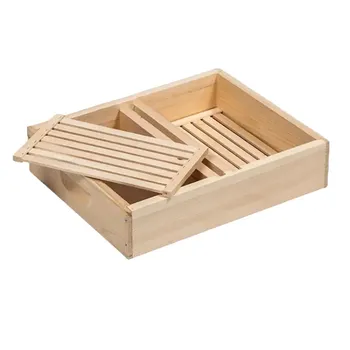
The scale of your operation is the primary determinant in choosing a feeding method. For beekeepers managing a small number of hives, closed feeding is the optimal choice because it offers superior protection and the labor remains manageable. Conversely, large-scale commercial apiaries almost exclusively rely on open feeding because the time and labor required to maintain individual feeders for hundreds of hives becomes logistically prohibitive.
While closed feeding offers superior control and protection for individual colonies, it is labor-intensive. Open feeding sacrifices biosecurity for efficiency, making it a practical necessity for large-scale operations where individual hive management is unsustainable.
The Strategy for Small Apiaries: Closed Feeding
Prioritizing Protection
Closed feeding is generally the standard for hobbyists or small-scale sideliners. This method isolates the feed within the hive, significantly reducing the risk of attracting robbers from other colonies or wild pests.
Manageable Labor Requirements
When you are managing a limited number of hives, the time investment to open each hive and refill a feeder is negligible. This process also provides a regular opportunity to monitor feed levels and colony health closely.
Cost Implications
For a small group of hives, the capital cost of purchasing individual frame or top feeders is low. The durability and protection they offer generally outweigh the initial expense.
The Strategy for Commercial Apiaries: Open Feeding
Solving the Labor Bottleneck
In large commercial operations, the primary constraint is time. Opening hundreds or thousands of hives to refill individual feeders is physically impossible for most commercial teams.
Efficiency at Scale
Open feeding allows a beekeeper to provide resources to a massive volume of bees simultaneously. This creates an economy of scale that is essential for profitability in large operations.
Equipment Reduction
This method eliminates the need to buy, store, and maintain thousands of individual feeder units. Instead, the focus shifts to maintaining a few large-capacity central feeding stations.
Understanding the Trade-offs
The Hidden Costs of Efficiency
While open feeding saves labor, it introduces significant biological risks. It increases the likelihood of spreading disease between colonies, as bees from different hives mix at the feeding source.
Pest Vulnerability
Open feeding stations are a beacon for pests, including wasps, ants, and raccoons. Commercial beekeepers must accept this increased pressure as a cost of doing business, whereas a small-scale beekeeper can avoid it entirely with closed systems.
Precision vs. Speed
Closed feeding guarantees that a specific weak colony receives the nourishment it needs. Open feeding relies on the strength of the foraging force, meaning stronger hives often take the lion's share of the resources.
Making the Right Choice for Your Goal
Select the method that aligns with your available labor and risk tolerance.
- If your primary focus is maximizing the health and security of a few hives: Stick to closed feeding to prevent disease spread and robbing while ensuring precise resource allocation.
- If your primary focus is the logistical management of a high-volume commercial yard: Utilize open feeding to drastically reduce labor hours, accepting the higher biological risks as a necessary trade-off.
Your choice ultimately balances the value of your time against the biosecurity of your bees.
Summary Table:
| Feature | Closed Feeding (Small Apiaries) | Open Feeding (Commercial) |
|---|---|---|
| Primary Goal | Colony Security & Precision | Labor Efficiency & Scale |
| Labor Intensity | High (Individual hive refills) | Low (Central stations) |
| Disease Risk | Low (Isolated feeding) | High (Cross-contamination) |
| Robbing Risk | Minimal | Significant |
| Cost per Unit | Higher (Individual feeders) | Lower (Bulk equipment) |
| Best For | Hobbyists & Sideliners | Large-scale Commercial Yards |
Scaling Your Beekeeping Operation with HONESTBEE
Whether you are a growing distributor or managing a large-scale commercial apiary, choosing the right feeding strategy is only half the battle—having the right equipment is the other. At HONESTBEE, we specialize in providing high-volume wholesale solutions designed for efficiency and durability.
From automated honey-filling machines and hive-making hardware to a full spectrum of beekeeping tools and consumables, our portfolio is built to support the rigorous demands of the modern industry. We empower our partners with the machinery and cultural merchandise needed to thrive in a competitive market.
Ready to optimize your yield and streamline your labor? Contact our experts today to discover how HONESTBEE can equip your business for success.
Related Products
- HONESTBEE Entrance Bee Feeder Efficient Hive Front Liquid Feeding Solution for Beekeeping
- HONESTBEE Professional Hive Top Bee Feeder Feeding Solution
- Classic Boardman Entrance Bee Feeder Hive Front Feeding Solution
- In-Hive Dual Compartment Frame Bee Feeder for Targeted Colony Nutrition
- Rapid Bee Feeder White Plastic 2L Round Top Feeder for 8 or 10-Frame Bee Hives
People Also Ask
- What types of bee feeders are available for beginners? Start with the Simple Entrance Feeder
- What are the advantages and disadvantages of using an entrance feeder for bees? Balance Convenience and Hive Security.
- What is a bee entrance feeder and what are its drawbacks? Essential Guide to Hive Security and Feeding Efficiency
- How does a bee entrance feeder work? A Simple Guide to Convenient Hive Feeding
- How to make an entrance feeder for bees? A DIY Guide for Safe & Effective Feeding