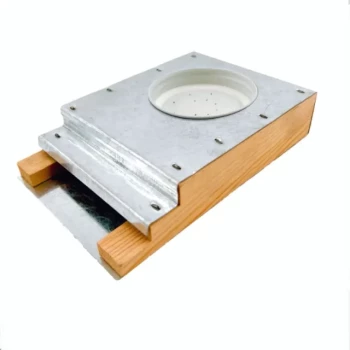
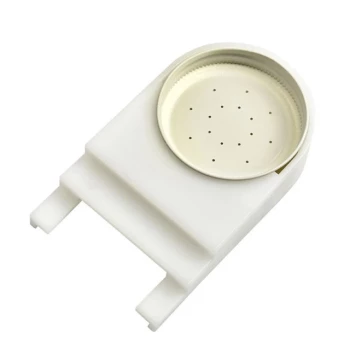
Entrance feeders, often referred to as Boardman feeders, are external feeding devices consisting of a wooden or plastic tray inserted into the hive entrance and an inverted jar that holds syrup. They are characterized by their extreme ease of use, allowing beekeepers to monitor syrup levels and refill the container without opening the hive or disturbing the colony. However, despite their convenience for the beekeeper, they present significant disadvantages regarding colony security and accessibility during cold weather, leading many experienced apiarists to avoid them for general feeding.
Core Takeaway While entrance feeders offer the highest level of convenience for the beekeeper, they often compromise the safety of the colony. Because they position food at the hive's exterior, they are prone to inciting robbing behavior from other pests and become inaccessible to bees when temperatures drop below the low 50s Fahrenheit.
The Mechanics and Appeal of Entrance Feeders
Design Simplicity
Entrance feeders consist of two primary components: a feeding tray that slides into the hive entrance and an inverted reservoir (usually a glass canning jar or plastic container).
The syrup creates a vacuum seal in the inverted jar, allowing bees to access the liquid through holes in the lid or base as needed.
Non-Intrusive Maintenance
The most significant advantage is that they minimize hive disturbance.
A beekeeper can refill the feeder without smoking the bees, donning a protective suit, or removing the hive cover.
Visual Monitoring
Because the reservoir sits outside the hive body, it provides instant visual confirmation of feed levels.
This allows the beekeeper to gauge how quickly the colony is consuming resources without any physical intervention.
Critical Operational Flaws
The Temperature Barrier
Entrance feeders are fundamentally flawed in cooler climates or shoulder seasons.
Honeybees form a tight cluster to conserve heat when temperatures drop; they will not break this cluster to travel to the hive entrance for food.
Consequently, bees can starve to death even with a full entrance feeder just inches away if the temperature dips into the low 50s Fahrenheit.
Security and Robbing Risks
Placing syrup at the front door of the hive broadcasts the scent of sugar to the outside world.
This frequently encourages robbing behavior from stronger neighboring colonies, wasps, hornets, and ants.
Unlike internal feeders, which require intruders to bypass the colony's guard bees to access food, entrance feeders offer a free meal at the perimeter.
Limited Capacity
Most entrance feeders rely on standard quart-sized jars, which have a small capacity compared to internal frame feeders.
This requires more frequent refilling, negating some of the labor-saving benefits during periods of heavy feeding.
Understanding the Trade-offs
Pest Attraction and Disease
While not strictly "open feeding" (like a bucket in a field), entrance feeders share similar risks by congregating insects at a shared external point.
This can attract non-target pests and potentially increase the risk of disease transmission if bees from different apiaries visit the specific feeder.
The "Water Only" Exception
Despite their poor reputation for syrup feeding, entrance feeders can be repurposed effectively.
Many experienced beekeepers who shun them for food will still use them as a distinct water source, particularly during hot summers when bees need water to cool the hive.
Making the Right Choice for Your Goal
While popular with beginners, entrance feeders are rarely the most effective tool for colony nutrition.
- If your primary focus is rapid colony growth: Avoid entrance feeders; use internal frame feeders that hold more syrup and keep the feed warm and accessible.
- If your primary focus is cold-weather feeding: Do not use entrance feeders, as the bees will not access them; utilize internal division board feeders closer to the cluster.
- If your primary focus is hydration: Use an entrance feeder filled with clean water during the summer to prevent bees from seeking water in neighbors' pools.
- If your primary focus is preventing robbing: Switch to internal feeding methods immediately if you notice fighting or frantic activity at the hive entrance.
Use the tool that serves the biology of the bee, not just the convenience of the keeper.
Summary Table:
| Feature | Description | Key Advantage / Disadvantage |
|---|---|---|
| Design | Wooden/plastic tray with inverted jar | Simple to install and monitor visually |
| Accessibility | Located at the hive entrance | Easy for beekeepers; inaccessible to bees in cold weather |
| Maintenance | Non-intrusive external refilling | Zero hive disturbance; minimizes stings |
| Capacity | Typically 1-quart reservoir | Small volume; requires frequent refilling |
| Security | Exterior feeding point | High risk of attracting wasps, ants, and robbers |
| Best Use | Hydration or summer feeding | Ideal for water; risky for syrup in shoulder seasons |
Scale Your Beekeeping Success with HONESTBEE
Choosing the right tools is the difference between a thriving colony and a struggling one. At HONESTBEE, we specialize in empowering commercial apiaries and distributors with high-performance beekeeping equipment. From essential consumables and specialized hardware like hive-making machines to precision honey-filling lines, our comprehensive wholesale catalog is designed to optimize your productivity.
Ready to enhance your operation with durable, professional-grade equipment? Contact HONESTBEE today to discuss your bulk requirements and discover how our industry expertise can drive your business growth.
Related Products
- HONESTBEE Entrance Bee Feeder Professional Hive Nutrition Solution for Beekeeping
- HONESTBEE Entrance Bee Feeder Efficient Hive Front Liquid Feeding Solution for Beekeeping
- Boardman Entrance Bee Feeder Durable Galvanized Steel and Wood Construction for Beekeeping
- Classic Boardman Entrance Bee Feeder Hive Front Feeding Solution
- Professional Hive Front Entrance Bee Feeder
People Also Ask
- What types of bee feeders are available for beginners? Start with the Simple Entrance Feeder
- What are the advantages and disadvantages of using an entrance feeder for bees? Balance Convenience and Hive Security.
- What is a bee entrance feeder and what are its drawbacks? Essential Guide to Hive Security and Feeding Efficiency
- How does a bee entrance feeder work? A Simple Guide to Convenient Hive Feeding
- How to make an entrance feeder for bees? A DIY Guide for Safe & Effective Feeding