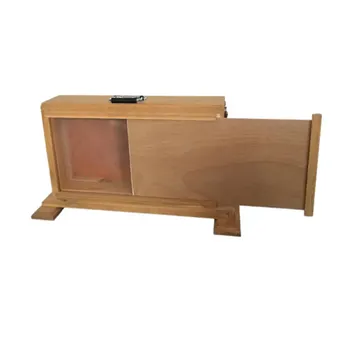
Install the inner cover with the recessed tray or raised-rim side facing upward. Place it directly on the uppermost hive body or honey super, beneath the outer cover. This orientation preserves the intended bee space, reduces direct propolizing to the outer cover, and supports ventilation. For covers with a ventilation notch, position the notch toward the front and keep it unobstructed.
The standard installation is tray side up, notch toward the front, and outer cover above it. Wooden inner covers offer natural insulation and moisture absorption, while high-density plastic covers generally provide easier cleaning, better weather resistance, and longer service life in high-volume operations.
How to Install a Hive Inner Cover Correctly
Position the Recessed Side Up
The inner cover’s recessed tray side or raised rim should face upward, toward the outer cover. The flat side faces downward toward the frames.
This creates the intended clearance between the inner and outer covers and maintains proper bee space above the uppermost frames.
Keep the Ventilation Notch Toward the Front
If the inner cover has a half-moon, rectangular, or similar ventilation notch, orient it toward the front of the hive. The notch should remain open rather than being blocked by the outer cover.
This opening can support internal airflow and may also function as an auxiliary upper entrance, depending on the hive configuration.
Reverse the Orientation Only for Extra Clearance
Some beekeepers place the rimmed side downward when they need additional space above the frames. This can accommodate items such as pollen patties while still allowing the outer cover to be installed.
That is an application-specific adjustment, not the standard orientation for routine installation.
Remove It When Using a Hive-Top Feeder
A hive-top feeder occupies the position normally taken by the inner cover. The inner cover should therefore be removed completely while the feeder is in use.
Reinstall the inner cover after removing the feeder, using the standard tray-side-up orientation unless additional clearance is specifically required.
Why Orientation Matters in Apiary Operations
It Preserves Bee Space
Correct orientation maintains the designed overhead spacing inside the hive. Improper placement can create excessive gaps or insufficient clearance around the frames and covers.
Maintaining bee space helps reduce unwanted comb construction and makes inspections and cover removal more predictable.
It Reduces Propolis Problems
With the tray side correctly positioned, bees are less likely to cement the outer cover directly to the frames or inner-cover structure with propolis.
This can reduce the force required during opening and help protect wooden components from repeated damage during hive manipulation.
It Supports Ventilation
A properly positioned notch helps maintain airflow through the upper part of the hive. This is especially important when the outer cover is installed in a way that could otherwise obstruct the opening.
When replacing the cover, slide it into place carefully from the rear toward the front to move bees out of the way and avoid crushing them.
Wooden Inner Covers: Strengths and Requirements
Natural Insulation and Moisture Handling
Wooden inner covers provide natural thermal insulation and can absorb some moisture. These characteristics make them familiar and practical for conventional apiary systems.
They also fit well with wooden hive bodies, frames, and outer covers, making them a straightforward choice for operations that prioritize traditional materials.
Familiar Handling and Repairability
Wooden covers are easy for beekeepers to inspect, modify, and integrate with standard hive equipment. Flat-board designs can also provide a simple, cost-effective option.
Rimmed wooden covers offer a more structured design, but their construction and finish should be matched to the operating environment.
Maintenance Is Essential
Wood is vulnerable to rain and ambient moisture. Wooden inner covers and related wooden cover assemblies may require regular painting or protective finishing to reduce the risk of rot.
For distributors and resellers, this means the product offer should account for maintenance expectations, climate, and the customer’s willingness to perform seasonal upkeep.
Plastic Inner Covers: Strengths and Requirements
Easier Cleaning and Propolis Removal
High-density plastic inner covers are generally easier to clean and scrape than wooden alternatives. This is valuable for commercial apiaries where equipment must be processed quickly between uses.
Their non-porous surface can also simplify routine sanitation and reduce labor associated with removing accumulated propolis.
Weather Resistance and Long-Term Durability
Plastic offers strong resistance to weathering and does not rot like untreated or poorly maintained wood. This supports long service life, particularly in high-volume apiary operations with frequent handling.
For wholesalers and B2B buyers, plastic can be attractive where reduced maintenance and consistent replacement cycles are more important than traditional material preference.
Maintenance Is Lower, Not Zero
Plastic covers are largely maintenance-free, but they can bend or bow over time. Storage conditions, heat exposure, and repeated use should therefore be considered when evaluating product quality.
A reliable plastic design should retain its shape well enough to preserve proper cover fit and bee-space performance.
Understanding the Trade-offs
Insulation Versus Operational Efficiency
Wood provides natural insulation and moisture absorption, while plastic emphasizes cleanability, weather resistance, and durability. Neither material is universally superior; the better choice depends on climate, labor availability, apiary scale, and handling frequency.
Commercial operations often place greater value on fast cleaning and consistent service life, whereas smaller or traditional apiaries may prefer wood’s familiar performance.
Maintenance Versus Initial Simplicity
Wooden covers may be economical and easy to repair, but they require protective maintenance to prevent deterioration. Plastic reduces painting and rot concerns but may require replacement if warping compromises fit.
The purchasing decision should consider total operating cost, not only the initial unit price.
Avoid Confusing Inner and Outer Cover Requirements
An inner cover is not a substitute for a weather-protective outer cover. Telescoping metal-covered wooden tops are widely used where wind resistance is important because they help prevent the outer cover from dislodging.
Extended polystyrene covers can provide insulation, but they may degrade under continuous environmental exposure unless protected with suitable weather-resistant coatings.
Do Not Obstruct the Ventilation Opening
Even a correctly oriented inner cover can perform poorly if the outer cover blocks its notch. Check the complete cover assembly after installation to ensure the intended airflow path remains open.
This detail is particularly important when selecting compatible inner and outer covers from different suppliers.
Selecting Products for Apiary Customers
Match Material to Operating Scale
For high-volume apiaries, high-density plastic inner covers can reduce cleaning time and maintenance demands. For traditional operations, wooden covers may remain preferable because of their insulation, moisture-handling characteristics, and compatibility with existing equipment.
Distributors should offer both materials rather than treating the choice as one-size-fits-all.
Maintain Compatibility Across the Product Portfolio
Inner covers should be matched to the customer’s hive body dimensions, frame configuration, outer-cover design, and feeder system. A broad portfolio is more valuable when components are clearly specified for compatibility.
This helps resellers reduce ordering errors and provide a complete sourcing solution rather than selling isolated components.
Prioritize Consistent Supply and Technical Support
For commercial buyers, product reliability includes more than material selection. Accurate specifications, rapid response, dependable fulfillment, and clear installation guidance directly affect apiary productivity.
A supplier with deep product expertise can help customers select suitable wooden, plastic, ventilated, feeder-compatible, and weather-resistant cover systems.
How to Apply This to Your Project
Choose the material and configuration according to the customer’s operating environment, labor model, and equipment system.
- If your primary focus is correct installation: Place the inner cover directly above the uppermost hive body with the recessed tray or raised-rim side facing upward, and orient the ventilation notch toward the front.
- If your primary focus is high-volume apiary efficiency: Favor high-density plastic for easier cleaning, propolis removal, weather resistance, and reduced routine maintenance.
- If your primary focus is natural insulation and traditional equipment: Choose wooden inner covers, while planning for painting or protective maintenance to limit moisture-related deterioration.
- If your primary focus is feeder use: Remove the inner cover completely while a hive-top feeder is installed, then replace it after feeding.
- If your primary focus is dependable B2B sourcing: Work with a supplier offering compatible cover options, responsive technical support, rapid fulfillment, and a full apiary product range.
Correct orientation protects bee space; the right material choice improves the efficiency and economics of the entire apiary operation.
Summary Table:
| Aspect | Wooden Inner Cover | Plastic Inner Cover |
|---|---|---|
| Insulation | Natural, good | Less, but adequate |
| Moisture Absorption | Yes | No |
| Cleaning Ease | Harder | Easier |
| Weather Resistance | Needs painting | High |
| Durability | Good, but may rot | Long-lasting, may warp |
| Maintenance | High | Low |
| Best For | Traditional/small-scale | Commercial/high-volume |
Equip your apiary with the right covers. As a leading B2B supplier, HONESTBEE offers a full range of wooden and plastic inner covers, hive tools, and complete beekeeping solutions. Benefit from our competitive wholesale pricing, reliable supply, fast delivery, and expert support. Contact us today to source top-quality equipment and meet your customers' needs efficiently — Reach out now.
Related Products
- Inner Beehive Cover for Beekeeping Bee Hive Inner Cover
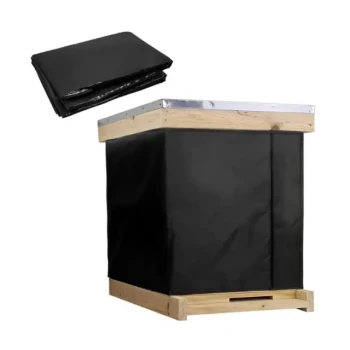
- Professional Insulated Winter Hive Wrap for Beekeeping
- Telescopic Beehive Outer Cover Lid Roof with Galvanised Sheeting for Langstroth Hive and Beehive Outer Cover
- Professional Insulated Plastic Bee Hives
- Professional Galvanized Steel Frame Rest for Beehives
People Also Ask
- What is the purpose of the inner cover in a beehive? A Key to Hive Health & Easy Management
- What is the function and placement of an inner cover in a beehive? Essential Hive Management Guide
- What is the purpose of the inner and outer covers in a beehive? Essential for Hive Health & Management
- What is a beehive's inner cover and how is it used? Essential Guide for Hive Insulation and Ventilation
- What are the functions of the inner and outer covers on a beehive? Essential Guide for Hive Protection and Management