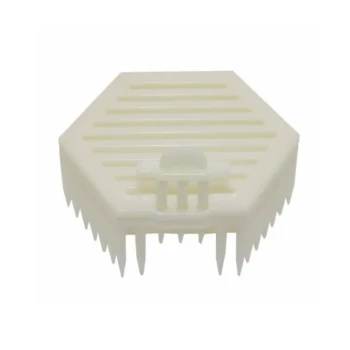
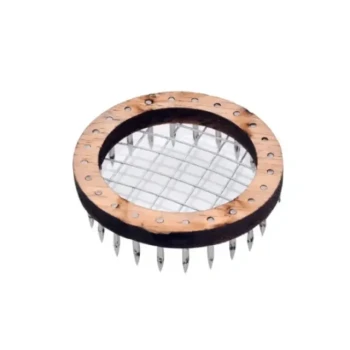
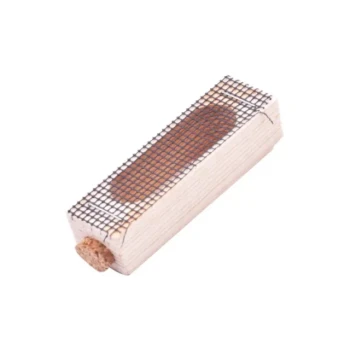
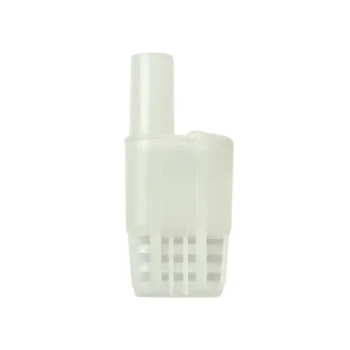
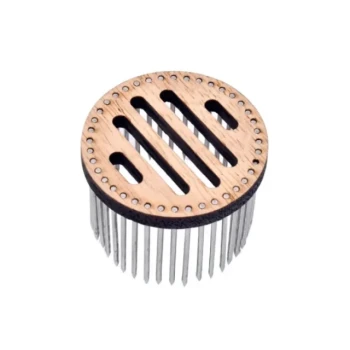
In field bee colony trials, the primary function of a specialized comb cage is to physically isolate specific sections of the honeycomb to control the environment for newly emerging worker bees. This isolation allows researchers to identify and mark specific cohorts of bees the moment they hatch, ensuring that subsequent data regarding their lifespan and survival rates is accurate and free from external interference.
The Core Insight Scientific rigor in field trials relies on the ability to distinguish between experimental effects and environmental noise. The specialized comb cage acts as a control mechanism, ensuring that observed outcomes—such as changes in longevity—can be directly attributed to pharmaceutical treatments rather than random hive variables.
The Mechanics of Isolation
Creating a Controlled Micro-Environment
The specialized comb cage is placed directly over specific areas of the honeycomb containing capped brood.
By enclosing this area, researchers prevent the general colony population from interacting with the brood frames. This creates a sterile observation zone where the variables are strictly controlled.
Ensuring Accurate Cohort Marking
The primary logistical benefit of the cage is the management of newly emerged bees.
Because the cage retains the bees immediately upon hatching, technicians can easily access, count, and mark them. This establishes a "known age" cohort, which is fundamental for accurate timeline tracking in longevity studies.
Application in Pharmaceutical Trials
Evaluating Side Effects
The primary reference highlights the use of these cages specifically when evaluating the side effects of treatments like nanoemulsions.
Without the cage, it is difficult to determine if a bee's reduced lifespan is due to the chemical treatment or normal hive attrition. The cage excludes external interference, isolating the treatment as the primary variable.
Linking Cause and Effect
To generate valid data on survival rates, researchers must minimize "confounding variables."
The comb cage ensures that the data collected reflects a direct causal relationship between the pharmaceutical application and the bee's health. It removes the uncertainty of outside predation, drift between hives, or resource competition during the critical emergence phase.
Understanding the Trade-offs
Precision vs. Natural Behavior
While the comb cage is excellent for data integrity, it introduces an artificial barrier within the hive.
Restricting movement forces the bees to remain in a specific area, which differs from their natural instinct to roam and nurse immediately. Researchers must balance the need for precise data against the potential stress this confinement places on the colony.
Specificity of Equipment
It is critical not to confuse this device with other field tools, such as specialized feeding boxes.
While feeding boxes are used for localization and trapping by allowing free feeding, the comb cage is a tool of exclusion. Its value lies in what it keeps out, whereas feeding tools are designed to draw in.
Making the Right Choice for Your Goal
To determine if a specialized comb cage is required for your specific trial, consider your primary data objectives.
- If your primary focus is Pharmaceutical Efficacy: You must use a comb cage to isolate the brood, ensuring that survival data is directly linked to the treatment (e.g., nanoemulsions) and not environmental noise.
- If your primary focus is Age-Based Longevity: You should use the cage to capture and mark bees immediately upon emergence to establish a verifiable baseline for the age of your test subjects.
The specialized comb cage converts a chaotic natural hive into a quantifiable laboratory environment.
Summary Table:
| Feature | Purpose in Field Trials | Benefit to Researchers |
|---|---|---|
| Physical Isolation | Encloses specific honeycomb sections | Controls the micro-environment for emerging bees |
| Cohort Marking | Retains bees immediately upon hatching | Ensures accurate age-tracking and longevity data |
| Variable Control | Excludes external hive interference | Directly links health outcomes to pharmaceutical treatments |
| Data Integrity | Minimizes confounding variables | Provides scientifically rigorous and quantifiable results |
Elevate Your Apiary Operations with HONESTBEE
Precision is the backbone of successful beekeeping and scientific research. At HONESTBEE, we empower commercial apiaries and distributors with the high-quality tools necessary for both professional honey production and rigorous field trials.
Whether you are scaling your business with our honey-filling machines or outfitting your team with specialized beekeeping equipment, our comprehensive wholesale offering ensures you have the reliable hardware and industry consumables needed to succeed.
Ready to optimize your apiary or distribution network? Contact us today to discover how HONESTBEE’s professional machinery and cultural merchandise can add value to your business.
References
- A. S. El Roby, Arwa Abdel Hakeem. Bioactivity of essential oils in nanoemulsions formulation against Varroa Mite and their selectivity for Apis mellifera under laboratory and colony conditions. DOI: 10.21608/jsasj.2023.334511
This article is also based on technical information from HonestBee Knowledge Base .
Related Products
- Hexagonal Direct Comb Introduction Queen Bee Cage
- Wood and Mesh Push-In Queen Cage
- Plastic Honey Comb Frames Cassette Box for Honey
- Heart-Shaped Comb Honey Frame and Honeycomb Cassette
- Durable Galvanized Steel Spring Queen Bee Cage
People Also Ask
- What is the technical purpose of using an introduction cage? Ensure Safe Queen Bee Integration and Colony Acceptance
- How does the introduction cage method differ from standard cage insertion for queen bees? Best Acceptance Strategies
- What is the mechanism of action for using temporary queen bee cages? Master Successful Queen Introduction
- Why are specialized queen bee cages used for the banking of mated queen bees? Maximize Commercial Apiary Storage Efficiency
- What is the importance of specialized queen introduction cages and tools? Secure High-Value Genetics & Scalability.