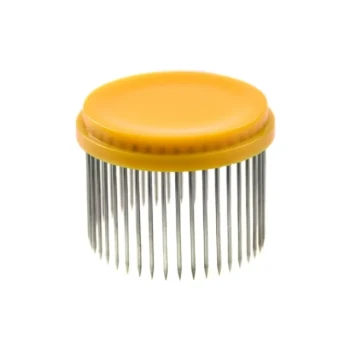
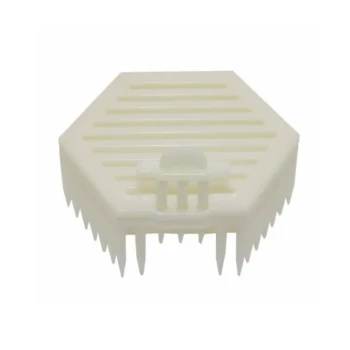
Queen cages serve as the fundamental interface for safe biological integration within a hive. Their primary function is to act as a temporary physical barrier that protects a foreign queen from immediate worker aggression while simultaneously allowing for the gradual exchange of pheromones necessary for colony acceptance.
The Core Insight A queen cage is not merely a container; it is an acclimation tool that balances two conflicting needs: the queen's need for immediate physical safety and the colony's need for gradual chemical habituation to a new leader.
The Mechanics of Introduction
Physical Isolation and Protection
When a new queen is introduced to an established colony, she is viewed as a foreign intruder. Without intervention, the colony’s worker bees would instinctively attack and kill her.
The queen cage provides a sturdy mesh or screen barrier. This physical isolation ensures the queen remains unharmed by aggressive workers during the initial period of high tension.
Pheromone Integration and Odor Exchange
Honeybee colonies rely on chemical signals, or pheromones, to maintain social order and recognize their leader. A new queen carries a foreign "scent" that must be integrated into the colony's collective identity.
The design of the cage allows air to flow freely, facilitating odor exchange. Over several days, the new queen's pheromones circulate through the hive, slowly overwriting the previous chemical signature and signaling her presence to the workers without triggering a defensive response.
Beyond Introduction: Brood Control Applications
Artificial Brood Breaks
While introduction is the primary use, the restrictive nature of queen cages is also utilized for pest management. By confining the queen, beekeepers can stop her from laying eggs on brood combs.
Interrupting Parasitic Lifecycles
This restriction creates an artificial "brood break," which is highly effective against parasites like Tropilaelaps mites and Varroa mites. Since these parasites rely on sealed brood cells to reproduce, preventing the availability of larvae effectively breaks the mite's life cycle.
Understanding the Trade-offs
The Timing of Release
The primary risk associated with queen cages is the timing of the release. Releasing a queen before the colony has fully accepted her pheromones will result in her rejection and death.
Research into acoustic signals suggests that colony sounds transition from "anxious" to "normal" over a period of nine to ten days. Rushing this process negates the function of the cage.
Impact on Colony Momentum
While caging is necessary for introduction or pest control, it inevitably halts egg production. Extended confinement effectively pauses the colony's growth, which can be a strategic disadvantage if maximized population growth is the immediate goal.
Making the Right Choice for Your Goal
To utilize queen cages effectively, align your usage with your specific colony management objectives:
- If your primary focus is Safe Introduction: Ensure the cage remains closed until the colony's aggression subsides and pheromone acclimatization is complete, often requiring several days of patience.
- If your primary focus is Pest Management: Utilize the cage to restrict the queen's movement long enough to create a brood break, starving parasites that depend on larvae for reproduction.
The queen cage is the critical control point that converts a potential biological conflict into a successful transition of power.
Summary Table:
| Function | Mechanism | Key Benefit |
|---|---|---|
| Physical Protection | Mesh/Screen barrier | Prevents worker bees from attacking the foreign queen |
| Pheromone Integration | Controlled air flow | Allows the hive to acclimate to the new queen's scent |
| Pest Management | Brood break creation | Disrupts the reproductive cycle of Varroa and Tropilaelaps mites |
| Social Transition | Temporary confinement | Converts biological conflict into a successful colony leadership change |
Elevate Your Beekeeping Operations with HONESTBEE
At HONESTBEE, we specialize in empowering commercial apiaries and distributors with the professional tools needed for high-yield success. Whether you are scaling your honey production or supplying the next generation of beekeepers, our comprehensive wholesale portfolio has you covered.
Why partner with us?
- Full Spectrum Supply: From precision-engineered queen cages and hive-making machinery to honey-filling systems.
- Essential Consumables: A wide array of reliable industry supplies to keep your colonies thriving.
- Cultural Merchandise: Unique honey-themed merchandise to diversify your retail offering.
Ensure seamless queen transitions and peak hive health with the industry's most trusted equipment. Contact us today to discuss your wholesale needs and see how our expertise can grow your business!
References
- Denis Vojt, Nebojša Nedić. THE EFFECT OF THE ORIGIN OF THE QUEEN BEES AND THEIR INTERACTION WITH SURROUNDINGS ON THE DEGREE OF VARROA INFESTATION OF A BEE COLONY. DOI: 10.7251/agreng2001061n
This article is also based on technical information from HonestBee Knowledge Base .
Related Products
- Durable Galvanized Steel Spring Queen Bee Cage
- Classic Wooden and Mesh California Queen Cage
- Professional Queen Bee Introduction and Transport Cage
- Professional Queen Cage with Sliding Gate and Feeder Plug
- Professional Multi-Compartment Queen Cage with Sliding Lid
People Also Ask
- Why are specialized queen bee cages used for the banking of mated queen bees? Maximize Commercial Apiary Storage Efficiency
- What is the mechanism of action for using temporary queen bee cages? Master Successful Queen Introduction
- What is the step-by-step process for installing a queen bee's cage onto a frame? Ensure Hive Acceptance Safely
- What is the optimal placement for a queen bee cage? Essential Strategies for Successful Re-queening
- What are the advantages and disadvantages of introducing a queen bee by embedding the cage? Boost Your Queen Acceptance