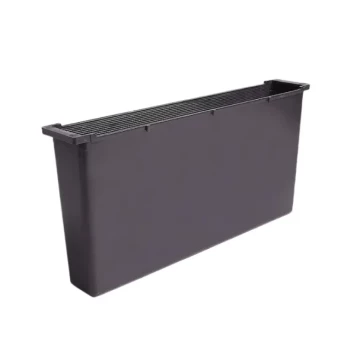
The entrance feeder is defined by its simplicity and external visibility. Its primary advantage is that it allows you to monitor feed levels at a glance and refill the jar without ever opening the hive or disturbing the bees. However, this external placement is also its greatest weakness, as it exposes the syrup to freezing temperatures and invites robbing from neighboring colonies.
Entrance feeders provide an inexpensive, low-disturbance method for feeding, but they require careful timing to be effective. While excellent for spring stimulation, their exposed nature makes them risky during freezing weather or periods of high robbing activity.
The Strategic Advantages
An entrance feeder consists of a jar (often a standard mason jar) inverted over a tray that slides directly into the hive's entrance. This design offers specific benefits for hive management.
Zero-Disturbance Monitoring
Because the jar sits outside the hive, you have immediate visual confirmation of how much feed remains.
You do not need to smoke the bees, lift the cover, or crack the propolis seal to check levels. This is the primary benefit cited by most experts.
Ease of Replenishment
Refilling the feeder is as simple as unscrewing the empty jar and replacing it with a full one.
This allows you to provide continuous nutrition without disrupting the colony's internal temperature or organization.
Cost and Utility
These feeders are generally inexpensive compared to complex internal hive feeders.
They are also particularly effective for providing water in the spring, helping the colony hydrate without traveling long distances.
Understanding the Trade-offs
While convenient, the entrance feeder introduces risks that are directly related to its external design. You must weigh these disadvantages against the convenience factors.
Vulnerability to Freezing
The most significant environmental drawback is the lack of insulation.
Because the jar is exposed to the elements rather than the warmth of the cluster, syrup is highly likely to freeze during cold months. This renders the feed inaccessible exactly when the bees might need it most.
Increased Risk of Robbing
Placing sugar syrup at the front door of a hive acts as a lure for other insects.
During a "dearth" (a period with no natural nectar), the scent of the syrup can attract wasps, ants, and robber bees from stronger hives. These intruders may overwhelm the colony defending the entrance.
Entrance Congestion
The feeding tray slides into the entrance, which physically narrows the opening available for the bees.
This can create a bottleneck, potentially blocking traffic or making it difficult for the colony to defend against the very pests the feeder attracts.
Making the Right Choice for Your Goal
The decision to use an entrance feeder depends largely on the season and the specific needs of your apiary.
- If your primary focus is spring build-up: This is an excellent choice for providing water or light syrup to stimulate brood rearing without chilling the brood nest.
- If your primary focus is winter survival: Avoid this feeder type; the syrup will likely freeze, and you should use an internal feeder instead.
- If your primary focus is preventing robbing: Do not use this feeder during a nectar dearth, as the external scent will attract aggressive competitors.
Select the right tool for the season to ensure your bees get the nutrition they need without unnecessary risk.
Summary Table:
| Feature | Advantage | Disadvantage |
|---|---|---|
| Monitoring | External jar allows instant visual checks | No internal hive climate feedback |
| Maintenance | Refill without opening the hive or smoke | Potential entrance congestion/bottlenecks |
| Climate | Ideal for spring stimulation & hydration | Syrup easily freezes in cold weather |
| Security | Low cost and easy setup | High risk of attracting robber bees/wasps |
| Disturbance | Zero disruption to the bee cluster | External scent lures pests during dearths |
Scaling Your Beekeeping Success with HONESTBEE
Choosing the right tools is critical for the health of your colonies and the profitability of your business. At HONESTBEE, we specialize in supporting commercial apiaries and professional distributors with a comprehensive range of high-quality wholesale solutions.
Whether you need specialized beekeeping tools, advanced honey-filling and hive-making machinery, or essential industry consumables, our portfolio is designed to enhance your operational efficiency. We help you navigate the complexities of hive management—from seasonal feeding strategies to large-scale honey production.
Ready to elevate your apiary equipment? Contact us today to explore our wholesale catalog and discover how HONESTBEE’s premium supplies can drive your success.
Related Products
- HONESTBEE Entrance Bee Feeder Professional Hive Nutrition Solution for Beekeeping
- Classic Boardman Entrance Bee Feeder Hive Front Feeding Solution
- Boardman Entrance Bee Feeder Durable Galvanized Steel and Wood Construction for Beekeeping
- HONESTBEE Entrance Bee Feeder Efficient Hive Front Liquid Feeding Solution for Beekeeping
- Professional Hive Front Entrance Bee Feeder
People Also Ask
- What types of bee feeders are available for beginners? Start with the Simple Entrance Feeder
- What are the advantages and disadvantages of using an entrance feeder for bees? Balance Convenience and Hive Security.
- What is a bee entrance feeder and what are its drawbacks? Essential Guide to Hive Security and Feeding Efficiency
- How does a bee entrance feeder work? A Simple Guide to Convenient Hive Feeding
- How to make an entrance feeder for bees? A DIY Guide for Safe & Effective Feeding