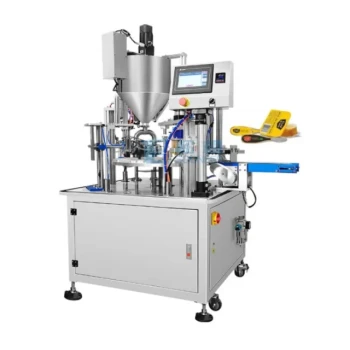
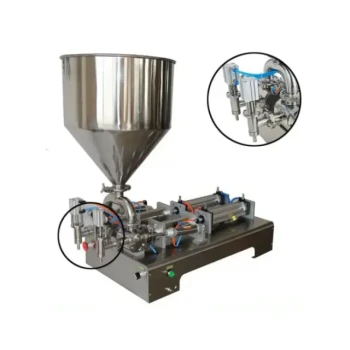
Integrating professional-grade honey-filling machines is the decisive step in transforming a manual beekeeping operation into a scalable commercial enterprise. By replacing manual labor with automated, high-precision flow control systems, producers immediately resolve critical bottlenecks regarding efficiency, hygiene, and product consistency.
The core value of this technology lies in standardization. It acts as the necessary bridge between small-scale activity and modern retail, enabling producers to guarantee weight accuracy and food safety standards that manual methods simply cannot achieve.
Validating the Shift to Automation
Solving the Scale Problem
Manual filling acts as a cap on growth. Professional-grade machines remove this limit by significantly increasing packaging throughput.
This speed allows large-scale annual harvests to be rapidly converted into finished goods. It is the technological foundation required to transition operations from bulk sales or home-based activities to a high-volume commercial model.
Achieving Absolute Consistency
In commercial retail, variance is a liability. Industrial filling machines utilize high-precision flow control systems to ensure weight consistency across every single unit.
This precision ensures that the volume of each bottle aligns perfectly with its labeled weight. It eliminates the irregularities inherent in manual packing, establishing the reliability required for supermarket supply chains.
Financial and Operational Efficiency
Eliminating High-Value Waste
Honey is a high-value commodity, and manual processing often leads to material loss through spills or drips.
Automated machines provide accurate dosage control, minimizing product giveaway and waste. By preventing overfilling and reducing drips, producers retain more sellable inventory from the same harvest volume.
Reducing Labor Dependency
Reliance on manual labor for filling creates efficiency gaps and potential bottlenecks.
By automating the quantitative filling process, producers can redirect human resources to other critical tasks. This shift maximizes operational efficiency, turning a labor-intensive chore into a streamlined industrial process.
Hygiene and Market Compliance
Preventing Secondary Contamination
One of the most critical advantages is the enhancement of food safety. Manual handling introduces risks of impurities and exposure to external air.
Professional machines often feature a closed-pipe design, which significantly limits contact between the honey and the environment. This effectively solves the issue of secondary contamination, ensuring the final product remains pure.
Meeting International Standards
To enter high-end domestic or international markets, products must meet rigorous sanitary and packaging benchmarks.
Automated lines ensure the process adheres to strict food safety and quality standards. This level of standardized hygiene is often a prerequisite for international trade and obtaining shelf space in major retail outlets.
Understanding the Trade-offs
Equipment Maintenance
While automation increases output, it introduces technical complexity. These machines utilize precision metering pumps that require regular calibration and maintenance to function correctly.
Initial Capital Expenditure
Transitioning to professional-grade equipment requires significant upfront investment compared to manual tools. Producers must weigh this cost against the long-term savings in reduced waste and labor.
Making the Right Choice for Your Goal
To maximize the value of this investment, align your equipment choice with your specific business objective:
- If your primary focus is Market Expansion: Prioritize machines that offer the highest level of standardization and hygiene to meet the rigorous entry requirements of supermarkets and international retailers.
- If your primary focus is Profit Margin: Focus on high-precision dosage control to eliminate overfilling and reduce material waste, directly improving your bottom line.
By securing the consistency and safety of your product, you do not just upgrade your equipment; you upgrade your market potential.
Summary Table:
| Key Feature | Manual Filling Process | Professional Automated Machines |
|---|---|---|
| Production Scale | Limited by manual labor speed | High throughput for mass commercial growth |
| Filling Accuracy | High variance & weight errors | High-precision flow control & consistency |
| Waste Management | Frequent spills and overfilling | Precision dosage control to eliminate waste |
| Hygiene Levels | Higher risk of contamination | Closed-pipe design meets food safety standards |
| Operational Cost | High labor dependency | High efficiency with lower labor requirements |
Scale Your Apiary with HONESTBEE
Ready to transform your beekeeping operation into a high-performance commercial enterprise? HONESTBEE specializes in serving commercial apiaries and distributors with a comprehensive wholesale portfolio.
We provide everything from high-precision honey-filling machines and hive-making hardware to a full spectrum of beekeeping tools and essential consumables. Our industrial solutions are designed to help you achieve international food safety standards, eliminate product waste, and maximize your profit margins.
Contact HONESTBEE today to upgrade your production line and see how our expertise in beekeeping machinery can drive your business success.
References
- Justyna Ziobrowska-Sztuczka. Awareness and possibilities for the use of crowdfunding by beekeepers in the Opolskie Voivodeship. DOI: 10.19195/2658-1310.29.5.2
This article is also based on technical information from HonestBee Knowledge Base .
Related Products
- Precision Durable Efficient HONESTBEE Rotary Honey Filling Machine
- Economy Small Honey Filling Machine Honey Bottle Filler Packaging Machine
- Fully Automatic Honey Filling Packaging Machine for Processing Line
- Commercial Rotary Honey Filling Machine for Production
- Semi Automatic Small Honey Bottle Filling Machine Honey Filler
People Also Ask
- How do high-precision honey filling machines ensure quality? Optimize Your Commercial Production with HONESTBEE
- How do honey filling and processing machines aid native bee product conservation? Boost Value with HONESTBEE Technology
- What is a key feature of the new generation of the honey filling machine? The Advanced Electronic Control Unit
- What are the common types of bottling machines used for honey? Choosing the Right Solution for Your Apiary
- What quality control role does professional honey filling equipment perform? Ensure Consistency and Product Stability