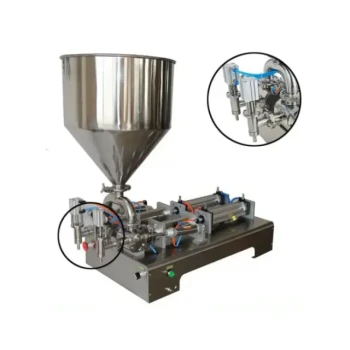
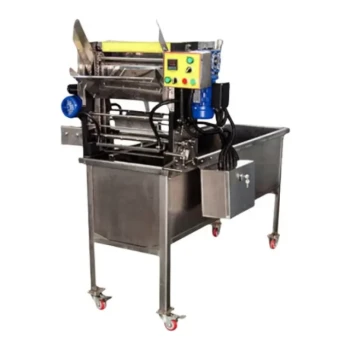
Automated honey-filling machinery addresses the complex intersection of high-viscosity fluid dynamics and strict food safety requirements. By utilizing high-precision quantitative pumps and hygienic-grade piping, these systems solve the fundamental difficulty of accurately moving a thick, sticky fluid while simultaneously eliminating biological contamination risks.
Core Takeaway Automated filling systems transform honey production from a variable, labor-intensive craft into a precise industrial process. They govern the physical flow of honey to ensure consistent weight and chemical stability while creating the sterile environment necessary for global market compliance.
Overcoming Physical and Chemical Constraints
Managing High Viscosity and Volume Accuracy
Honey is notoriously difficult to handle due to its high viscosity and resistance to flow. Manual filling often results in inconsistent volumes and significant product loss.
Automated machinery utilizes high-precision quantitative pumps and piston systems designed specifically for dense fluids. These components deliver exact net weights for every container, regardless of the honey’s thickness, drastically minimizing material waste.
Preserving Chemical Stability (HMF Control)
Honey is chemically sensitive; prolonged exposure to air or heat can increase Hydroxymethylfurfural (HMF) levels and degrade natural enzymes.
Industrial filling lines utilize high-speed, closed processing loops. By significantly reducing the time honey is exposed to oxygen during the bottling phase, these machines prevent oxidative degradation and limit HMF formation, preserving the product's nutritional value and sensory profile.
Countering Hygroscopic Properties
Honey is hygroscopic, meaning it naturally absorbs moisture from the surrounding air, which can lead to fermentation or spoilage.
Automated systems employ advanced sealing technologies and rapid processing to minimize environmental exposure. This ensures the moisture content remains stable and the final product maintains the airtightness required for long-term storage.
Ensuring Hygiene and Scalability
Eliminating Contamination Risks
Traditional manual harvesting and filling involve high human contact, which introduces risks of bacterial contamination and foreign impurities.
Modern machinery utilizes hygienic-grade piping and sterile filling environments. This creates a "closed" system where the honey moves from extraction to sealed bottle without direct human contact, ensuring the retention of beneficial microorganisms like lactic acid bacteria while excluding harmful pathogens.
Standardization for Global Markets
To enter international retail markets, producers must meet rigorous consistency standards that manual labor cannot guarantee.
Automated packaging machinery ensures that every unit meets identical specifications regarding weight, seal integrity, and hygiene. This standardization allows apiaries to transition from local sales to high-volume commercial production that meets international trade requirements.
Understanding the Trade-offs
Maintenance and Cleaning Complexity
While automation solves hygiene issues during production, the machinery itself requires rigorous sanitation protocols.
The hygienic piping and pumps must be cleaned thoroughly to prevent crystallization or cross-contamination between batches. Operators must adhere to strict maintenance schedules, as dried honey can seize precision components more easily than standard liquids.
Upfront Investment vs. Labor Flexibility
Automated lines significantly reduce labor intensity, but they represent a rigid capital expense.
Unlike manual labor, which can be scaled up or down instantly based on harvest size, machinery requires a consistent volume to justify the return on investment. Producers must balance their projected output against the cost of installation and energy consumption.
Making the Right Choice for Your Goal
To select the right automation level for your production, assess your specific bottlenecks:
- If your primary focus is Market Expansion: Prioritize machines with high-precision metering and standardized sealing to meet strict international weight and hygiene regulations.
- If your primary focus is Product Quality: Select equipment featuring closed-loop systems and rapid processing speeds to minimize air exposure and control HMF levels.
- If your primary focus is Efficiency: Look for high-volume pumping capacity and integrated packaging lines to maximize output per unit of labor during peak harvest seasons.
Investing in the right filling technology is the decisive step in moving from beekeeping to professional food manufacturing.
Summary Table:
| Technical Challenge | Solution Provided by Automation | Impact on Production |
|---|---|---|
| High Viscosity | High-precision quantitative pumps | Consistent net weights & reduced waste |
| Chemical Stability | Closed processing loops | Lower HMF levels & enzyme preservation |
| Hygroscopic Risk | Rapid sealing technology | Stable moisture content & prevented fermentation |
| Contamination | Hygienic-grade piping & closed systems | Sterile production & pathogen exclusion |
| Market Compliance | Standardized packaging protocols | Ready for international trade & retail standards |
Scale Your Honey Production with HONESTBEE
Transitioning from local beekeeping to global commercial distribution requires precision and reliability. HONESTBEE specializes in empowering commercial apiaries and distributors with high-performance beekeeping machinery and tools.
Whether you need advanced honey-filling machines to ensure weight accuracy, specialized hive-making hardware, or a full suite of beekeeping consumables, our comprehensive wholesale offering is designed to maximize your efficiency and product quality.
Ready to elevate your honey brand to international standards?
Contact HONESTBEE Today to discover how our tailored equipment solutions can streamline your operations.
References
- Fabrice Réquier, Karina Antúnez. First large-scale study reveals important losses of managed honey bee and stingless bee colonies in Latin America. DOI: 10.1038/s41598-024-59513-6
This article is also based on technical information from HonestBee Knowledge Base .
Related Products
- Fully Automatic Honey Filling Packaging Machine for Processing Line
- Automatic Honey Filling and Filtering Machine for Beekeeping Bottle Filling
- Precision Durable Efficient HONESTBEE Rotary Honey Filling Machine
- Precision Automated Packaging Turntable Honey Spoon Filling Sealing Packing Machine
- Semi Automatic Small Honey Bottle Filling Machine Honey Filler
People Also Ask
- Why are fully automatic honey filling and packaging lines essential? Boost Your Honey's Market Value and Quality
- What is a fully-automatic honey filler? Streamline Your Production with High-Precision Automation
- How do automated honey filling and packaging machines affect profitability? Boost Margins with HONESTBEE Technology
- How do automated honey filling and packaging machines contribute to the market value of honey products? Maximize Your ROI
- How do industrial-grade automated honey filling and packaging machines mitigate the risk of physical contamination?