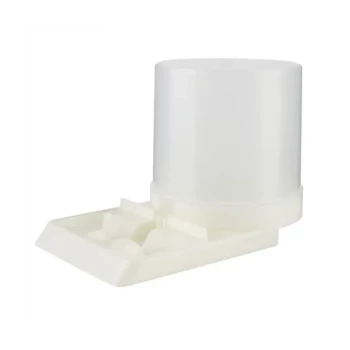
The MiniPlus system represents a breakthrough in apiary research, offering a scalable and standardized platform for identifying Varroa-resistant honeybee lineages. These miniaturized hives allow researchers to conduct high-repetition, parallel experiments by housing approximately 4,000 bees—simulating a full biological cycle while significantly reducing the logistical complexity and spatial requirements of large-scale field trials.
Miniaturized hive systems bridge the gap between laboratory precision and field-scale validity, providing a cost-effective, high-resolution environment for monitoring complex resistance traits. For distributors, these systems represent a high-demand category for research institutions and commercial breeding programs focused on sustainable pest management.
Scalability and Experimental Efficiency
Maximizing Research Throughput
Miniaturized hives, such as the MiniPlus, enable large-scale parallel repeats within a limited geographical footprint. Because each unit requires fewer bees and less equipment than a full-sized Langstroth hive, researchers can increase their sample sizes, leading to more statistically significant data on Varroa resistance.
Precision Dosage and Infection Control
These systems allow for the precise control of initial mite infection densities and the exact administration of dietary treatments, such as dsRNA. This level of control is difficult to achieve in full-scale colonies, making mini-hives an essential tool for high-precision breeding and pharmaceutical testing.
Simulating Real-World Colony Dynamics
Maintaining Biological Integrity
Despite their small size, mini-hives function as a complete micro-ecosystem, including a queen, workers, drones, and brood cells. This ensures that the social behaviors related to Varroa resistance—such as grooming and hygienic behavior—are expressed naturally and can be measured accurately.
Enhanced Environmental Stability
Many modern mini-hives are constructed from polystyrene, which provides superior thermal insulation compared to traditional wood. This stability in temperature and humidity ensures that observed changes in colony health are a result of genetic traits or experimental variables rather than environmental stress.
High-Resolution Monitoring of Resistance Traits
Evaluating VSH and Recapping Behaviors
The standardized nature of mini-hive frames facilitates the systematic monitoring of Varroa Sensitive Hygiene (VSH) and recapping (REC) behaviors. Researchers can easily remove and replace brood combs to observe how quickly workers identify and remove mite-infested larvae.
Advanced Imaging Compatibility
The compact dimensions of mini-hives are ideal for high-precision X-ray imaging. By limiting the scanning area, these hives allow for higher-resolution scans that can detect minute density gradients within wax cells, providing non-invasive data on brood development and honey ripening.
Understanding the Trade-offs
Population Sensitivity
Because these colonies only house about 4,000 bees, they are more sensitive to population fluctuations than full-sized hives. A small loss of foragers or a minor disease outbreak can have a disproportionately large impact on the colony’s survival.
Intensive Management Requirements
Miniaturized systems require frequent inspections and specialized management to prevent swarming or starvation. Their rapid development cycle means researchers must be highly responsive, as the small volume of the hive can quickly become overcrowded.
Strategic Selection for Your Distribution Portfolio
Providing the right hive system depends on the specific research or breeding goals of your end-user.
- If your primary focus is high-throughput genetic screening: Prioritize MiniPlus systems that offer standardized, modular components to support large-scale parallel testing.
- If your primary focus is pharmaceutical or dietary R&D: Stock insulated polystyrene mini-hives that allow for precise environmental control and accurate measurement of medicated feed consumption.
- If your primary focus is advanced behavioral imaging: Offer compact, specialized hive designs that are compatible with X-ray and high-resolution scanning equipment.
By offering a comprehensive portfolio of miniaturized hive systems, distributors can position themselves as expert partners in the global effort to breed Varroa-resistant honeybees.
Summary Table:
| Key Advantage | Research & Breeding Benefit | Ideal Application |
|---|---|---|
| High Scalability | Large-scale parallel repeats with minimal bees/space. | Genetic screening & large trials |
| Precision Control | Accurate mite infection densities and dietary dosing. | Pharmaceutical & R&D testing |
| Biological Integrity | Full micro-ecosystem allows for natural grooming/VSH. | Behavioral resistance studies |
| Thermal Stability | Polystyrene insulation reduces environmental stress. | Year-round breeding programs |
| Imaging Optimized | Compact size allows for high-res X-ray scanning. | Non-invasive brood monitoring |
Elevate Your Distribution Portfolio with HONESTBEE
As the honeybee industry shifts toward sustainable pest management, demand for specialized research tools like miniaturized hive systems is surging. HONESTBEE empowers distributors and commercial apiaries with a comprehensive, one-stop sourcing solution.
Why partner with us?
- Full-Spectrum Portfolio: From specialized MiniPlus systems and hive-making machinery to honey-filling equipment and essential consumables.
- B2B Expertise: We provide OEM/ODM support, deep industry knowledge, and high-profit margins for wholesalers and resellers.
- Operational Excellence: Benefit from ultra-fast delivery, efficient order fulfillment, and a dedicated rapid-response support team.
Ready to supply the future of beekeeping? Contact HONESTBEE today to discuss our wholesale offerings and premium services!
References
- Lina Sprau, Peter Rosenkranz. Mite non‐reproduction is not a consequence of the brood removal behavior of varroa sensitive hygiene honey bee colonies (<i>Apis mellifera</i>). DOI: 10.1002/ece3.11595
This article is also based on technical information from HonestBee Knowledge Base .
Related Products
- Automatic Heat Preservation 6 Frame Pro Nuc Box for Honey Bee Queen Mating
- 4 Frame Plastic Nuc Boxes for Beekeeping Bee Nuc Box
- Durable Plastic Hive Number Set for Beekeeping
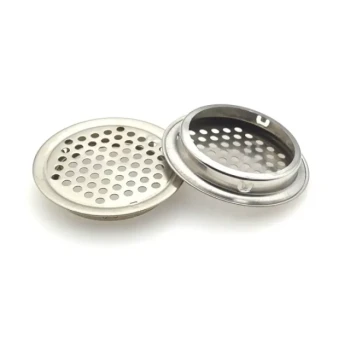
- Stainless Steel Round Beehive Air Vents for Ventilation
- Styrofoam Mini Mating Nuc Box with Frames Feeder Styrofoam Bee Hives 3 Frame Nuc Box
People Also Ask
- What are the options for adding frames to a nuc after taking two frames from the parent colony?
- How are nuc boxes used in queen rearing? The Essential Tool for Reliable Queen Mating
- What steps are involved in transferring frames from the nuc box to the hive? A Guide for a Smooth, Low-Stress Colony Move
- What is the process for managing a new bee colony started in a nuc box? Expert Tips for Hive Success
- How long can bees be kept in a nuc box? Expert Timeline for Hive Transfer