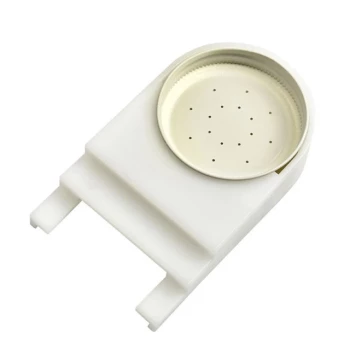
Drip feeders represent the gold standard for maintaining honeybee health in controlled, long-term environments. By providing a continuous, hygienic supply of syrup, these systems eliminate the risk of contamination from excrement or environmental impurities. Their design is specifically engineered to support precise nutrient intake, making them the superior choice for both professional rearing and complex toxicological research.
Drip feeders ensure a stable and uncontaminated nutritional environment, allowing adult honeybees to feed based on their natural requirements. This consistency is vital for maintaining colony vigor and obtaining accurate data in long-term health and exposure studies.
Maximizing Hygiene and Bio-Security
Preventing Environmental Contamination
In long-term rearing, the primary risk to adult honeybee health is the accumulation of honeybee excrement and environmental impurities. Drip feeders utilize a closed or semi-closed system that physically isolates the syrup reservoir from the bees' waste.
Maintaining Syrup Integrity
Traditional open feeding methods expose the nutrient source to the air, leading to rapid fermentation or spoilage. Drip feeders provide a continuous and sealed supply, ensuring the syrup remains fresh and bio-available for the duration of the rearing cycle.
Precision for Long-Term Rearing and Research
Facilitating Realistic Ingestion Patterns
Drip feeders allow honeybees to freely ingest feed based on their physiological needs rather than a forced schedule. This ad-libitum access mimics natural foraging behaviors more closely than intermittent feeding methods.
Accuracy in Toxicological Testing
In chronic exposure experiments, such as those involving insecticides, precision is paramount. Drip feeders ensure that medicated feed is delivered at realistic field dosages, allowing researchers to assess long-term toxic effects with a high degree of confidence.
Understanding the Trade-offs
Refill Frequency vs. Hygiene
While drip feeders offer superior hygiene, they often have a smaller capacity compared to large-scale top feeders. This may require more frequent monitoring or refilling in high-volume commercial settings.
Complexity and Maintenance
Drip systems can be more technically demanding to set up than simple entrance feeders. However, the investment in setup time is offset by the dramatic reduction in colony loss and the increased reliability of biological data.
Strategic Sourcing for Professional Operations
When sourcing equipment for high-stakes rearing or research, the reliability of the supply chain is as critical as the product itself. Choosing a partner with a comprehensive full-spectrum product portfolio ensures that you can scale your operations without friction.
Making the Right Choice for Your Goal
- If your primary focus is research and toxicological accuracy: Drip feeders are essential for ensuring that medicated feed is delivered consistently and without external contamination.
- If your primary focus is high-volume commercial transit: Consider high-capacity top feeders that minimize disturbance, though you must monitor hygiene more closely.
- If your primary focus is rapid operational scaling: Partner with a supplier offering ultra-fast delivery and expert customer service to ensure your project timelines are never compromised.
By prioritizing precision-engineered feeding solutions, professionals can ensure the long-term vitality of their colonies while maintaining the highest standards of industry expertise.
Summary Table:
| Feature | Advantage | Best Use Case |
|---|---|---|
| Hygiene | Prevents contamination from excrement and fermentation. | Long-term laboratory rearing |
| Ingestion | Ad-libitum feeding mimics natural foraging behavior. | Colony vigor maintenance |
| Precision | Delivers exact dosages for medicated or toxicological feed. | Chronic exposure research |
| Security | Sealed reservoir maintains syrup bio-availability. | High-security bio-testing |
Scale Your Beekeeping Operations with HONESTBEE
Are you looking to supply your clients with the gold standard in beekeeping technology? HONESTBEE specializes in serving commercial apiaries and B2B distributors with a comprehensive, one-stop sourcing experience.
Our full-spectrum portfolio includes everything from precision drip feeders and specialized hive-making machinery to honey-filling equipment and essential consumables. By partnering with us, you benefit from:
- Deep Industry Expertise: Professional-grade tools designed for durability and precision.
- Competitive Wholesale Support: Optimize your profit margins with our OEM/ODM capabilities.
- Efficient Fulfillment: Rapid response times and ultra-fast delivery to keep your supply chain moving.
Ready to elevate your inventory? Contact our expert team today to discuss how our premium trading services can support your business growth.
References
- Gyan Harwood, Adam G. Dolezal. Butenolide Insecticide Flupyradifurone Affects Honey Bee Worker Antiviral Immunity and Survival. DOI: 10.3389/finsc.2022.907555
This article is also based on technical information from HonestBee Knowledge Base .
Related Products
- HONESTBEE Entrance Bee Feeder Efficient Hive Front Liquid Feeding Solution for Beekeeping
- HONESTBEE Round Hive Top Bee Feeder for Syrup
- HONESTBEE Entrance Bee Feeder Professional Hive Nutrition Solution for Beekeeping
- HONESTBEE Professional Entrance Bee Feeder Hive Nutrition Solution
- Professional In-Hive Bee Feeder HONESTBEE Frame for Beekeeping
People Also Ask
- What types of bee feeders are available for beginners? Start with the Simple Entrance Feeder
- What are the advantages and disadvantages of using an entrance feeder for bees? Balance Convenience and Hive Security.
- What is a bee entrance feeder and what are its drawbacks? Essential Guide to Hive Security and Feeding Efficiency
- How does a bee entrance feeder work? A Simple Guide to Convenient Hive Feeding
- How to make an entrance feeder for bees? A DIY Guide for Safe & Effective Feeding