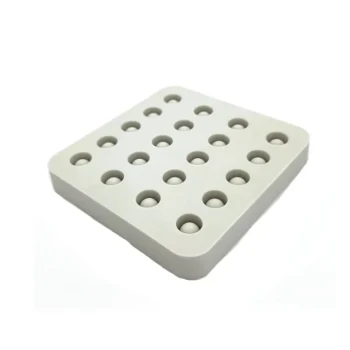
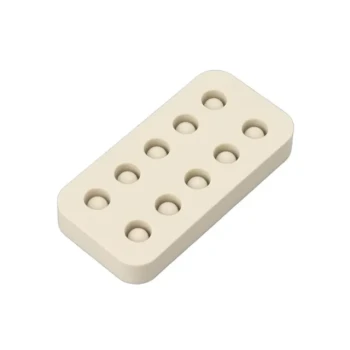
Industrial queen rearing frames and artificial cell cups provide a decisive advantage in scalability, precision, and quality control compared to natural methods. These tools allow beekeepers to transition from passive colony management to the active, mass production of hundreds of high-quality queens simultaneously.
Core Insight: The primary value of this equipment is the ability to industrialize biological potential. By simulating the ideal physical structure of a queen cell, you trick the colony into concentrating its resources—specifically royal jelly—onto target larvae, resulting in queens with superior egg-laying capacity and uniform genetics.
The Mechanics of Scalability and Consistency
The shift from natural to industrial rearing is a shift from reliance on natural impulses (swarming or supersedure) to controlled production.
Unlocking Exponential Scale
Natural queen rearing is limited by the colony's immediate instinct. In contrast, industrial frames allow for the large-scale production of hundreds of queens simultaneously.
This capability is critical for commercial efficiency, allowing for rapid colony replacement and large-scale splitting operations that natural methods cannot support.
Creating a Standardized Environment
In nature, queen cells vary in size and location. Artificial cups and frames provide a consistent developmental environment for every single larva.
This standardization ensures that no queen is disadvantaged by poor cell placement or space constraints. The result is a batch of new queens with uniform characteristics, eliminating the variability often found in naturally raised queens.
Enhancing Biological Quality
The physical tools used in industrial rearing—specifically the wax or plastic cups—serve a biological purpose beyond mere convenience.
Maximizing Royal Jelly Nutrition
The artificial cups simulate the natural physical structure of a queen cell. This structure acts as a trigger, guiding nurse bees to recognize the larvae as royalty.
This induces the intensive secretion of royal jelly. Because the frames are placed in strong, queenless nursing colonies, the bees concentrate their nutritional resources on these specific cups. This heavy feeding leads to queens with higher physiological quality and superior egg-laying capacity.
Precision Genetic Control
Using grafting frames allows you to select larvae from superior maternal lines rather than letting the bees choose randomly.
Technicians can transfer larvae of a precise age (often 24 hours old) into the cups. This ensures that the new generation of queens possesses stable genetic traits, allowing you to propagate specific desirable behaviors across your apiary.
Understanding the Trade-offs
While the advantages are significant, industrial rearing introduces specific demands that natural rearing does not.
The Requirement for Technical Skill
This method is not passive. It relies on specialized tools like grafting needles and the precise transfer of delicate larvae.
Success depends on the skill of the technician. Unlike natural rearing, where the bees manage the process, this method requires a human to correctly identify and transfer larvae without damage.
Dependency on Resource Management
Mass production requires massive resources. The frames must be placed in strong queen-rearing colonies capable of secreting abundant royal jelly.
If the "starter" or "finisher" colony lacks sufficient energy or nutrition (often supplemented by external feeders), the quality of the mass-produced queens will suffer. The tools only work if the biological support system is robust.
Making the Right Choice for Your Goal
Deciding between natural and industrial methods depends entirely on the scale and objectives of your operation.
- If your primary focus is Commercial Expansion: Industrial frames are essential for generating the volume of queens needed for simultaneous colony replacements and splits.
- If your primary focus is Genetic Improvement: The use of artificial cups allows for the precise propagation of superior bee strains with stable, desirable traits.
- If your primary focus is Operational Efficiency: Modular grafting frames allow you to manage dozens of queen cells in a single production cycle, streamlining your workflow.
By adopting industrial rearing tools, you move from simply keeping bees to actively engineering the genetic and physiological future of your apiary.
Summary Table:
| Feature | Natural Queen Rearing | Industrial Queen Rearing (Frames/Cups) |
|---|---|---|
| Production Scale | Limited to natural impulses (Swarming) | High-volume (Hundreds of queens simultaneously) |
| Consistency | Variable cell size and placement | Standardized developmental environment |
| Nutrition | Resource distribution varies | Concentrated royal jelly secretion in target cells |
| Genetic Control | Random/Natural selection | Precise selection of superior maternal lines |
| Skill Level | Passive/Low | High (Requires grafting and technician skill) |
| Primary Use | Hobbyist/Small-scale | Commercial apiaries and breeding programs |
Maximize Your Apiary’s Potential with HONESTBEE
Elevate your commercial beekeeping operation with high-performance equipment designed for scale and precision. HONESTBEE specializes in supporting commercial apiaries and distributors with a comprehensive wholesale selection of beekeeping tools and machinery. From precision queen rearing frames and artificial cell cups to advanced honey-filling and hive-making machines, we provide the industrial solutions needed to ensure uniform genetics and superior productivity.
Ready to transform your biological potential into commercial success? Contact us today to explore our full spectrum of beekeeping hardware and industry consumables tailored to your business needs.
References
- Mohamed Khamees, M. Elnagar. Knowledge and implementation of good beekeeping practices by beekeepers in New Valley governorate, Egypt. DOI: 10.21608/aasj.2022.312210
This article is also based on technical information from HonestBee Knowledge Base .
Related Products
- JZBZ Langstroth Queen Rearing Frame for Beekeeping
- JZBZ Type Wide Base Plastic Queen Cell Cups for Base Mounting and Queen Rearing
- Premium Nicot Style Cell Bar Holder and Queen Cell Cup Holder System
- Brown Nicot Queen Cell Cups for Breeding Queen Bees Beekeeping
- JZBZ Push-In Queen Cell Cups for Beekeeping
People Also Ask
- Why use finishing colonies for queen cell capping? Secrets to Superior Queen Quality and Performance
- How do queen rearing frames and grafting needles function together? Master the Doolittle Method for High-Quality Queens
- What is the purpose of queen rearing frames? Master Controlled Queen Production for Your Apiary
- What are the functions of queen rearing frames and artificial queen cells? Master Bee Genetic Improvement
- What roles do professional queen rearing frames and artificial queen cells play? Scaling Your Queen Bee Production