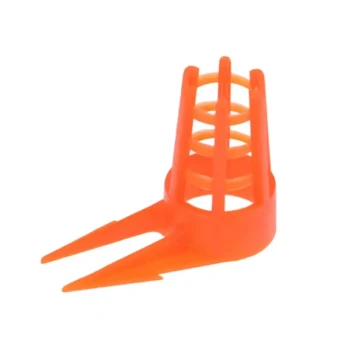
The precision of your 3D printing equipment is the defining factor in whether honeybees will accept or reject artificial polycarbonate queen cell cups. This precision directly dictates the wall thickness of the cup, specifically at the rim. If the equipment lacks the resolution to produce an edge within a specific microscopic range, the bees will view the cup as foreign or unsuitable, leading to high rejection rates.
Success in manufacturing polycarbonate queen cups relies entirely on achieving a specific edge thickness between 0.1 and 0.2 mm. Without high-precision equipment capable of this fine resolution, honeybees will likely exhibit rejection behaviors, rendering the artificial cups ineffective for queen rearing.
The Biological Threshold for Acceptance
The Critical Importance of Edge Thickness
Honeybees are highly sensitive to the dimensions of their environment. For an artificial cup to be accepted, it must mimic natural parameters.
Research indicates that the "make or break" dimension is the edge thickness. The artificial cup must feature an extremely thin edge, specifically between 0.1 and 0.2 mm.
Consequences of Low Precision
If your 3D printer lacks high resolution, it will invariably produce walls that exceed this 0.2 mm threshold.
When the walls are too thick, bees exhibit rejection behaviors. They may refuse to lay eggs in the cup, remove larvae grafted into it, or ignore the structure entirely.
The Manufacturing Implication
Resolution Dictates Usability
The printing resolution of your 3D equipment is not just a cosmetic factor; it is a functional requirement.
Low-resolution prints cannot physically achieve the fine geometry required for the cup's rim. Therefore, the effectiveness of the cup is determined before the print even finishes, based solely on the machine's capability.
Standardization for Large-Scale Production
To move from prototyping to mass production, consistent precision is required.
High-precision printing ensures that every unit in a batch meets the specific physiological preferences of the honeybees. This consistency is the only way to guarantee standardized, reliable results in queen rearing operations.
Common Pitfalls to Avoid
The Risk of Standard Resolution
Many standard 3D printers prioritize speed or structural integrity over microscopic edge fidelity.
Using standard settings often results in an edge thickness greater than 0.2 mm. While the cup may look correct to the human eye, it will likely fail in the hive.
Material vs. Geometry
It is a mistake to assume that using the correct material (polycarbonate) is enough.
Even with the correct material, geometry is king. A polycarbonate cup with poor precision is just as ineffective as a cup made of the wrong material.
Making the Right Choice for Your Goal
To ensure your artificial queen cups are biologically effective, you must prioritize equipment resolution above all other print settings.
- If your primary focus is high acceptance rates: Ensure your printer is calibrated to achieve a layer resolution capable of rendering a 0.1 mm edge without structural collapse.
- If your primary focus is mass production: Verify that your equipment can maintain this high level of precision repeatedly across large batches to prevent variations that trigger rejection.
High-precision manufacturing is not merely a technical detail; it is a biological necessity for integrating artificial components into the hive.
Summary Table:
| Feature | High-Precision Printing (0.1 - 0.2mm) | Standard-Precision Printing (> 0.2mm) |
|---|---|---|
| Edge Thickness | Optimal (Mimics natural parameters) | Too thick (Viewed as foreign) |
| Bee Acceptance | High acceptance and integration | High rejection; larvae removal |
| Functionality | Biologically effective for rearing | Ineffective for queen production |
| Manufacturing | Consistent, scalable quality | Unreliable for commercial use |
Elevate Your Queen Rearing with Precision-Engineered Equipment
At HONESTBEE, we understand that in beekeeping, a fraction of a millimeter makes the difference between success and failure. We specialize in supporting commercial apiaries and distributors by providing the industry's most comprehensive range of wholesale beekeeping tools and advanced machinery.
From high-precision manufacturing equipment capable of meeting strict biological thresholds to specialized honey-filling machines and premium consumables, our portfolio is designed to maximize your efficiency and yield. Whether you are looking to scale your production or distribute top-tier beekeeping hardware, our team is ready to deliver the value your business deserves.
Ready to upgrade your apiary’s performance? Contact HONESTBEE Today to explore our full spectrum of professional beekeeping solutions.
References
- S. S. Chandrasekar, P. A. Saravanan. Standardization of Mass Queen Rearing Techniques in Indian Honey Bees. DOI: 10.29321/maj.10.200007
This article is also based on technical information from HonestBee Knowledge Base .
Related Products
- Clear Black Plain Polystyrene Queen Bee Grafting Cell Cups No Lug for Bee Queen Cup
- JZBZ Type Wide Base Plastic Queen Cell Cups for Base Mounting and Queen Rearing
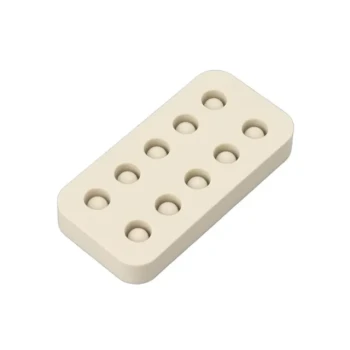
- 10-Cell Silicone Beeswax Bee Queen Cups Forming Mold
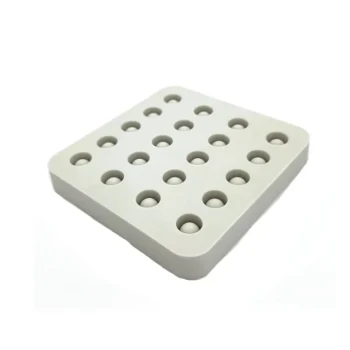
- High-Efficiency 20-Cell Silicone Mold for Beeswax Bee Queen Cup Production
- Brown Nicot Queen Cell Cups for Breeding Queen Bees Beekeeping
People Also Ask
- What materials are used to make artificial queen cell cups for grafting? Beeswax vs. Plastic Guide
- What role do specialized queen rearing tools play in developing mite-resistant honeybee stock? Master Genetic Selection
- What roles do specialized queen cell cups play in royal jelly production? Optimize Your Hive's Secretion and Yield
- What types of cell cups are commonly used in grafting? Plastic vs. Wax for Queen Rearing Success
- Why is a diluted royal jelly solution applied to queen cell cups? Boost Acceptance in Artificial Grafting