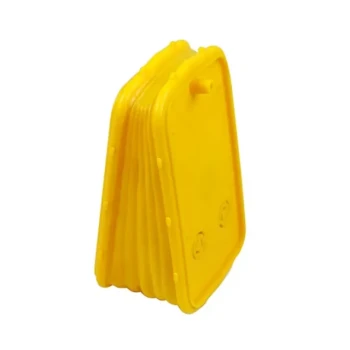
Specialized plastic sampling straws provide a superior method for extracting beebread by enabling precise removal from specific depths without destroying the surrounding honeycomb. Unlike traditional scraping, this approach isolates the sample to prevent cross-contamination between individual cells.
Core Takeaway The primary value of plastic sampling straws lies in their ability to yield high-fidelity chemical and biological data without compromising hive health; they isolate samples to prevent cross-contamination while leaving the comb intact for future colony use.
Enhancing Data Accuracy through Precision
Depth-Specific Extraction
One of the distinct advantages of sampling straws is the ability to extract beebread from specific depths within a honeycomb cell. Traditional methods often blend layers, but straws allow researchers to sample vertically, preserving the stratification of the stored pollen.
Prevention of Cross-Contamination
Straws function as isolated containers during the extraction process. By inserting the straw directly into a single cell, you effectively prevent material from adjacent cells from mixing with your sample. This is critical for maintaining the specific profile of that exact cell's contents.
Integrity for Chemical Analysis
Using high-purity plastic consumables is essential when conducting sensitive chemical assays, such as heavy metal bioaccumulation studies. Unlike metal tools or lower-grade materials, high-quality plastic straws shield the sample from background interference, ensuring that subsequent atomic absorption spectroscopy reflects the true environmental state.
Preservation of Microbial Communities
Beebread is a fermented product containing active microbial communities. Utilizing sterile, single-use plastic straws ensures that the sample remains free from external environmental impurities. This aseptic technique guarantees that laboratory assessments accurately reflect the beebread's physicochemical properties and antimicrobial activity.
Preserving Hive Health and Structure
Non-Destructive Harvesting
Traditional scraping is destructive, often ruining the comb structure. Specialized straws minimize physical damage, removing only the target material. This allows the honeybee colony to continue utilizing the cells normally after the harvesting process is complete, reducing stress on the hive.
Mitigation of Pathogen Transmission
The use of disposable, sterile tools prevents the human-mediated transmission of pathogens between colonies. By using a fresh straw for specific sampling points, you ensure that you are not effectively inoculating a healthy hive with spores or bacteria from a previously sampled, infected hive.
Understanding the Trade-offs
Specificity vs. Speed
While scraping allows for the rapid collection of large biomass, it sacrifices precision. Sampling straws are inherently slower because they target individual cells. This method is optimized for research quality rather than bulk harvesting speed.
Material Selection Requirements
Not all plastics are suitable for all tests. Standard plastics may be sufficient for general sampling, but ultra-sensitive pesticide residue testing requires strictly strictly sterile, high-purity consumables to avoid chemical interference. You must ensure the "plastic" used matches the sensitivity of your intended analysis.
Making the Right Choice for Your Goal
To select the best sampling method, align your tool choice with your primary research or operational objective:
- If your primary focus is heavy metal or chemical analysis: Use high-purity plastic straws to eliminate background interference and ensure data validity.
- If your primary focus is colony sustainability: Use non-destructive straws to allow bees to immediately reuse the honeycomb cells after sampling.
- If your primary focus is microbial consistency: Use sterile, disposable straws to prevent the introduction of external bacteria into the fermented beebread.
By choosing specialized straws, you prioritize the integrity of your data and the health of your bees over the speed of extraction.
Summary Table:
| Feature | Specialized Plastic Straws | Traditional Scraping |
|---|---|---|
| Data Accuracy | High - depth-specific & isolated | Low - blended samples |
| Comb Integrity | Non-destructive; cells reusable | Destructive; ruins structure |
| Contamination | Minimal risk (sterile/single-use) | High risk of cross-contamination |
| Best Used For | Chemical & microbial research | Bulk biomass collection |
| Bee Stress | Low | High |
Elevate Your Apiary Operations with HONESTBEE
Precision in the field leads to excellence in the market. At HONESTBEE, we understand the unique needs of commercial apiaries and global distributors. Whether you are conducting sensitive research or scaling production, we provide a comprehensive wholesale range of beekeeping tools, specialized machinery, and essential consumables designed for performance.
From high-purity sampling tools to advanced honey-filling machines and hive-making hardware, our portfolio is built to enhance your efficiency and protect your colony's health.
Ready to upgrade your equipment? Contact HONESTBEE today to discuss our wholesale offerings and discover how we can add value to your beekeeping business.
References
- Robert Brodschneider, Jozef van der Steen. INSIGNIA: Beekeepers as citizen scientists investigate the environment of their honey bees. DOI: 10.22323/1.393.0019
This article is also based on technical information from HonestBee Knowledge Base .
Related Products
- Yellow Plastic Bucket Pail Perch for Beekeeping
- Food Grade Plastic Honey Bucket Pail for Beekeeping
- All-Weather Plastic Bellows for Bee Smokers
- Plastic Handle Single Row Artificial Fiber Bee Brush
- Plastic Transporting Bee Packages and Nuc Boxes for Beekeeping
People Also Ask
- What are the strategic benefits of installing beekeeping hives at an elevation of 1 to 6 meters? Protect Your Assets
- What are the key advantages of modern improved beekeeping hives? Scale Your Honey Yield and Production Efficiency
- How do container-type consumables like plastic buckets function in urban beekeeping systems? Expert Setup Tips
- What are the advantages and disadvantages of plastic beekeeping equipment? Choose the Best Gear for Your Apiary
- Why Increase Hive Installation Quantity in Commercial Apiaries? Offset Climate Risks with Scalable Infrastructure