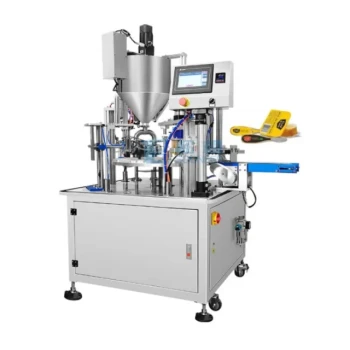
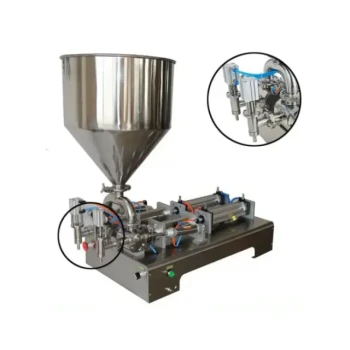
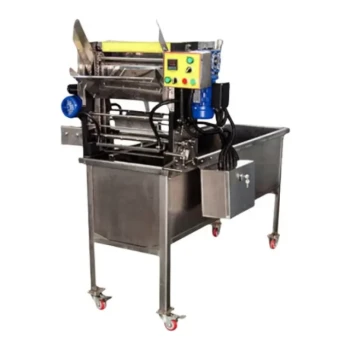
Timing is the critical variable in commercial honey production. Industrial-grade automated filling machines enable apiaries to capitalize on brief, high-intensity nectar flows by processing massive volumes of raw honey before the window closes. This rapid throughput is essential for operations relying on plants with flowering periods as short as 20 days.
By significantly reducing the interval between extraction and final packaging, automated filling systems solve the logistical bottleneck of short nectar flows. This speed directly translates to higher product quality, locking in volatile aromatics and medicinal properties that degrade with exposure and time.
Maximizing Yield During Critical Windows
Handling the 20-Day Limit
Short nectar flows create a "feast or famine" production environment. When a specific plant species blooms for only 20 days, the volume of raw honey generated is immense and immediate.
Manual or semi-automated processes often fail to keep pace with this influx. Industrial automation ensures that the packaging line does not become the bottleneck that halts the harvest.
Throughput and Scalability
The primary advantage of these machines is their ability to process large volumes rapidly. This capability allows the apiary to move raw product from the extractor to the jar without delay.
By maintaining a high flow rate, the facility prevents the accumulation of raw honey in bulk storage tanks. This continuous flow is vital for maximizing the yield from a short-duration harvest.
Preserving Product Integrity
Protecting Aromatic Compounds
Honey derives much of its value and character from distinct flavor profiles. These profiles are often composed of delicate aromatic compounds that are highly volatile.
Extended exposure to air or long processing times allows these compounds to dissipate. Automated filling minimizes this exposure window, effectively "locking in" the specific floral notes associated with the nectar source.
Retaining Medicinal Value
Beyond flavor, many raw honeys are prized for their health benefits. The primary reference indicates that rapid processing helps preserve these medicinal properties.
Minimizing the time between extraction and packaging reduces the risk of degradation. This ensures the final consumer receives a bioactive product that justifies a premium price point.
Understanding the Trade-offs
Capital Investment vs. Usage Window
While highly effective, industrial-grade equipment represents a significant capital expenditure.
Operators must calculate the Return on Investment (ROI) carefully. If the equipment is only utilized intensely for a 20-day window and sits idle otherwise, the financial burden may outweigh the efficiency gains for smaller operations.
Maintenance and Technical Overhead
Moving from manual to industrial automation introduces technical complexity.
These machines require calibration, specialized cleaning protocols, and maintenance to function correctly. You are effectively trading manual labor intensity for a requirement of higher technical skill and support.
Making the Right Choice for Your Goal
To determine if industrial automation fits your apiary's specific needs, evaluate your primary objectives:
- If your primary focus is Premium Quality Preservation: Prioritize automation to minimize processing time, ensuring volatile aromatics and medicinal compounds are captured immediately.
- If your primary focus is Volume Maximization: Implement industrial filling to eliminate packaging bottlenecks, allowing for continuous harvesting during the limited 20-day window.
Automation transforms the short nectar flow from a logistical crisis into a predictable, profitable opportunity for superior product quality.
Summary Table:
| Feature | Advantage for Short Nectar Flows | Impact on Honey Quality |
|---|---|---|
| High Throughput | Processes massive volumes within 20-day bloom windows | Prevents oxidation by reducing air exposure |
| Rapid Processing | Eliminates bottling bottlenecks during peak harvest | Locks in volatile aromatic compounds |
| Automated Precision | Maintains continuous flow from extractor to jar | Preserves bioactive medicinal properties |
| Scalability | Handles "feast or famine" production cycles | Ensures consistent product integrity |
Elevate Your Commercial Apiary with HONESTBEE
Don't let a 20-day nectar flow become a logistical bottleneck. HONESTBEE empowers commercial apiaries and distributors with high-performance honey-filling machines, specialized hive-making hardware, and a full spectrum of professional beekeeping tools. Our industrial automation solutions are designed to lock in the medicinal value and delicate floral notes of your honey, ensuring you deliver a premium product every time.
Ready to scale your production and maximize your ROI? Contact our experts today to find your custom equipment solution.
References
- Mihaela Britvec, Rosana Šimunić. MEDONOSNO BILJE KAMENJARSKIH PAŠNJAKA OTOKA KRKA, CRESA I PAGA. DOI: 10.18332/tid/137086
This article is also based on technical information from HonestBee Knowledge Base .
Related Products
- Fully Automatic Honey Filling Packaging Machine for Processing Line
- Automatic Honey Filling and Filtering Machine for Beekeeping Bottle Filling
- Precision Durable Efficient HONESTBEE Rotary Honey Filling Machine
- Semi Automatic Small Honey Bottle Filling Machine Honey Filler
- Precision Automated Packaging Turntable Honey Spoon Filling Sealing Packing Machine
People Also Ask
- Why are fully automatic honey filling and packaging lines essential? Boost Your Honey's Market Value and Quality
- What is a fully-automatic honey filler? Streamline Your Production with High-Precision Automation
- How do automated honey filling and packaging machines affect profitability? Boost Margins with HONESTBEE Technology
- How do automated honey filling and packaging machines contribute to the market value of honey products? Maximize Your ROI
- How do industrial-grade automated honey filling and packaging machines mitigate the risk of physical contamination?