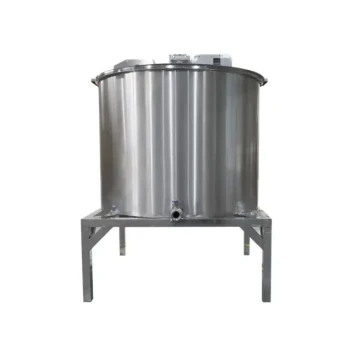
Automated honey sampling and filling equipment is the cornerstone of data integrity in safety evaluations. By packaging honey under strictly sterile, anti-contamination conditions, this technology ensures that the original chemical composition of the sample remains unaltered during the extraction process. This preservation is a prerequisite for the accurate detection of pesticide metabolites, which is necessary to determine if the honey poses risks to the ecosystem or human health.
The core function of this equipment is to eliminate handling variables. By maintaining a sterile environment, it guarantees that subsequent laboratory results reflect the actual conditions of the trial colony rather than external contamination introduced during processing.
Preserving Chemical Integrity
Eliminating External Contaminants
In manual honey processing, human contact and non-sterile tools introduce a high risk of cross-contamination.
Automated equipment mitigates this by handling the sampling and filling in a controlled, sterile environment. This ensures that the sample collected is a pure representation of what the bees produced.
Maintaining Original Components
For safety evaluations, the chemical structure of the honey must remain stable from the hive to the lab.
Automation prevents exposure to environmental factors that might degrade or alter volatile compounds. This preservation allows researchers to analyze the honey’s "original chemical components" with confidence.
Facilitating Toxicology Analysis
Enabling Pesticide Detection
The primary safety concern in many trial colonies is the presence of pesticide metabolites.
Because the filling equipment provides a reliable, uncontaminated source, researchers can use precision instruments to detect trace levels of these chemicals. Without sterile sampling, false positives or negatives caused by handling errors could skew these critical results.
Assessing Food Chain Impact
Safety evaluations often look beyond immediate toxicity to long-term ecological effects.
By securing accurate data on pesticide residues, scientists can evaluate how these substances might accumulate in the food chain. This helps determine the potential impact on both the broader ecosystem and human consumption safety.
Understanding the Scope and Limitations
Sampling vs. Analysis
It is critical to distinguish between sample preparation and sample analysis.
This automation equipment does not perform the chemical testing itself; it serves strictly to package the sample without corrupting it. The actual safety data is derived from subsequent analysis using separate precision instruments.
The Role of Precision Weighing
While sampling equipment focuses on safety and chemistry, it is often paired with precision weighing tools mentioned in broader research contexts.
However, precision weighing (calculating yield by subtracting empty comb weight) focuses on economic characteristics and genetic selection, not safety. Do not confuse the equipment used for quantitative yield analysis with the sterile equipment required for qualitative safety analysis.
Making the Right Choice for Your Research
If you are designing a trial protocol, select your equipment based on the specific metric you need to validate.
- If your primary focus is Environmental Safety: Prioritize automated filling systems that guarantee sterility to prevent cross-contamination during pesticide metabolite analysis.
- If your primary focus is Colony Productivity: Focus on precision weighing equipment to accurately calculate honey yield for genetic selection, as sterile packaging is less critical for simple weight metrics.
Reliable safety data begins with a sterile, untouched sample that accurately represents the hive environment.
Summary Table:
| Feature | Benefit for Safety Evaluation | Research Impact |
|---|---|---|
| Sterile Filling | Eliminates cross-contamination from human contact | Ensures results reflect hive conditions, not processing errors |
| Aseptic Environment | Preserves volatile chemical compounds | Maintains original honey composition for precise lab analysis |
| Traceability | Provides uncontaminated samples for toxicology | Enables accurate detection of trace pesticide metabolites |
| Automation | Removes handling variables | Guarantees data integrity for ecological risk assessments |
Elevate Your Apiary's Standards with HONESTBEE
At HONESTBEE, we understand that for commercial apiaries and global distributors, equipment reliability is the foundation of product safety and brand reputation. We provide a comprehensive suite of beekeeping machinery, specialized honey-filling machines, and industrial tools designed to maintain the highest standards of purity from hive to jar.
Whether you are scaling up production or conducting rigorous quality control, our wholesale solutions offer the precision and durability your business demands. Partner with us today to access our full spectrum of hardware and industry consumables. Let’s work together to bring safer, high-quality honey products to the global market.
References
- Helen Thompson, Mark Miles. <i>In response</i>: The challenge of implementing a sustainable and highly sophisticated risk-assessment scheme, able to address the realistic potential hazards as well as the needs of our pollinators—An industry view on the key challenges and guidance. DOI: 10.1002/etc.2988
This article is also based on technical information from HonestBee Knowledge Base .
Related Products
- Automatic Honey Filling and Filtering Machine for Beekeeping Bottle Filling
- Fully Automatic Honey Filling Packaging Machine for Processing Line
- Precision Durable Efficient HONESTBEE Rotary Honey Filling Machine
- Manual Honey Filling Machine Bottling Machine for Honey
- Semi Automatic Small Honey Bottle Filling Machine Honey Filler
People Also Ask
- What process advantages do professional honey filtering and filling machines provide? Optimize Your Organic Honey Output
- How do honey filling and filtering machines increase product value? Turn Raw Honey into Premium Export-Grade Goods
- How do honey filtration and filling machinery contribute to industrialization? Scale Your Commercial Honey Production
- What specific issues do industrial filtration and automated filling machinery address? Ensure Honey Quality & Compliance
- How does the use of professional honey filtration and filling machinery facilitate international honey exports?