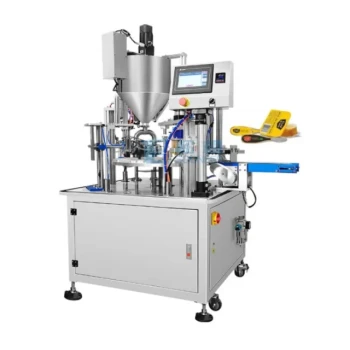
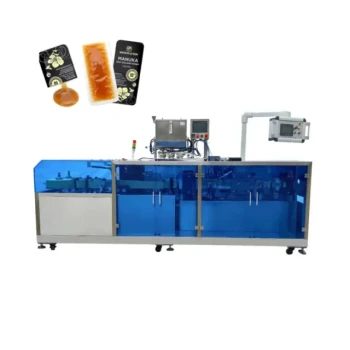
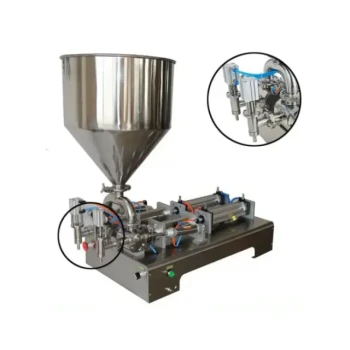
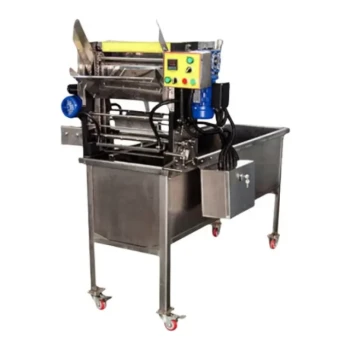
Automating your honey production line represents the critical operational shift from small-scale beekeeping to viable commercial manufacturing. The integration of these machines is necessary because they guarantee precise product volume consistency and enforce strict hygiene standards that manual labor cannot maintain. By replacing manual handling with high-precision metering and closed-loop systems, you significantly reduce labor costs while eliminating the risk of secondary contamination during the packaging stage.
Commercial success in the honey industry relies on transforming a raw, variable harvest into a standardized, shelf-stable product. Automated filling is the only reliable method to achieve the volume precision and sterile environment required to maximize yield and meet international trade standards.
Maximizing Yield and Economic Efficiency
Precision Metering and Cost Control
Manual filling almost inevitably leads to inconsistent volumes, resulting in either regulatory non-compliance (underfilling) or product "giveaway" (overfilling). Automated machines utilize high-precision metering pumps to ensure every container matches its labeled weight exactly. Over a production run of thousands of units, eliminating even minor overfills saves significant capital.
Minimizing Material Waste
Honey is viscous and difficult to handle, often leading to spills and drips during manual transfer. Commercial machines employ advanced anti-drip technology to achieve clean, quantitative packaging. This prevents physical loss of the raw material and reduces the labor required to clean the production line.
Preserving Product Integrity and Hygiene
The Importance of Closed-Loop Operation
Honey is a delicate biological product that can degrade if exposed to improper environmental conditions. Automated machines operate in a closed environment, isolating the honey from the surrounding atmosphere. This is critical for preventing moisture absorption, which can lead to fermentation and spoilage.
Eliminating Secondary Contamination
The greatest risk in food packaging is often the introduction of pathogens or impurities during the final fill. Automation removes human contact from the filling process, effectively preventing secondary contamination. This sterile rapid packaging ensures the physical and chemical indicators of the honey remain stable during storage.
Meeting Commercial Market Demands
Adhering to Trade Standards
International and retail markets demand strict adherence to labeled weight and packaging specifications. Industrial filling machines provide the consistency required to meet these rigorous trade standards. This reliability is essential for producers looking to transition from bulk sales to high-value-added fractional (retail) packaging.
Scaling for Market Supply
To convert large-scale annual harvests into finished goods before the product degrades, speed is essential. Automated systems dramatically increase packaging velocity compared to manual labor. This allows producers to meet large-scale market supply demands efficiently without sacrificing quality control.
Understanding the Operational Trade-offs
Maintenance and Technical Skill
While automation reduces general labor, it introduces a need for technical maintenance. Precision metering pumps and sealing mechanisms require regular calibration and skilled cleaning to function correctly. A lack of proper maintenance can lead to machine downtime that manual lines do not experience.
Flexibility vs. Throughput
Highly automated lines are optimized for specific bottle sizes and consistent speeds. If your business model relies on frequent changes to container shapes or widely varying honey types, the setup and changeover times of a fully automated line can become a bottleneck compared to semi-automatic or manual flexibility.
Making the Right Choice for Your Goals
To determine the level of automation suited for your operation, assess your primary business objective:
- If your primary focus is maximizing profit margins on high-volume sales: Prioritize fully automated machines with anti-drip and precision metering to eliminate product giveaway and labor costs.
- If your primary focus is brand reputation and shelf-life: Focus on machines with advanced closed-loop systems to prevent moisture absorption and ensure a sterile, contaminant-free product.
True commercial viability demands that you treat honey not just as a harvest, but as a standardized consumer packaged good; automation is the tool that bridges that gap.
Summary Table:
| Key Factor | Manual Filling Impact | Automated Filling Benefit |
|---|---|---|
| Volume Precision | High risk of overfill (waste) or underfill | High-precision metering ensures exact weight |
| Hygiene & Safety | Potential human contact/contamination | Closed-loop systems eliminate secondary contamination |
| Product Waste | Frequent spills and drips | Advanced anti-drip technology saves raw material |
| Market Readiness | Difficult to meet strict trade standards | Consistent quality meets international retail standards |
| Production Speed | Slow, labor-intensive processes | Rapid packaging velocity for large-scale supply |
Revolutionize Your Honey Production with HONESTBEE
Transitioning from small-scale beekeeping to a commercial powerhouse requires the right industrial tools. HONESTBEE specializes in supporting commercial apiaries and distributors with high-performance honey-filling machines and automated production equipment designed to eliminate waste and maximize your yield.
Whether you need specialized hardware like hive-making machinery or precision packaging systems to meet international trade standards, we provide the full spectrum of beekeeping tools and essential industry consumables to grow your business.
Ready to scale your operation? Contact HONESTBEE today to discover how our wholesale machinery solutions can enhance your brand's efficiency and profitability.
References
- Dinku Negash, Asaminew Tassew. Assessment the Status of Agro-Chemicals Utilization and Honeybee Poisons Plants in Sidama Zone, SNNPR, and Ethiopia. DOI: 10.7176/jrdm/85-04
This article is also based on technical information from HonestBee Knowledge Base .
Related Products
- Fully Automatic Honey Filling Packaging Machine for Processing Line
- Automatic Honey Filling and Filtering Machine for Beekeeping Bottle Filling
- Precision Durable Efficient HONESTBEE Rotary Honey Filling Machine
- Precision Automated Packaging Turntable Honey Spoon Filling Sealing Packing Machine
- Semi Automatic Small Honey Bottle Filling Machine Honey Filler
People Also Ask
- Why are fully automatic honey filling and packaging lines essential? Boost Your Honey's Market Value and Quality
- What is a fully-automatic honey filler? Streamline Your Production with High-Precision Automation
- How do automated honey filling and packaging machines affect profitability? Boost Margins with HONESTBEE Technology
- How do automated honey filling and packaging machines contribute to the market value of honey products? Maximize Your ROI
- How do industrial-grade automated honey filling and packaging machines mitigate the risk of physical contamination?