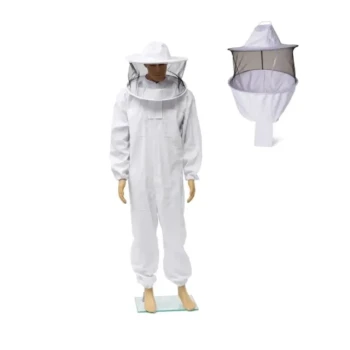
A fencing veil, often referred to as a hooded veil, is a specialized protective gear designed to zip directly onto a beekeeping suit or jacket, mimicking the style of a fencer’s mask. It utilizes a stiff, self-supporting structure to maintain a critical distance between the mesh and the beekeeper's face without the need for a separate hat or helmet.
Core Takeaway The fencing veil is the "set-it-and-forget-it" option for beekeepers, prioritizing distinct separation between the mesh and skin for maximum sting prevention. However, this protection comes at the cost of peripheral visibility and airflow compared to traditional round veils.
The Distinctive Design
Integrated Structure
Unlike round veils that often require a separate helmet or hat, the fencing veil is self-supporting. It typically features a unified design that zips securely to the protective suit, eliminating gaps where bees might enter.
Facial Separation
The defining characteristic of this veil is its rigid front structure. It holds the mesh firmly away from the nose and chin, which are high-risk areas for stings if the wind blows a soft veil against the skin.
The Advantages
Superior Protection Profile
By mechanically keeping the mesh off the head, the fencing veil minimizes contact points. This distance is your primary defense; if the mesh cannot touch your skin, a bee landing on the veil cannot reach you with its stinger.
Convenience and Comfort
Because it attaches directly to the suit, it is generally considered comfortable and less cumbersome to put on than multi-piece systems. The primary reference notes that many beekeepers find this style cooler and more comfortable than the alternatives.
Sun Protection
While the front and sides are mesh, the back of a fencing veil is typically made of solid fabric. This construction acts as a shield, protecting the back of the neck and head from direct sunlight during long hours in the apiary.
Understanding the Trade-offs
Restricted Field of View
The most significant drawback is the viewing area. The mesh is concentrated at the front and sides, which can create a narrower, tunnel-like view compared to 360-degree round veils.
The "Movement Lag"
Because the veil is integrated into the suit's shoulders rather than sitting on your head, it may not move in perfect unison with you. When you turn your head sharply, you may find yourself staring at the side fabric rather than through the mesh.
Ventilation Constraints
While the solid fabric back protects against the sun, it also blocks airflow. In comparison to full-mesh round veils, you may find that a breeze from behind does not penetrate the veil, potentially reducing ventilation on hot days.
Making the Right Choice for Your Goal
- If your primary focus is sting prevention: Choose the fencing veil, as its rigid structure guarantees the mesh stays off your face regardless of wind or movement.
- If your primary focus is maximum visibility: Opt for a round veil, which offers a wider, unobstructed field of view and better peripheral vision.
- If your primary focus is convenience: The fencing veil is ideal because it requires no separate hat and zips on quickly as a single unit.
The fencing veil is an excellent choice for beekeepers who value a compact, integrated system and are willing to sacrifice some peripheral vision for reliable facial clearance.
Summary Table:
| Feature | Fencing (Hooded) Veil | Round Veil |
|---|---|---|
| Structure | Self-supporting, integrated | Requires separate hat/helmet |
| Protection | High; rigid mesh-to-skin distance | Variable; depends on hat brim |
| Visibility | Narrower, tunnel-like view | 360-degree panoramic view |
| Movement | Moves with suit shoulders | Moves with beekeeper's head |
| Ventilation | Solid back blocks rear airflow | High airflow via full-mesh design |
| Best For | Maximum sting prevention | Maximum peripheral visibility |
Elevate Your Apiary Operations with HONESTBEE
Are you looking to supply your commercial apiary or distribution network with the industry's most reliable protective gear? At HONESTBEE, we specialize in providing a comprehensive wholesale range of beekeeping essentials. From precision-engineered fencing veils and protective suits to advanced honey-filling machines and specialized hardware, our portfolio is designed to enhance productivity and safety.
Why partner with us?
- Bulk Wholesale Solutions: Competitive pricing on full-spectrum beekeeping equipment.
- Industrial Machinery: High-quality hive-making and processing equipment.
- Diverse Inventory: Everything from essential consumables to honey-themed cultural merchandise.
Contact HONESTBEE today to discuss your bulk requirements and custom orders!
Related Products
- Premium Cotton Beekeeper Suit with Reinforced Fencing Veil
- Three-Layer Ventilated Beekeeper Suit with Structured Fencing Veil
- White Cotton Beekeeping Jacket and Veil for Bee Keepers
- Professional Square Folding Wire Mesh Beekeeping Veil
- Beekeeper Cowboy Hat and Veil for Beekeeping
People Also Ask
- What material and design specifications are recommended for a high-quality beekeeper suit? Top Gear Selection Guide
- How to Pre-treat Propolis Stains on Beekeeping Suits? Master Advanced Fabric Care and Soil Removal
- What features should be considered for sting protection in a beekeeping suit? Ensure Total Safety and Comfort
- What are the differences between full suits and jackets with veils in beekeeping? Choose Your Best Protection
- What features should be looked for in a beekeeping suit for maximum comfort? Prioritize Ventilation and Fit