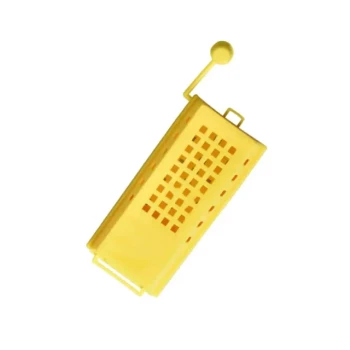
Plastic Queen Cups represent the critical technical shift from artisanal to industrial royal jelly production. By replacing the labor-intensive manual fabrication of wax cups with a standardized, reusable alternative, these tools drastically streamline the larval grafting process. This efficiency allows nurse bees to maximize secretion, enabling producers to escalate annual yields from mere hundreds of grams to several kilograms per colony.
Core Takeaway While traditional wax cups provide a natural material affinity, they function as a bottleneck in commercial operations due to their fragility and lack of uniformity. Plastic Queen Cups solve this by offering the durability and precise standardization necessary to scale royal jelly harvesting into a high-efficiency industrial process.
Driving Industrial Efficiency
Exponential Yield Growth
The primary advantage of adopting Plastic Queen Cups is the dramatic increase in production capacity.
Traditional methods often limit yields to a few hundred grams per colony. By optimizing the workflow, plastic cups help unlock the colony's potential, pushing annual yields to several kilograms.
Streamlining the Grafting Process
Traditional wax cups require manual fabrication on wooden bars, which is time-consuming and inconsistent.
Plastic cups come pre-manufactured with uniform specifications. This eliminates the fabrication step entirely, allowing technicians to focus immediately on the delicate task of larval grafting and inoculation.
The Power of Standardization
Precision in Measurement
In research and commercial settings, accurate data is vital. Traditional wax cups are prone to deformation, making weight consistency difficult.
Plastic cups maintain a rigid, consistent geometry. This facilitates accurate tare calibration, allowing producers to measure the exact yield of royal jelly within individual cells without variances caused by the container.
Uniform Installation
Standardized physical specifications ensure that plastic cups fit perfectly onto the base bars of grafting frames.
This mechanical consistency reduces setup time and ensures that the spacing is optimal for the nurse bees to access and tend to the larvae.
Durability and Hygiene
Reusability and Maintenance
Wax cups are inherently fragile and typically single-use or difficult to salvage.
Plastic cups are durable and designed for repeated use. Their smooth surfaces allow for easy cleaning and sterilization, making them a cost-effective long-term investment for large-scale operations.
Food-Grade Safety
Using food-grade plastic ensures the purity of the harvested product.
These cups act as a contaminant-free collection pool. This facilitates the safe extraction of royal jelly and simplifies the cleaning of larvae, ensuring the final product meets commercial hygiene standards.
Understanding the Trade-offs
Material Affinity vs. Scalability
It is important to acknowledge that beeswax has a natural material affinity with the colony. It is the biological standard for acceptance.
Plastic is a foreign material. However, modern plastic cups are engineered to effectively simulate the physical characteristics of natural cells. While they sacrifice the native material of wax, they gain the scalability required for industry.
Initial Setup Costs
Transitioning to plastic requires an upfront investment in consumables compared to recycling colony wax.
However, the massive increase in workflow efficiency and total yield generally offsets this initial cost rapidly in a commercial environment.
Making the Right Choice for Your Goal
To maximize the benefits of your production setup, align your tool choice with your specific operational scale:
- If your primary focus is Industrial Scale: Adopt Plastic Queen Cups immediately to remove fabrication bottlenecks and target kilogram-level yields per colony.
- If your primary focus is Data & Research: Use Plastic Queen Cups to ensure consistent tare weights and precise measurements of jelly secretion per larva.
- If your primary focus is Tradition: Stick to wax only if your operation is small-scale, artisanal, and prioritizes using only hive-produced materials over volume.
Standardizing your equipment is the first step toward transforming beekeeping from a craft into a high-output industry.
Summary Table:
| Feature | Traditional Wax Cups | Plastic Queen Cups |
|---|---|---|
| Production Scale | Small-scale / Artisanal | Industrial / High-output |
| Consistency | Low (manual fabrication) | High (standardized mold) |
| Durability | Fragile / Single-use | Robust / Reusable |
| Yield Potential | Hundreds of grams/colony | Several kilograms/colony |
| Maintenance | High labor for fabrication | Easy to clean & sterilize |
| Measurement | Difficult tare calibration | Precise for data & research |
Transform Your Beekeeping Into a High-Yield Industrial Operation
Maximize your colony's potential with professional-grade tools from HONESTBEE. As specialists in serving commercial apiaries and distributors, we provide the complete infrastructure needed to scale your royal jelly production—from high-precision Plastic Queen Cups and grafting frames to advanced honey-filling machines and hive-making hardware.
Whether you are expanding a commercial apiary or sourcing for a distribution network, our comprehensive wholesale portfolio delivers the durability and standardization your business demands. Contact HONESTBEE today to discuss how our specialized equipment can streamline your workflow and drive your annual yields to new heights.
References
- Huoqing Zheng, Fuliang Hu. Beekeeping Industry In China. DOI: 10.1080/0005772x.2011.11417406
This article is also based on technical information from HonestBee Knowledge Base .
Related Products
- JZBZ Type Wide Base Plastic Queen Cell Cups for Base Mounting and Queen Rearing
- Clear Black Plain Polystyrene Queen Bee Grafting Cell Cups No Lug for Bee Queen Cup
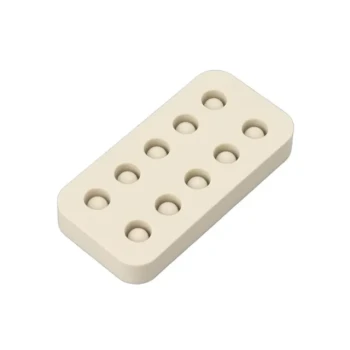
- 10-Cell Silicone Beeswax Bee Queen Cups Forming Mold
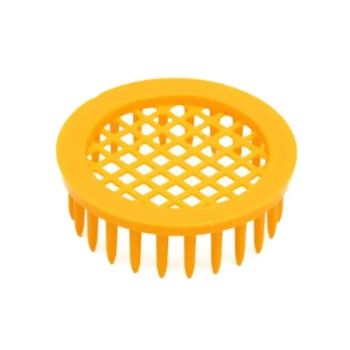
- Durable Plastic Push In Queen Bee Cage
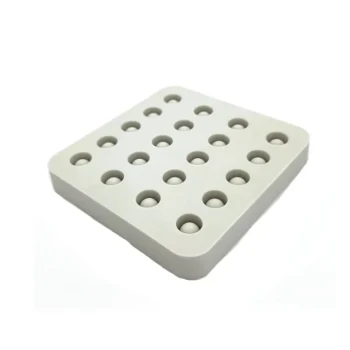
- High-Efficiency 20-Cell Silicone Mold for Beeswax Bee Queen Cup Production
People Also Ask
- What are the primary advantages of using plastic queen cell cups? The Industrial Choice for High-Efficiency Apiaries
- What technical advantages do commercial plastic queen cell cups offer? Scale Your Queen Rearing for Maximum Efficiency
- What is the function of standardized plastic Queen Cell Cups? Boost Efficiency in Commercial Larval Grafting
- Why are standardized plastic queen cell cups preferred? Boost Commercial Queen Rearing Efficiency
- Why are standardized plastic queen cell cups typically used in large-scale queen bee production? Boosting Apiary Output