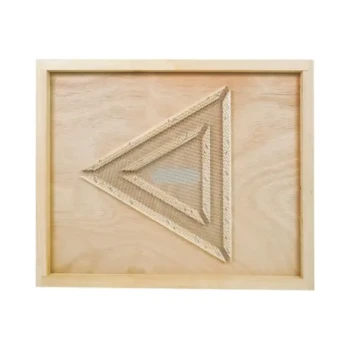
The bottom board functions as the structural foundation of a Langstroth hive. It bears the entire weight of the colony's stack and incorporates the primary entrance and exit for the bees. Beekeepers generally select between two distinct variations—solid or screened—based on their specific climate conditions and pest management strategies.
The choice of bottom board dictates the hive's internal environment; solid boards excel at heat and pheromone retention, while screened boards are superior for ventilation and pest monitoring.
The Fundamental Roles of the Bottom Board
Structural Support
The bottom board is the base upon which all other hive components rest. It must be sturdy enough to support the cumulative weight of brood boxes, honey supers, and the colony itself.
Colony Access
This component defines the hive's threshold. It incorporates the entrance that controls traffic flow, allowing bees to forage and defend their home.
Analyzing the Two Main Types
The Solid Bottom Board
This is a traditional design consisting of a continuous floor. It creates a sealed environment from the bottom up.
The Screened Bottom Board
This variation replaces the solid floor with a mesh screen. It is designed to allow air to pass through freely while preventing bees from escaping through the bottom.
Strategic Trade-offs and Considerations
Ventilation vs. Insulation
Solid bottom boards are excellent for insulation, helping the colony stay warm during winter. However, this lack of airflow can lead to poor ventilation.
Conversely, screened bottom boards drastically improve airflow and prevent moisture condensation, which can be deadly to bees. The trade-off is that in cold climates, the colony must consume more energy to maintain hive temperature.
Pheromone Retention
Bees rely on chemical signals for communication. Solid bottom boards help retain these essential pheromones within the hive structure. Screened boards may allow these scents to dissipate more rapidly due to increased airflow.
Pest Monitoring and Management
Screened bottom boards are a critical tool for Integrated Pest Management (IPM). They allow Varroa mites to fall out of the hive rather than crawling back onto bees. They also allow the beekeeper to easily count fallen mites to assess infestation levels.
Seasonal Interchangeability
A key advantage of the Langstroth design is that these boards are easily swapped. A beekeeper does not have to commit to one type permanently. It is common practice to utilize the ventilation of a screened board in summer and switch to a solid board for overwintering.
Making the Right Choice for Your Goal
While both boards serve the same structural purpose, your choice should align with your immediate environmental objectives.
- If your primary focus is overwintering in cold climates: Prioritize the solid bottom board to maximize heat retention and minimize wind drafts.
- If your primary focus is pest management and ventilation: Choose the screened bottom board to reduce condensation and easily monitor Varroa mite populations.
Success often lies in adaptability, using the specific board that best supports the colony's needs during the current season.
Summary Table:
| Feature | Solid Bottom Board | Screened Bottom Board |
|---|---|---|
| Primary Function | Insulation & Foundation | Ventilation & Pest Control |
| Heat Retention | High (Ideal for Winter) | Low (Aids Cooling) |
| Airflow | Restricted | Excellent |
| Pest Management | Minimal | High (Varroa Mite Monitoring) |
| Best Used For | Cold climates / Overwintering | Hot climates / IPM Strategies |
Elevate Your Apiary with HONESTBEE Quality
At HONESTBEE, we empower commercial apiaries and distributors with the high-performance tools needed for thriving colonies. From precision-engineered hive components to industrial-scale honey-filling machines, we supply the full spectrum of beekeeping hardware and consumables.
Ready to scale your operation or stock the best equipment for your customers?
Contact us today to explore our wholesale solutions and see how our comprehensive machinery and specialized beekeeping tools can drive your success.
Related Products
- Solid Bottom Board Australian Pine Wood Langstroth Bottom Board for Wholesale
- Langstroth Solid Bottom Board for Beekeeping
- Australian Pine Wood Langstroth Screen Bottom Board for Wholesale
- Langstroth Screen Bottom Board for Beekeeping Wholesale
- Long Langstroth Style Horizontal Top Bar Hive for Wholesale
People Also Ask
- In what conditions is a solid bottom board preferred over a screened bottom board? Maximize Hive Heat and Treatment
- What are the characteristics of a solid bottom board? A Guide to Hive Foundation & Climate Control
- What is the primary function of a solid bottom board on a beehive? Key Benefits for Hive Stability and Insulation
- What is the purpose of a solid bottom board in a hive? Essential for Winter Survival & Insulation
- What are the benefits of a solid bottom board? Boost Hive Health with Superior Insulation & Defense