Accurate operation of a honey refractometer relies on three critical procedures: calibrating the instrument before every session, applying the sample precisely to fully cover the prism, and cleaning the device immediately after use. Neglecting these steps can lead to false readings, resulting in harvested honey that may ferment or fail to meet legal moisture standards.
The reliability of your moisture reading is determined by the strict adherence to calibration prior to use, ensuring the honey sample is free of air bubbles on the prism, and wiping the device clean with a damp cloth immediately after the reading is taken.
Critical Preparation and Calibration
Calibrate Before Every Use
To ensure baseline accuracy, you must calibrate the refractometer before testing your honey. This is the primary requirement for reliable data. Use distilled water or a specific reference solution (as directed by your manual) to set the device to the correct zero point.
Achieve Temperature Equilibrium
Both the honey and the refractometer should be at the same ambient room temperature. Significant temperature differences between the device and the sample can skew the refractive index, leading to incorrect moisture percentage readings.
Prepare the Honey Sample
If testing from a larger batch, such as a bucket or jar, stir the honey thoroughly first. This ensures the small drop you test is representative of the entire container's moisture content, rather than just the surface layer.
Application and Measurement
Apply a Thin, Complete Layer
Place a small sample of honey onto the glass prism plate. It is vital that the honey covers the plate entirely to ensure a proper reading, but avoid using an excessive amount that creates a mess.
Eliminate Air Bubbles
Once the cover panel is closed, gently wiggle it to remove any air bubbles trapped in the honey. Air pockets can interfere with the light path and distort the line on the scale, making the reading difficult to interpret.
Focus and Read
Look through the eyepiece while pointing the device toward a bright light source. Adjust the focus ring until the scale is sharp, then record the water percentage where the boundary line crosses the scale.
Maintenance and Hygiene
Clean Immediately After Use
After every measurement, wipe the prism and cover plate with a damp, soft cloth. Residue left on the glass can dry and scratch the prism or contaminate future samples, compromising the device's longevity and accuracy.
Prevent Cross-Contamination
If testing multiple batches, clean the prism thoroughly with lukewarm water between samples. This prevents honey from the previous test from mixing with the new sample and altering the results.
Understanding the Trade-offs
The Risk of Temperature Fluctuations
Refractometers are highly sensitive to temperature changes. Taking measurements in an environment with significant temperature fluctuations without allowing the device to acclimate can render your data useless.
The Cost of Inaccuracy
Failing to follow these procedures does not just result in bad data; it risks your product. Inaccurate readings can lead you to harvest honey with moisture content above 18%, causing it to ferment into "baker's honey," which has a sour, yeasty taste and must often be discarded.
Making the Right Choice for Your Goal
Consistent procedure is the only way to ensure your honey meets quality standards.
- If your primary focus is Legal Compliance: Ensure your readings consistently show less than 21% moisture content, as this is the standard legal limit for sale in many regions.
- If your primary focus is Long-Term Storage: Aim for a moisture content range of 14% to 18%, as this is the optimal zone to prevent fermentation while maintaining quality.
Treat your refractometer as a precision instrument, not just a tool, and it will protect the quality of your harvest.
Summary Table:
| Procedure Phase | Key Action | Why It Matters |
|---|---|---|
| Preparation | Calibrate & Stir | Ensures baseline accuracy and representative sampling. |
| Application | Thin Layer & No Bubbles | Prevents light distortion for a clear, readable scale. |
| Measurement | Focus in Bright Light | Provides precise data on water percentage (14%-18% goal). |
| Maintenance | Immediate Cleaning | Protects the prism from scratches and cross-contamination. |
Ensure the Highest Quality for Your Honey Harvest with HONESTBEE
Protect your reputation and product integrity by using professional-grade tools. HONESTBEE is a leading partner for commercial apiaries and distributors, offering a comprehensive wholesale range of beekeeping equipment. From precision testing tools to specialized honey-filling machinery and hive-making equipment, we provide the hardware and consumables necessary for large-scale success.
Why choose HONESTBEE?
- Commercial-Scale Solutions: High-performance machinery designed for efficiency.
- Complete Supply Chain: Everything from basic hardware to honey-themed cultural merchandise.
- Expert Support: We help you meet legal standards and optimize long-term storage.
Contact us today to discuss your apiary's wholesale needs!
Related Products
- Digital Honey Refractometer for Precision Measurement of Optimal Honey Quality
- Precision Honey Refractometer Instrument for Quality Assessment
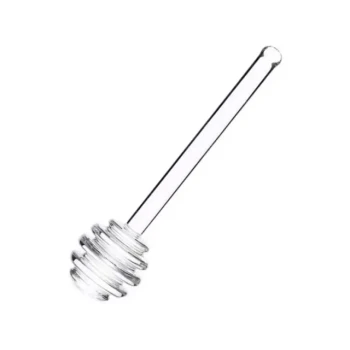
- Premium Heat-Resistant Glass Honey Dipper
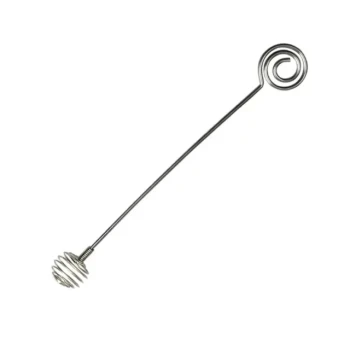
- Modern Stainless Steel Honey Dipper Stirrer
- Heavy Duty 304 Stainless Steel Honey Dipper
People Also Ask
- What role do high-precision refractometers play in determining the maturity and quality of honey? Ensure Honey Purity.
- Do the color and viscosity of honey affect its refractometer reading? Mastering Moisture Measurement Accuracy
- How do refractometers ensure technical precision when measuring honey moisture? Secure Quality and Prevent Fermentation
- How is the reading taken from a honey refractometer? A Guide to Accurate Moisture Measurement
- Why is a honey refractometer considered essential for commercial beekeepers? Ensure Honey Quality and Profitability