For reliable wooden beehive equipment, prioritize precise dimensions, load-bearing ledges, and reinforced glued-and-nailed joints. Hive boxes should be manufactured to standardized dimensions so brood boxes, supers, frames, and accessories remain interchangeable. The recommended box construction uses rabbet/rebate or dado joints, with box joints providing additional structural strength where appropriate; frames should be assembled square with weatherproof glue and rust-resistant mechanical fasteners.
The critical requirement is compatibility: accurately milled components, a properly formed rabbet that supports the frames, and joints reinforced with both exterior-grade glue and suitable nails or pins. This combination improves durability during hive inspections, transport, and honey extraction.
Build Hive Boxes for Compatibility and Load Support
Maintain standardized dimensions
Precise, standardized dimensions are essential when producing wooden hive equipment for distributors, wholesalers, and beekeepers.
Brood boxes and supers must accept standard frames without excessive clearance, binding, or misalignment. Consistent milling also supports efficient order fulfillment because components from different production batches remain compatible.
Include an internal rabbet or rebate
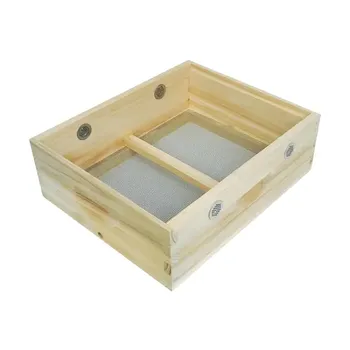
The rabbet joint is the most important specialized cut inside a conventional beehive box.
It creates the internal ledge, often called the frame rest, on which the frame ears sit. This ledge must be accurately positioned and strong enough to support the weight of frames filled with honey.
Use box joints where greater strength is required
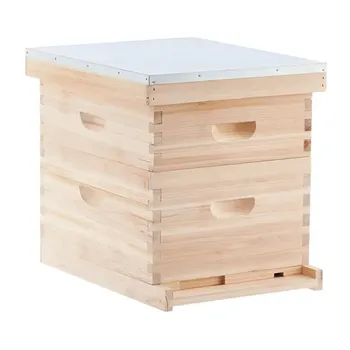
Box joints interlock adjacent boards through a series of matching fingers. They provide greater resistance to racking and separation than a basic butt joint.
Box joints are particularly useful when the hive body will experience frequent handling, transport, or repeated seasonal use. Their main disadvantage is that they require more precise machining and quality control.
Use rebate or dado construction appropriately
Rebate and dado joints create a larger glued and fastened surface than a simple butt joint. They can improve alignment and help resist movement at the corners or frame-support areas.
For conventional equipment, the rabbet inside the box is the essential application. Depending on the product design, other box connections may use rebates, dados, or reinforced butt joints.
Assemble Box Components with Adhesive and Fasteners
Apply exterior-grade wood glue
Use an exterior-grade or weather-resistant wood adhesive at the joining surfaces. Glue helps distribute stress across the joint instead of concentrating all loads on the nails or staples.
The adhesive should be applied consistently without leaving large voids or excessive squeeze-out inside the hive.
Hold components in alignment during assembly
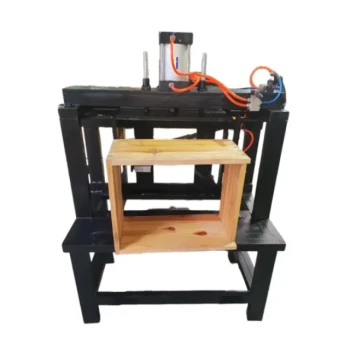
Use pipe pin clamps or equivalent assembly clamps to keep boards aligned while the adhesive is applied and the fasteners are driven.
Accurate clamping prevents twisted boxes, uneven corners, and frame-rest misalignment. These defects can cause frames to bind or reduce the usable internal space.
Reinforce the joints mechanically
After clamping, secure the box joints with pneumatic brad nailers, suitable nails, or staples, depending on the construction and production specification.
Fasteners should be driven fully into the timber without splitting the boards or leaving protruding points that could damage hands, gloves, bees, or hive components.
Assemble Frames for Heavy Comb Loads
Combine glue with rust-resistant fasteners
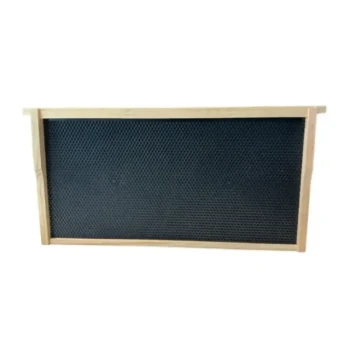
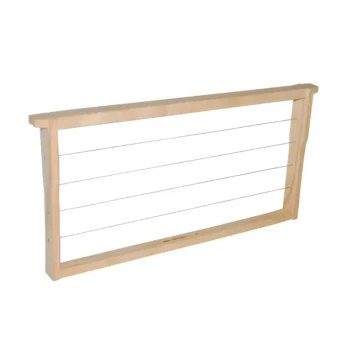
Wooden frames should not rely on adhesive or nails alone. Apply all-weather wood glue to the top-bar rebates, side-bar slots or grooves, and bottom-bar connections, then reinforce every joint with coated, rust-resistant frame pins or nails.
Hive interiors are humid, so ordinary uncoated fasteners may corrode. Standard panel pins should generally be avoided because they can split thin frame components.
Keep every frame square
Check each frame with a carpenter’s square before the adhesive cures and before final fastening.
A square frame hangs correctly in the hive, maintains proper bee space, and is less likely to twist during inspection or honey extraction.
Follow a controlled assembly sequence
A practical sequence is to fit the bottom bar into the narrow slots or grooves in the side bars, apply glue to all four corners, install the top bar, and then secure the joints.
Common specifications call for six to eight nails per frame, depending on the frame design and fastening standard. One example uses two nails at each end of the top bar and one or two nails at each end of the bottom bar.
Remove exposed fastener points
Nails must be driven straight and completely into the timber. Any exposed, bent, or protruding nail should be removed and replaced immediately.
This is both a product-quality and safety requirement because protruding metal can puncture protective gloves or injure beekeepers during hive management.
Match Joint Selection to the Product Requirement
For standard commercial hive bodies
Use a precisely milled internal rabbet for the frame ledge, combined with glued and fastened corner joints.
Depending on production capability, the outside corners may use box joints, rebate/dado joints, or reinforced butt joints. The key requirements are dimensional accuracy, structural strength, and repeatable assembly.
For high-durability equipment
Box joints are the stronger premium option when the hive body will be repeatedly transported, handled, or reused.
They require more accurate machining, but they can support a higher-quality product position for professional beekeepers and B2B buyers seeking longer service life.
For cost-sensitive production
Reinforced butt joints can be used for some box designs, provided they are accurately aligned and supported with weatherproof adhesive and mechanical fasteners.
They are simpler and less expensive to produce, but generally offer less resistance to racking and separation than box or well-designed rebate joints.
Choose Suitable Frame Materials and Milling
Use timber that resists splitting
Frame timber must be soft enough to accept nails without splitting, yet sufficiently stiff for repeated handling and heavy comb loads.
White pine is a versatile choice for top, bottom, and end bars. Spruce can be advantageous for side bars because its stiffness supports narrow, wired frame components.
Mill frame components accurately
Standard frame construction includes a top bar, two side bars, and a grooved or slotted bottom bar. The top bar may include a centered saw kerf to retain a foundation sheet or starter strip.
Consistent milling is especially important for distributors and wholesalers because interchangeable frames reduce customer complaints and simplify replenishment.
Protect foundation and comb alignment
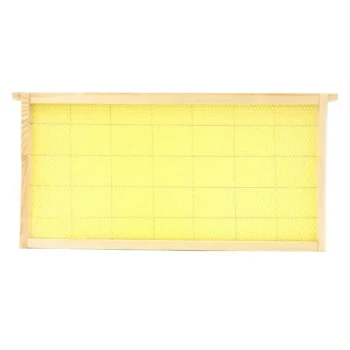
The top-bar groove or kerf must hold the foundation securely. Starter strips can also guide bees to build comb in a straight direction.
Poorly aligned grooves, uneven bars, or twisted frames can lead to crooked comb and operational problems during inspections and extraction.
Understanding the Trade-offs
Box joints versus butt joints
Box joints provide better mechanical interlock and resistance to movement, but they require more tooling, machining time, and inspection.
Butt joints are faster and cheaper, but they depend more heavily on adhesive quality, fastener placement, and accurate clamping.
Rabbet and dado joints versus complex interlocking joints
Rabbet and dado cuts offer useful alignment and load-bearing surfaces without the full manufacturing complexity of box joints.
However, they must be milled accurately. A poorly positioned rabbet can reduce frame support or create incorrect bee space.
Adhesive versus mechanical fastening
Glue distributes loads across the joint, while nails or pins provide immediate clamping and long-term mechanical reinforcement.
Using only one method increases the risk of joint failure, especially under heavy honey loads, repeated handling, humidity, and vibration during transport.
Fastener quantity and design
The exact number of nails depends on the frame specification and timber thickness. The important principle is to fasten each joint adequately with rust-resistant pins or nails without splitting the wood.
Manufacturers should standardize the fastening pattern and inspect every frame for squareness, secure joints, and concealed fastener heads.
How to Apply This to Your Product or Assembly Program
The best specification depends on whether the priority is premium durability, production efficiency, or broad compatibility.
- If your primary focus is dimensional compatibility: Standardize box and frame dimensions, mill the internal rabbet accurately, and maintain strict quality checks between production batches.
- If your primary focus is maximum hive-body durability: Use box joints or robust rebate/dado construction with exterior-grade glue and corrosion-resistant mechanical fasteners.
- If your primary focus is efficient large-volume production: Use repeatable clamping and pneumatic fastening processes, while reserving more complex joints for premium product lines.
- If your primary focus is frame reliability: Assemble every frame square with weatherproof glue and coated, rust-resistant nails or frame pins at all joint connections.
- If your primary focus is distributor and reseller service: Offer compatible boxes, frames, foundation-ready components, fasteners, and assembly supplies as a coordinated product portfolio.
Accurate machining, appropriate joint selection, and reinforced assembly are the foundation of dependable wooden beehive equipment.
Summary Table:
| Component | Recommended Joints | Key Requirements |
|---|---|---|
| Hive Boxes | Rabbet/rebate (for frame rest), box joints for higher strength | Precise dimensions, accurate rabbet, glued and nailed corners |
| Frames | Glued and nailed (6-8 rust-resistant nails per frame) | Square assembly, weatherproof glue, rust-resistant fasteners |
| General | Exterior-grade adhesive, mechanical fasteners | Proper alignment, concealed fastener points, dimensional accuracy |
Partner with HONESTBEE for Reliable Beekeeping Equipment
At HONESTBEE, we cater to commercial apiaries and distributors with a comprehensive wholesale supply of beekeeping tools, machinery, and equipment. Our portfolio includes hive-making machines, honey-filling lines, specialized hardware, and essential consumables.
We prioritize your operational efficiency with a full-spectrum product range, rapid response times, dedicated customer service, and fast order fulfillment. For distributors, we offer profit margins, OEM/ODM support, certifications, and supply reliability.
Contact us today to discuss your requirements and experience a partnership built on expertise and quality.
Related Products
- Wooden Bee Hive Frames for Beekeeping and Wholesale
- Wholesales Dadant Size Wooden Bee Hives for Beekeeping
- Assembled Wooden Bee Frames with Plastic Foundation for Durability and Convenience by HONESTBEE
- HONESTBEE Wired and Assembled Wooden Bee Frames Foundation for a Thriving Hive
- Australian Langstroth Beehive Boxes for Beekeeping Wholesales
People Also Ask
- How do wooden and plastic hive frames compare in terms of durability? Wood vs. Plastic Longevity & Repairability
- How does balancing the number of frames impact hive productivity? Optimize Your Apiary's Biological Output
- What are the main considerations when choosing between wooden and plastic bee hive frames? Optimize Your Apiary's Efficiency
- How should beehive frames be maintained to prolong their lifespan? 5 Pro Tips for Durable Beekeeping Equipment
- What are frames and combs used for in beekeeping? The Foundation of Modern Hive Management