In commercial queen production, line breeding and hybrid breeding differ mainly in how genetics are managed, how mating is controlled, and how often replacement queens must be produced. Line breeding develops a relatively stable population over multiple generations, while hybrid breeding combines distinct lines to capture heterosis, or hybrid vigor. Hybrid programs therefore require more precise mating-control equipment—especially instrumental artificial insemination systems—and a dependable annual queen-replacement operation.
Line breeding builds and stabilizes selected traits within a managed population; hybrid breeding combines distinct genetic lines for performance but requires tighter parentage control and recurring production of replacement queens. The equipment difference is therefore not limited to queen-rearing tools: hybrid programs also need specialized artificial insemination and genetic-management infrastructure.
How the Breeding Objectives Differ
Line breeding: improving a closed population
Line breeding selects queens and drones from a defined population over multiple generations. Commercial breeders may target traits such as honey production, temperament, disease resistance, hygienic behavior, and colony survival.
The objective is to make performance more consistent within the line while retaining a recognizable genetic identity. Because selection occurs generation after generation, accurate pedigree and performance records are essential.
Hybrid breeding: combining distinct lines
Hybrid breeding crosses separate inbred lines or subspecies to exploit heterosis, commonly called hybrid vigor. The resulting queens or colonies may show stronger productivity or other improved commercial characteristics than either parent line.
The reference describes productivity gains of approximately 34% to 50% over line-bred strains, but this should be treated as a program-dependent result rather than a guaranteed outcome. Actual performance depends on parental quality, mating control, environment, and colony management.
The Main Operational Differences
Parent selection and mating strategy
In line breeding, breeder colonies are repeatedly selected within the same closed or controlled population. The program must manage genetic progress while avoiding excessive inbreeding.
Hybrid breeding requires two or more clearly defined parent lines. The breeder must ensure that the intended queen and drone genetics are combined rather than diluted by uncontrolled mating.
Genetic stability across generations
A successful line-breeding program is designed to maintain and improve a relatively stable population. Offspring can remain part of the breeding structure if they meet the selection criteria.
Commercial hybrid offspring generally do not reproduce the same combination of traits reliably when used as parents. Their offspring may segregate into different genetic combinations, so commercial operations commonly produce or purchase new hybrid queens rather than breeding from production hybrids.
Mating control
Line breeding can use controlled natural mating when the mating location is isolated and external drone influence is minimized. For higher genetic precision, breeders may also use instrumental insemination.
Hybrid breeding places greater emphasis on precise mating control, particularly when specific parent lines must be crossed. Instrumental insemination allows the breeder to select drone semen and prevent unwanted natural mating from changing the intended cross.
Production planning
Line breeding is an ongoing improvement program. Its production plan includes selecting breeder colonies, rearing queens and drones, evaluating offspring, and repeating the cycle across generations.
Hybrid breeding has two linked workflows:
- Create and verify the desired cross.
- Continuously produce replacement hybrid queens for commercial colonies.
This makes hybrid production more dependent on scheduling, parent-line maintenance, mating capacity, and queen introduction logistics.
Equipment Required for Both Programs
Queen-rearing equipment
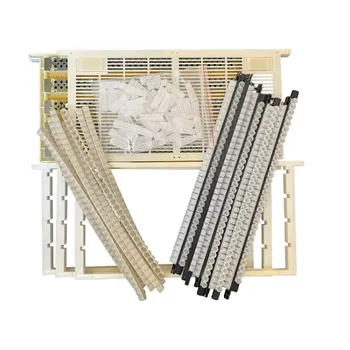
Both systems require the physical infrastructure to raise queens at commercial scale. Typical equipment includes:
- Fine larval grafting tools
- Grafting needles or instruments
- Plastic or wax queen cell cups
- Cell bar frames
- Queen-rearing frames
- Starter and finisher hive components
- Queen marking tools
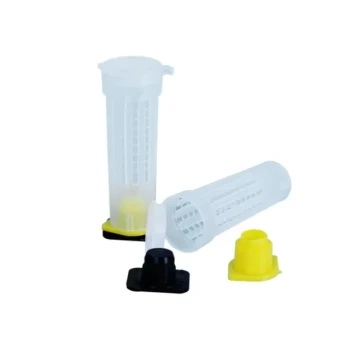
- Queen transport cages
- Queen introduction cages
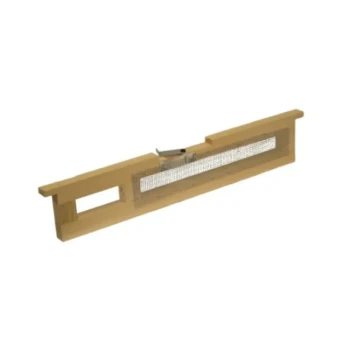
- Mating nuclei, or mating nucs
The Doolittle grafting method is widely used for mass queen production. Miller-style rearing and queenless nucleus methods may also be used, depending on the breeder’s labor model, scale, and production objectives.
Mating and evaluation infrastructure
Both programs need mating nuclei for controlled mating and early queen evaluation. They also require standardized hive components, suitable colonies for raising queens, and systems for tracking queen identity and pedigree.
Commercial operations benefit from consistent equipment dimensions and interchangeable components. Standardization reduces handling time, simplifies inventory, and makes it easier to fulfill repeat orders for distributors and beekeepers.
Record-keeping and identification tools
Queen marking and tracking supplies are operationally important, not cosmetic. They help link a queen to her parentage, production batch, mating status, and customer shipment.
Wing-clipping supplies, queen tags, batch records, and transport cages can support traceability throughout the breeding and distribution process.
Specialized Equipment for Hybrid Breeding
Instrumental artificial insemination system
The defining specialized requirement for a precision hybrid program is instrumental artificial insemination equipment. A professional system typically includes:
- A queen-holding or queen-positioning device
- A controlled insemination instrument
- Fine glass capillaries or insemination tips
- A microscope or suitable magnification system
- Semen collection equipment
- Tools for handling and storing drone semen
- A stable work surface and controlled operating environment
The purpose is to place semen from selected drones into a virgin queen without relying on uncontrolled natural mating. This is particularly important when crossing distinct lines or using pooled semen from selected drone colonies.
Drone and semen-management equipment
Hybrid programs must maintain suitable drone-producing colonies and collect semen from identified sources. The breeder needs a reliable method for labeling, handling, and separating semen by drone line or mating group.
Where multiple drone lines are pooled, accurate records are necessary to preserve the intended genetic design. The equipment is only effective when combined with disciplined parent-colony identification and semen-handling procedures.
Controlled mating facilities
Instrumental insemination is not the only mating-control option. At larger production volumes, breeders may use geographically isolated mating apiaries or controlled mating locations to reduce exposure to outside drones.
This approach can be more efficient than inseminating every queen, but it requires suitable sites, high-capacity mating nucs, strong drone management, and confidence that external drone pressure is sufficiently limited.
Replacement and introduction equipment
Because commercial hybrid queens are not normally used as the foundation for reproducing the same hybrid performance, hybrid operations need dependable queen replacement equipment. This includes:
- Queen-rearing frames and cell cups
- Mating nucs
- Queen transport cages
- Queen introduction cages
- Queen marking and tracking supplies
- Packaging materials for live-queen shipment
The equipment supports a recurring cycle of producing, transporting, introducing, and monitoring replacement queens.
How the Workflow Changes at Commercial Scale
Line-breeding workflow
A typical line-breeding operation follows this sequence:
- Select superior breeder colonies.
- Rear queens and drones from approved parent stock.
- Mate queens through controlled natural mating or instrumental insemination.
- Evaluate colony performance.
- Retain the best individuals for the next generation.
- Produce queens for internal expansion or commercial sale.
The major management challenge is maintaining selection pressure without narrowing the genetic base too far. Inbreeding depression can reduce colony vigor, brood viability, and overall performance.
Hybrid-breeding workflow
A hybrid operation generally follows a more segmented process:
- Maintain distinct parent lines.
- Select the required queen and drone parents.
- Control the mating through instrumental insemination or an isolated mating system.
- Rear and evaluate hybrid queens.
- Distribute the hybrid queens to production colonies.
- Produce replacement queens for subsequent commercial seasons.
The operation must protect the identity and quality of each parent line while also managing high-volume queen production and annual replacement demand.
Understanding the Trade-offs
Genetic consistency versus hybrid performance
Line breeding offers greater continuity and easier long-term selection within a population. Its risk is that repeated use of a narrow genetic base can increase inbreeding if diversity is not actively managed.
Hybrid breeding can deliver strong commercial performance through heterosis. Its trade-off is reduced predictability in later generations and greater dependence on controlled crosses and replacement-queen production.
Precision versus throughput
Instrumental insemination provides precise parentage control, but it requires trained personnel, specialized equipment, careful handling, and additional quality-control procedures. It may be most valuable for early-generation crosses, elite breeder production, or programs where genetic identity is critical.
Controlled natural mating in an isolated location can support higher volume with less individual handling. However, it offers less direct control than instrumental insemination and depends heavily on the quality and isolation of the mating environment.
Equipment investment versus operational reliability
A hybrid program requires more than a grafting kit. It may need artificial insemination equipment, microscopes, semen-handling tools, dedicated mating facilities, and a larger inventory of queen introduction and transport cages.
That investment can be justified when the business needs repeatable hybrid production, premium genetic stock, or large-scale distribution. For smaller operations, the equipment and training requirements may outweigh the benefits of producing every cross internally.
Performance claims versus field validation
Reported productivity improvements should not be treated as universal guarantees. A hybrid that performs well in one climate, forage system, or management regime may not deliver the same result elsewhere.
Commercial buyers should request information about parent lines, evaluation conditions, replacement policy, and quality-control procedures rather than relying only on a headline productivity percentage.
Making the Right Choice for Your Goal
Choose the operating model according to the genetic objective, production volume, and level of mating control required.
- If your primary focus is stable, long-term genetic improvement: Use a line-breeding structure with disciplined selection, pedigree records, queen-rearing equipment, and active management of inbreeding risk.
- If your primary focus is maximum commercial performance from a planned cross: Use hybrid breeding with distinct parent lines, instrumental insemination or isolated mating facilities, and strict genetic records.
- If your primary focus is high-volume queen distribution: Build standardized grafting, mating-nuc, marking, transport, and introduction workflows that support fast order fulfillment and recurring replacement demand.
- If your primary focus is supplying diverse professional customers: Maintain a full equipment portfolio covering grafting, queen rearing, artificial insemination, mating control, shipping, and queen introduction rather than treating any single tool as sufficient.
The right program matches its breeding objective with the necessary genetic-control equipment, production capacity, and replacement-queen logistics.
Summary Table:
| Aspect | Line Breeding | Hybrid Breeding |
|---|---|---|
| Objective | Stabilize and improve traits within a population | Combine distinct lines for hybrid vigor |
| Genetic Management | Selection within a closed population | Controlled crosses between distinct lines |
| Mating Control | Can use controlled natural mating or AI | Requires precise mating control (AI or isolated sites) |
| Production Cycle | Ongoing selection over generations | Annual replacement of hybrid queens |
| Equipment | Queen-rearing tools, marking, tracking | Same as line breeding + AI system, drone/semen management, controlled mating facilities |
| Genetic Stability | Relatively stable | Less stable, offspring not used as parents |
| Commercial Output | Continuous genetic improvement | High-performance queens for immediate use |
Ready to optimize your queen breeding program? Whether you need advanced artificial insemination equipment, queen-rearing supplies, or a full-spectrum beekeeping toolkit, HONESTBEE supports commercial apiaries and distributors with comprehensive wholesale solutions. Our one-stop sourcing, rapid response, and ultra-fast delivery ensure your operation runs smoothly. Contact us today to discuss your needs and boost your productivity!
Related Products
- Queen Bee Artificial Insemination Instrument Equipment for Instrumental Insemination
- Nicot Queen Rearing Kit for Beekeeping and Grafting in Nicot System
- HONESTBEE Improved No Grafting Queen Rearing Kit For Queen Rearing and Royal Jelly Production
- Plastic Chinese Queen Grafting Tool for Bee Queen Rearing
- Double Head Beekeeping Grafting Tools for Beekeepers
People Also Ask
- Why is maintaining sanitary conditions important during artificial insemination? Protect Your Queen from Fatal Infections
- Why are artificial insemination instruments critical in bee hybridization? Master Genetic Control & Pure Breeding
- What is the core value of bee artificial insemination instruments in breed improvement? Achieve Precise Genetic Control
- Why is professional bee artificial insemination equipment considered a core tool for genetic control in honeybee breeding? Ensure 100% Purity
- Why is high-purity CO2 used for queen bee artificial insemination? Unlock Precision Breeding & Faster Egg-Laying