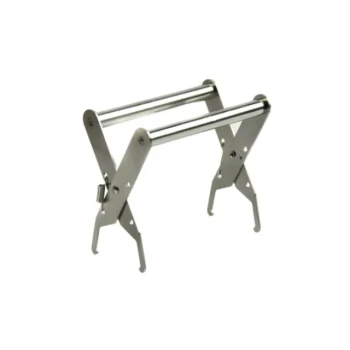
Standardized modern frame hives are generally more productive, manageable, and commercially scalable than cylindrical clay hives. Removable frames let beekeepers inspect colonies, control brood and honey stores, and harvest honey without destroying the comb structure. Their standardized dimensions also support extraction equipment, transport systems, and repeatable commercial workflows—advantages that are difficult to achieve with fixed-comb clay hives.
The central economic advantage is not only higher potential honey yield; it is the ability to manage colonies, reuse comb, reduce labor, improve product quality, and scale operations with compatible equipment.
Why Frame Hives Improve Daily Operations
Easier colony inspection
Modern frame hives guide bees to build combs in organized, removable frames. Beekeepers can inspect the queen, brood pattern, food reserves, pests, and disease conditions without dismantling the colony.
Cylindrical clay hives usually offer limited access to the internal comb structure. This makes management less precise and can delay the detection of weak colonies, infestation, disease, or inadequate food stores.
More controlled brood and honey management
Individual frames allow the beekeeper to separate brood, stored honey, and developing combs. Colonies can therefore be manipulated more deliberately during nectar flows, dearth periods, and population changes.
This control helps commercial operators maintain stronger colonies and support faster recovery when floral resources become available.
Non-destructive harvesting
With a frame hive, mature honey frames can be removed while the colony and most of its comb remain intact. The frames can then be returned after extraction.
Traditional fixed-comb harvesting often requires cutting or destroying comb. That interrupts the colony’s internal organization and forces bees to spend additional energy rebuilding it.
Reusable comb improves efficiency
When intact comb is returned to the hive, bees do not need to rebuild the entire structure before storing more nectar. More of their energy can be directed toward foraging, brood rearing, and honey production.
Over repeated harvest cycles, this can improve the productive efficiency of each colony.
Why Standardization Creates Economic Value
Higher output potential per hive
Modern frame hives are designed to use internal space efficiently and provide organized storage capacity. Reference data reports higher average production from frame hives than from traditional hives, although the exact figures vary substantially by hive design, climate, forage, colony strength, and management quality.
The reliable conclusion is that frame hives provide greater production potential and better management control; they do not guarantee a particular yield in every apiary.
Lower labor per management task
Removable frames simplify inspections, honey removal, colony division, and disease or pest control. These tasks can be performed more systematically than when comb is fixed inside a cylindrical structure.
For a commercial apiary, the cumulative labor saving can be as important as the honey yield increase. Faster inspections and harvesting allow a team to manage more colonies within the same working period.
Better honey quality and marketability
Frames allow beekeepers to remove selected mature honeycombs and keep harvested honey separate from brood, larvae, and unnecessary wax. This supports cleaner extraction and more consistent product quality.
Improved purity and consistency can strengthen the commercial value of the honey, particularly for wholesalers, processors, retailers, and export-oriented buyers.
Compatibility with commercial equipment
Standardized frames are compatible with modern honey extractors, hive-making equipment, transport tools, and other apiary machinery. This creates a connected operating system rather than a collection of individually managed hives.
Clay hives generally do not integrate as easily with mechanized extraction, standardized handling, or high-volume processing.
Easier procurement and replacement
A standardized design makes it simpler to source replacement frames, hive components, accessories, and processing equipment from multiple suppliers. This is especially valuable for distributors, wholesalers, and commercial beekeepers who need reliable replenishment.
A broad, compatible product portfolio also reduces delays caused by custom fabrication or inconsistent component dimensions.
Advantages for Commercial Scaling
More efficient migratory beekeeping
Modern frame hives are portable and can be transported to different flowering areas for honey production or crop pollination. Their structured internal components also make colonies easier to inspect before and after movement.
This flexibility can help commercial operators match colony placement with seasonal forage availability.
More predictable inventory planning
Standardized hives make it easier to estimate requirements for frames, boxes, protective equipment, extractors, spare parts, and transport capacity. Operators can plan purchases and maintenance around repeatable specifications.
For B2B suppliers, standardization supports faster quotations, clearer product catalogs, and more efficient order fulfillment.
Better use of labor and equipment
A commercial apiary gains more value from specialized equipment when its hives use compatible frames and dimensions. Extraction, inspection, loading, and maintenance can follow consistent procedures.
This reduces operational variation and makes it easier to train staff or expand the workforce.
Improved business continuity
Because frames and hive components can be replaced individually, damage to one part does not necessarily require replacing the entire hive. This modularity can reduce downtime and simplify repairs.
It also enables phased expansion: an operator can add colonies, frames, supers, or processing capacity as demand grows.
Understanding the Trade-offs
Higher initial investment
Modern frame hives require manufactured components, removable frames, and often additional tools such as extractors and transport equipment. The initial investment may therefore exceed the cost of locally made clay hives.
The economic case depends on utilization. Commercial operators benefit most when the equipment is used across many colonies and multiple harvest cycles.
Training and management are essential
Frame hives provide more control, but they also require correct inspection, frame spacing, colony manipulation, and seasonal management. Poor handling can stress colonies or reduce the benefits of the system.
The transition should include practical training and clear operating procedures.
Yield is not automatic
Reported yield comparisons in the reference material range widely. Such variation indicates that productivity depends on forage availability, bee genetics, climate, colony strength, hive configuration, and beekeeper skill—not on hive design alone.
A frame hive is best understood as an enabling platform for better management, not as a guaranteed production result.
Standardization must be maintained
The benefits of modern equipment depend on dimensional consistency. Mixing incompatible frame sizes, boxes, or accessories can recreate the inefficiencies that standardization is meant to eliminate.
Distributors and buyers should verify specifications, component compatibility, replacement availability, and after-sales support before committing to a product range.
Traditional hives may still have a role
Clay hives can remain practical where capital is limited, local materials are readily available, and production is small-scale or primarily subsistence-based. They may also be familiar to local beekeepers and require less specialized equipment.
Their limitations become more significant when the objective shifts to consistent quality, migratory production, mechanized extraction, or commercial scale.
Making the Right Choice for Your Goal
Modern frame hives are most valuable when the apiary’s business model depends on repeatability, volume, and efficient management.
- If your primary focus is higher commercial output: Choose standardized frame hives to support stronger colony management, reusable comb, and greater production potential per hive.
- If your primary focus is reducing labor: Use removable frames to accelerate inspections, harvesting, brood management, and pest or disease control.
- If your primary focus is honey quality: Select a frame-based system that allows mature honey to be separated from brood and extracted with compatible processing equipment.
- If your primary focus is migratory beekeeping: Prioritize portable, structurally consistent frame hives that integrate with transport and crop-pollination operations.
- If your primary focus is distribution or wholesale supply: Build around standardized hive components, replacement frames, processing machinery, and responsive fulfillment to give customers a complete operating solution.
- If your primary focus is minimizing upfront cost: Traditional clay hives may remain suitable for small-scale operations, but compare their lower purchase cost with higher management constraints and limited equipment compatibility.
For commercial beekeeping, standardized frame hives turn colony management from a destructive, labor-intensive process into a more controllable and scalable production system.
Summary Table:
| Aspect | Modern Frame Hives | Traditional Clay Hives |
|---|---|---|
| Comb management | Removable frames allow non-destructive inspection and harvesting | Fixed comb limits access and requires destructive harvesting |
| Labor efficiency | Faster inspections and tasks reduce labor per hive | More labor-intensive management |
| Honey quality | Can separate brood and honey for cleaner extraction | Comb destruction affects purity and quality |
| Equipment compatibility | Standardized with extractors and machinery | Limited integration with modern equipment |
| Scalability | Easy to replace parts and add colonies | Harder to scale due to non-standard sizes |
| Initial investment | Higher upfront cost but better long-term ROI | Lower initial cost but higher operational constraints |
Elevate your commercial beekeeping with HONESTBEE's comprehensive range of standardized frame hives, extraction equipment, and beekeeping tools. Our one-stop sourcing for distributors and beekeepers ensures fast delivery, OEM/ODM support, and certified reliability. Contact us today to optimize your apiary's productivity and profitability. Get in touch!
Related Products
- Modern Flat-Mount Hive Number Set for Beekeeping
- Wooden Bee Hive Frames for Beekeeping and Wholesale
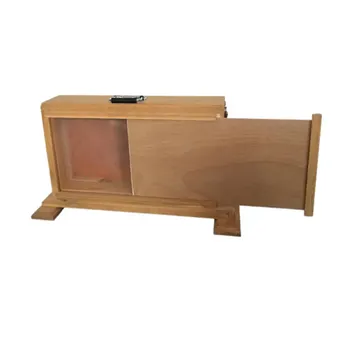
- Professional Observation Hive: The Ultimate Portable Solution for Beekeeping Education, Exhibitions, and Colony Displays
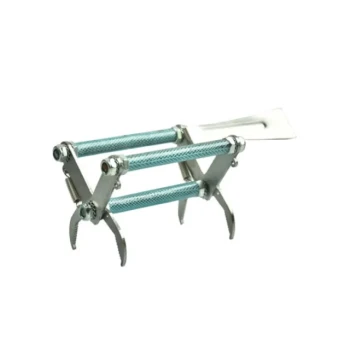
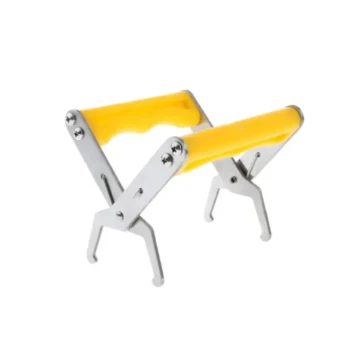
- Professional 3-Bar Frame Grip with Integrated Hive Tool
- Plastic Bee Frame Beekeeping Hive Frames for Wholesale
People Also Ask
- What are the primary advantages of modern beekeeping hives? Scale Your Apiary with Industrial Efficiency
- What is the impact of regular technical extension contact on the management of modern beekeeping hives? Enhance Hive Efficiency
- What are the structural and management advantages of modern beekeeping hives? Scale Your Honey Yields Today
- Why should the promotion of modern beekeeping hives be integrated with professional beekeeping tool kits and technical support?
- Why do forest beekeepers consider transitioning from traditional bark hives? Modernizing for Sustainable Yields