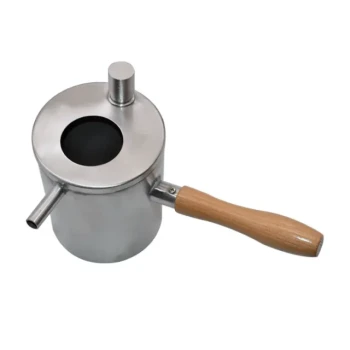
To filter and purify beeswax effectively, you must engage in a iterative cycle of solidifying, cleaning, and re-melting. After the initial melt, allow the wax to harden into a block to separate it from the dirty water, then break it down and re-melt it inside a filtration medium (such as a stocking) submerged in fresh water to trap fine impurities.
The Core Takeaway Purification is not a single step, but a cycle of density separation and mechanical filtration. You must repeatedly wash the wax to remove debris, ensuring you discard the dirty water and replace the filter each time until the wax is visually clear.
Phase 1: Separation and Preparation
Solidifying the Wax Cake
After your initial melt, remove the heat and allow the mixture to cool completely. The beeswax will solidify into a cake on the water's surface, while heavier debris and dirty water will settle at the bottom.
Removing the Debris Layer
Once the wax is hard, remove the cake from the pot. You must immediately discard the dirty water and "slumgum" (residue) left underneath the wax.
Preparing for Re-melting
Break the solidified wax cake into smaller, manageable chunks. This increases the surface area, ensuring the wax melts evenly and quickly during the next phase.
Phase 2: The Filtration Cycle
The Stocking Method
Place the broken chunks of wax inside a new nylon stocking. In this method, the stocking serves as a containment filter, trapping impurities inside while allowing clean wax to flow out.
The Water Bath
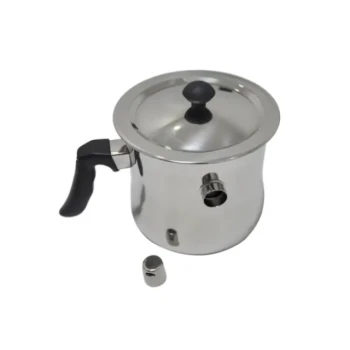
Place the wax-filled stocking back into your heating vessel (such as a crockpot) and fill the vessel with fresh water. The water acts as a buffer to prevent burning and aids in separation.
Controlled Heating
Re-heat the water and wax mixture to approximately 155°F. Maintain this temperature until the wax inside the stocking has fully liquefied.
Phase 3: Extraction and Repetition
Extracting the Purified Wax
Once melted, carefully lift the hot stocking from the water. Allow it to cool slightly so it is safe to handle, then wring it out to squeeze the purified liquid wax through the mesh.
Trapping the Impurities
The impurities will remain trapped inside the stocking, while the clean wax flows back into the pot or a collection container.
The Rule of Three
Do not expect perfect results after one pass. Repeat this entire cycle—melting, filtering, and solidifying—at least three times. Continue until the wax appears completely free of visible particles.
Understanding the Trade-offs and Risks
Temperature Sensitivity
Be vigilant about temperature control; the melting point of beeswax is roughly 147°F, but exceeding this significantly can degrade the product. Overheating can darken the wax's natural color and destroy its desirable aroma.
Water Contamination
While water is used for washing, you must ensure they separate completely. If water remains trapped or emulsified within the wax, it can negatively impact the final texture of your balms or candles.
Fire Safety
Beeswax is highly flammable with a flashpoint around 400°F. Never leave melting wax unattended, and avoid open flames; an electric heat source or double boiler is the safest method to prevent ignition.
Making the Right Choice for Your Goal
To ensure your beeswax is ready for use, apply the following standards:
- If your primary focus is cosmetic quality (lotions/balms): Ensure you repeat the filtration cycle a minimum of three times to remove all microscopic debris that could feel gritty on the skin.
- If your primary focus is crafting candles: Ensure the final pour is done through a fine filter (like cheesecloth) into the mold to prevent clogging the wick.
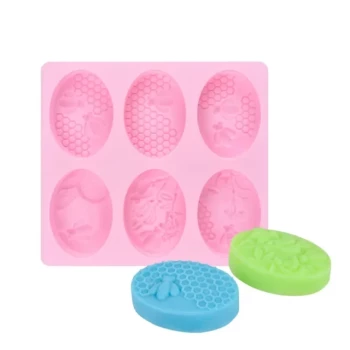
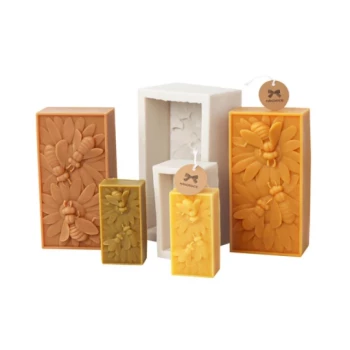
- If your primary focus is long-term storage: Pour the final purified wax into flexible plastic molds or cups, allowing it to harden into blocks that are easy to remove and store in a cool, dry place.
True purification requires patience; rush the process, and you risk ruining the wax's texture and scent.
Summary Table:
| Stage | Action | Purpose |
|---|---|---|
| Phase 1: Separation | Solidify cake & remove slumgum | Removes heavy debris and dirty water |
| Phase 2: Filtration | Re-melt in nylon stocking at 155°F | Traps fine impurities inside the mesh |
| Phase 3: Extraction | Wring out stocking & repeat 3x | Ensures microscopic clarity and smooth texture |
| Safety Check | Use electric heat; avoid 400°F+ | Prevents wax degradation and fire hazards |
Elevate Your Apiary Production with HONESTBEE
High-quality beeswax starts with the right process, but scales with the right equipment. HONESTBEE specializes in supporting commercial apiaries and distributors with a comprehensive range of professional beekeeping tools and machinery.
Whether you need specialized honey-filling machines, precision hive-making hardware, or essential industry consumables, we provide the wholesale solutions you need to thrive. Let us help you streamline your beeswax processing and honey production with equipment built for durability and efficiency.
Ready to scale your operation? Contact us today to explore our wholesale catalog!
Related Products
- Beeswax Foundation Sheets Beehive Foundation for Wholesale
- Colorful Silicone Beeswax Foundation Mold Mould for Beekeeping
- Economy Manual Beeswax Embossing Mill Wax Foundation Machine Roller
- Beeswax Melter for Candle Making Honey Bee Wax Melter
- Electric Beeswax Flat Sheet Machine with Operating Tray for Wax Processing
People Also Ask
- What are the technical advantages of beeswax foundations and feeding tools? Optimize Your Bee Breeding Phase
- Why is the regular exchange and replacement of beeswax foundations encouraged? Boost Honey Yield & Hive Biosafety
- What are the negative consequences of using old or contaminated beeswax in foundations? Protect Your Hive Today
- Why is high-purity natural beeswax essential for foundations? Prevent Larval Mortality & Boost Colony Health
- What are the specific advantages of regular comb replacement? Boost Hive Health with New Beeswax Foundations