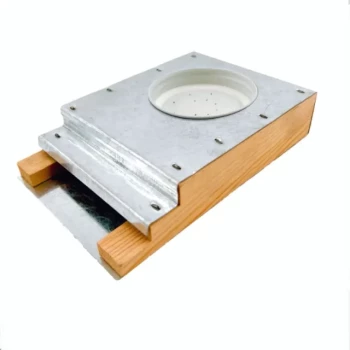
Vertical feeding troughs are specialized internal hive components designed to replace a standard frame, typically located at the perimeter of the brood box. Their primary structural advantage is the containment of liquid supplements within the hive body, while their main functional benefit is allowing bees to feed without breaking their thermal cluster during cold spring or autumn conditions.
By integrating directly into the hive's internal architecture, vertical troughs solve the critical problem of accessibility during adverse weather, ensuring colonies can safely consume essential nutrients without exposure to the elements or outside predators.
Structural Integration and Colony Safety
Internal Placement and Frame Compatibility
Vertical feeders are engineered to fit inside the hive body, occupying the space of a standard frame. This allows them to integrate seamlessly with the standardized frame structures found in Langstroth hives, maintaining the colony's internal organization.
Preventing Resource Loss
The physical design of these troughs is specifically constructed to prevent feed leakage. This structural integrity ensures that liquid supplements remain contained, preventing sticky messes that can drown bees or degrade hive hygiene.
Perimeter Installation
These troughs are typically installed at the edge or perimeter of the hive. This placement keeps the feed accessible to the colony while adhering to the natural spatial organization of the hive.
Functional Benefits for Health and Nutrition
Maintaining Thermal Integrity
The most significant functional advantage is that bees do not need to leave the hive or break their warm cluster to access food. In cold spring or autumn weather, this proximity is critical for survival, as leaving the cluster to forage or access external feeders can be fatal.
Targeted Nutritional Support
Vertical troughs are particularly effective for delivering specific liquid supplements, such as proteins and postbiotics. Because the feeder is internal, the beekeeper can ensure these valuable resources are consumed exclusively by the target colony rather than lost to pests.
Deterrence of Robbing Behavior
By keeping the food source inside the hive, vertical troughs significantly discourage robbing behavior. Unlike entrance feeders which expose the scent of syrup to other insects, vertical troughs keep the resource hidden and defensible, ensuring the colony retains its food.
Understanding the Trade-offs
Space Utilization
Because vertical troughs are installed inside the hive, they occupy space that would otherwise be used for honeycomb or brood frames. Beekeepers must balance the need for supplemental feeding against the loss of potential comb surface area within the standardized box.
Inspection Requirements
Since the equipment is internal, checking feed levels requires opening the hive cover. While this protects the feed, it does require the beekeeper to disturb the hive top to monitor consumption, unlike external transparent feeders.
Making the Right Choice for Your Goal
To maximize the effectiveness of vertical feeding troughs, consider your specific management objectives:
- If your primary focus is Overwintering or Cold Springs: Prioritize vertical troughs to allow bees to feed without breaking the cluster, preventing isolation starvation during temperature drops.
- If your primary focus is Disease Management or Supplementation: Use these troughs to administer precise doses of protein or postbiotics, ensuring the medication is not diluted or stolen by neighboring colonies.
Vertical troughs offer a secure, climate-resilient feeding solution that prioritizes colony security and thermal health over convenience.
Summary Table:
| Feature | Structural/Functional Advantage | Impact on Bee Colony |
|---|---|---|
| Internal Placement | Replaces standard frames within the brood box | Maintains thermal cluster during cold weather |
| Leak-Proof Design | Contained liquid storage system | Prevents bee drowning and maintains hive hygiene |
| Perimeter Position | Integrated into hive edge architecture | Minimizes disruption to natural colony organization |
| Scent Containment | Keeps syrup smell hidden inside the hive | Significantly reduces robbing and pest attraction |
| Direct Access | Feeders located within the hive body | Eliminates isolation starvation during spring/autumn |
Elevate Your Beekeeping Efficiency with HONESTBEE
Are you looking to enhance colony survival and streamline your nutritional management? At HONESTBEE, we specialize in supporting commercial apiaries and distributors with high-performance beekeeping tools and machinery. From specialized vertical feeding troughs and hive-making equipment to professional honey-filling machines, our comprehensive wholesale range is designed to scale your operations.
Partner with us to access premium industry consumables and honey-themed cultural merchandise tailored for the global market. Contact us today to explore our wholesale solutions and see how our expertise can drive your business growth.
References
- Eduardo José García-Vicente, David Risco. Evaluation of Combined Use of Protein and Postbiotics Feed Supplements in Honey Beehives in Autumn and Spring. DOI: 10.1007/s12602-025-10489-3
This article is also based on technical information from HonestBee Knowledge Base .
Related Products
- Professional In-Hive Bee Feeder HONESTBEE Frame for Beekeeping
- HONESTBEE Entrance Bee Feeder Efficient Hive Front Liquid Feeding Solution for Beekeeping
- HONESTBEE Professional Hive Top Bee Feeder Feeding Solution
- HONESTBEE Square Top Hive Bee Feeder Top Bee Feeder
- HONESTBEE Round Hive Top Bee Feeder for Syrup
People Also Ask
- When should beekeepers stop feeding their bees? Let Your Bees Tell You
- Why is the use of a beekeeping feeder for syrup supplementation important? Boost Colony Growth and Survival
- What are the common types of internal and external feeders used in beekeeping? Choose the Right Feeder for Your Hive
- What is a feeder in the context of beekeeping? Optimize Your Hive Nutrition and Growth
- How do specialized feeders contribute to effective artificial feeding? Scientific Apiary Management & Colony Health