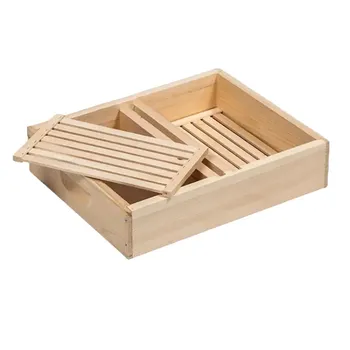
Transitional top-bar hives provide a lower-cost, simpler alternative to full-frame hive systems while retaining practical colony inspection capability. Their single-story box, sloping inward sidewalls, and removable top bars allow bees to build manageable parallel combs without requiring standard frames, supers, or centrifugal extractors. For apiculture managers, the result is reduced equipment investment, simpler handling, and more flexible deployment—particularly where labor, storage, and capital budgets are constrained.
Transitional top-bar hives bridge the gap between fixed-comb and movable-frame systems. They reduce construction, handling, and harvesting costs, but managers must account for fragile comb, annual comb rebuilding, and potentially lower yields compared with fully framed hives.
How Transitional Top-Bar Hives Are Designed
Single-Story Long Hive Body
A transitional top-bar hive typically uses a single-story, elongated box rather than the stacked boxes common in full-frame systems.
This layout simplifies construction and avoids the need to purchase, lift, and store multiple honey supers. It can also support gradual expansion by adding or managing top bars as the colony develops.
Sloping Sidewalls
The sidewalls generally slope inward toward the bottom, commonly using an angle of approximately 115 degrees, depending on the specific design and local construction practice.
This geometry encourages bees to attach comb to the top bars rather than to the hive walls. Proper wall angles are important because excessive attachment can make comb removal and inspection more difficult.
Removable Top Bars
Top bars span the hive body and provide the bees with the attachment point for natural comb.
Their width is selected to suit local bee populations and management conditions; a representative specification is approximately 32 millimeters. Consistent spacing helps bees construct parallel combs that can be removed and inspected individually.
Quick-Opening Cover
A simple removable lid provides rapid access to the colony.
This supports frequent inspections without dismantling stacked boxes or exposing the entire hive cavity for extended periods. Reduced exposure can help limit heat loss and colony disturbance during routine checks.
Why the Design Reduces Operating Costs
Lower Initial Equipment Investment
Top-bar hives use fewer specialized components than full-frame systems.
They generally do not require large inventories of frames, foundation, supers, queen excluders, or mechanical honey extractors. For manufacturers, distributors, and resellers, this creates an accessible product category with relatively straightforward component sourcing.
Simplified Construction
The hive body and bars can be manufactured using basic woodworking methods, and suitable scrap wood may be usable when it meets durability and safety requirements.
This makes the design practical for cost-sensitive beekeeping operations, local fabrication programs, and markets where imported full-frame equipment is expensive or difficult to obtain.
Lower Storage Requirements
Because the system does not depend on seasonal stacks of extra honey supers, it reduces warehouse and apiary storage needs.
This is relevant for commercial operators and distributors managing inventory space. A streamlined product portfolio can also simplify packaging, order fulfillment, and regional delivery.
Reduced Need for Specialized Equipment
Honey can be harvested by cutting and crushing the comb or by selling natural comb honey pieces.
This eliminates the need for a centrifugal extractor in operations focused on crude honey, small-scale production, or direct local sales. The trade-off is that the comb is not preserved for immediate reuse.
Operational Benefits for Apiary Managers
Faster Individual-Comb Inspections
Beekeepers can lift one top bar and its attached comb at a time.
This allows targeted assessment of brood, food stores, queen activity, and colony condition without lifting heavy supers or exposing the full hive interior. It also reduces bending and handling effort during routine management.
Lower Physical Demands
Top-bar systems avoid the repeated lifting of heavy honey boxes associated with stacked frame hives.
That can improve accessibility for smaller teams, older operators, and workers managing multiple colonies. The reduced handling burden may also lower labor strain during inspections and harvest.
Minimal Hive Disturbance
Individual-bar access allows the operator to work progressively through the colony rather than opening the entire hive at once.
When managed carefully, this can reduce heat loss and help preserve a more stable hive environment. It supports natural and relatively low-stress beekeeping methods.
Efficient Crude Honey Harvesting
Parallel combs can be removed and harvested without separating each comb from a standard frame.
For operations selling raw honey, comb honey, or locally processed products, this can shorten the path from hive to market. The approach is especially practical where processing infrastructure is limited.
Flexible Installation
Top-bar hives can be suspended or elevated to help protect colonies from large animals.
This feature can be valuable in rural or mixed-use environments where apiary security is a concern. The support structure should still be designed for stability, weather exposure, and safe beekeeper access.
What Distributors and Resellers Should Specify
Consistent Bar Dimensions
Top-bar width and spacing should be clearly defined for the intended bee population and management model.
A representative width is approximately 32 millimeters, but product specifications should identify the actual dimension, tolerance, and compatibility requirements. Consistency is essential for repeatable comb construction and customer satisfaction.
Durable Hive Materials
Low-cost construction should not be confused with inadequate construction.
Suppliers should specify suitable timber or alternative materials, weather resistance, lid durability, fastener quality, and the expected service environment. Poor material selection can undermine the operating advantages of the design.
Accurate Sidewall Geometry
The inward-sloping walls are a functional feature, not merely a stylistic choice.
Manufacturing documentation should define the target angle, internal dimensions, and bar seating arrangement. Variation between units can lead to excessive comb attachment and difficult inspections.
Complete Product Availability
A strong supply offer should cover the hive body, top bars, lid, stands or suspension hardware, and replacement components.
For B2B buyers, one-stop sourcing reduces procurement complexity and supports faster fulfillment. Reliable stock availability is particularly important when supplying seasonal apiary expansion or replacement-hive programs.
Understanding the Trade-offs
Comb Destruction During Harvest
Crush-and-strain harvesting normally destroys the harvested comb.
The colony must then rebuild that comb, consuming time and energy that could otherwise support brood production or honey storage. This may contribute to lower overall yields than systems where drawn comb is preserved and reused.
More Fragile Comb
Top-bar comb lacks the rigid support provided by a conventional frame.
It can be vulnerable to breakage during lifting, transport, hot weather, or rough handling. Operators need careful inspection techniques, especially when comb is newly built or heavily filled with honey.
Potentially Lower Honey Production
Because bees may need to rebuild comb after harvest, top-bar colonies can have less reusable comb available in subsequent production cycles.
This can reduce efficiency compared with mature framed systems that preserve drawn comb. The difference is important for commercial honey operations focused primarily on maximum extractable yield.
Limited Compatibility With Standard Equipment
Top-bar comb does not transfer directly into standard full-frame boxes or extractor systems.
This can limit interoperability between apiaries and may complicate expansion into conventional honey-processing channels. Managers should select the system based on the intended production model rather than assuming easy conversion later.
Greater Dependence on Management Skill
The system is simple mechanically but still requires careful beekeeping.
Operators must maintain correct bar spacing, handle unsupported comb gently, and monitor attachment to the hive walls. Training and practical guidance are therefore important parts of the product offering.
Making the Right Choice for Your Goal
Transitional top-bar hives are most suitable when operational simplicity and capital efficiency matter as much as maximum honey yield.
- If your primary focus is low startup cost: Choose top-bar equipment to reduce spending on frames, supers, extractors, and specialized storage.
- If your primary focus is rapid colony inspection: Use removable top bars to examine individual combs with less lifting and reduced hive exposure.
- If your primary focus is crude honey or comb-honey production: Select a system that supports direct cut-and-crush harvesting without mechanical extraction.
- If your primary focus is commercial maximum yield: Evaluate full-frame systems carefully, because reusable drawn comb may provide better long-term production efficiency.
- If your primary focus is distribution and resale: Offer complete, dimensionally consistent hive packages with replacement bars, durable materials, and dependable fulfillment support.
- If your primary focus is remote or low-infrastructure beekeeping: Prioritize simple construction, minimal storage needs, and harvesting methods that do not depend on electrical or mechanical equipment.
The right transitional top-bar hive is a cost-effective management platform when its lower complexity is matched to the apiary’s production goals, labor capacity, and supply requirements.
Summary Table:
| Design Feature | Specification / Benefit |
|---|---|
| Single-story body | Reduces equipment investment, storage, and lifting. |
| Sloping sidewalls (~115°) | Encourage natural comb attachment to bars, easier inspection. |
| Removable top bars (~32mm width) | Allow individual comb access, less disturbance. |
| Quick-opening cover | Fast access, minimal heat loss. |
| Crush-and-strain harvest | No extractor needed; ideal for crude honey. |
Looking to streamline your beekeeping operations with cost-effective, low-maintenance hives? HONESTBEE offers a full spectrum of transitional top-bar hive solutions, along with all necessary beekeeping tools and equipment. Our wholesale program ensures rapid delivery and dedicated support for distributors and commercial apiaries. Enhance your product line and satisfy your customers' needs—contact us today to discuss bulk pricing and custom specifications.
Related Products
- Long Langstroth Style Horizontal Top Bar Hive for Wholesale
- Top Bar Beehive for Beekeeping Wholesales Kenya Top Bar Hive
- HONESTBEE Top Bar & Bottom Bar Forming Machine | Bee Frame Machine
- Premium Wood Hive Top Feeder with Floating Rafts for Langstroth Hives
- HONESTBEE Square Top Hive Bee Feeder Top Bee Feeder
People Also Ask
- What are the potential applications of top bar hives in resource-limited settings? Empower Communities with Sustainable Beekeeping
- What are the benefits of extra wax production in top bar hives? A Natural Byproduct for Craft & Efficiency
- How is a top bar hive used to start a new colony? Master Incremental Expansion for a Thriving Hive
- How does the top bar hive help control varroa mites? A Natural Approach to Mite Management
- What does the general management of a top bar hive entail? Master Horizontal Beekeeping with Ease