The technical superiority of insect aspirators lies in their ability to use regulated negative air pressure for the non-destructive capture of live specimens. This pneumatic method eliminates the risk of mechanical damage to delicate limbs and wings, ensuring that wasps and bees maintain their full biological activity and physiological integrity. By acting as a physical safety barrier, the device simultaneously protects the operator from stings while providing a precise, selective collection process that traditional sweep-netting cannot match.
Core Takeaway: Aspirators provide a high-precision, safety-first solution for live insect collection, preserving specimen health and data accuracy through controlled suction. For B2B distributors, offering these tools demonstrates a commitment to professional-grade equipment that meets the rigorous standards of research and industrial toxicology.
Preservation of Specimen Integrity and Bio-Activity
Minimizing Mechanical Damage
Unlike manual handling or sweep-netting, aspirators draw insects directly into collection containers, such as centrifuge tubes, via airflow. This prevents the crushing or bruising of the exoskeleton, ensuring that the morphological integrity of the wings and limbs remains intact for taxonomic identification.
Maintaining Physiological Baseline
By reducing the physical stress response during capture, aspirators minimize physiological fluctuations in the target species. This is critical for subsequent toxicology tests or the analysis of rapidly metabolized pollutants, where the sample must represent the insect's "real-time" biological state.
Selective Collection Capabilities
The targeted nature of suction allows operators to isolate specific individuals, such as returning foragers at a hive entrance, without disturbing the broader colony. This selectivity prevents the mixing of non-target species, which is a common inefficiency in bulk collection methods.
Enhanced Operational Safety and Speed
The Safety Barrier Advantage
The aspirator serves as a critical safety interface between the operator and the stinging insect. By containing the wasp or bee immediately upon capture, it significantly reduces the occupational hazard of stings, making it the preferred tool for high-volume professional sampling.
Rapid Recovery and Efficiency
Aspirators allow for the fast collection of fast-moving adult insects, such as small hive beetles or aggressive wasps, that would otherwise escape. This speed improves the representativeness of the sample, ensuring that data collection is both efficient and statistically reliable.
Portability and Field Versatility
Modern hand-held aspirators are designed for real-time sampling in diverse environments, from agricultural fields to internal hive components. Their compact nature allows for rapid deployment, which is a key selling point for distributors targeting mobile research teams.
Understanding the Trade-offs
Equipment Limitations and Maintenance
While highly effective, aspirators require consistent power sources—either manual or battery-operated—which necessitates robust supply chain support for replacement parts. Furthermore, the suction strength must be carefully calibrated; excessive pressure can still cause stress, while insufficient pressure allows fast-moving insects to evade capture.
Capacity and Environmental Factors
Aspirators are designed for precision rather than mass-extraction; for extremely large-scale population control, they may be less efficient than industrial vacuum systems. Additionally, high-humidity environments can sometimes cause specimens to stick to the inner tubing, requiring specialized cleaning protocols to maintain hygiene and prevent cross-contamination between samples.
Making the Right Choice for Your Goal
As a distributor or wholesaler, aligning your product portfolio with the specific needs of your end-users is essential for long-term growth and client trust.
- If your primary focus is Research and Laboratory Clients: Prioritize aspirators that utilize standardized centrifuge tubes to ensure seamless integration into existing lab workflows and chemical analysis.
- If your primary focus is Professional Pest Control or Beekeeping: Emphasize the safety barrier features and the speed of capture to appeal to operators working in high-risk or high-volume environments.
- If your primary focus is Environmental Monitoring: Highlight the tool's ability to preserve volatile pollutants within the specimen, catering to specialists who require high-integrity biological data.
By providing these precision-engineered tools, you empower your clients with the technical capacity to conduct safer, more accurate, and more efficient entomological work.
Summary Table:
| Feature | Technical Advantage | Impact on Research/Field Work |
|---|---|---|
| Specimen Health | Non-destructive suction | Prevents wing/limb damage; maintains physiological baseline. |
| Operator Safety | Integrated physical barrier | Minimizes sting risk during high-volume sampling. |
| Collection Logic | Precision selectivity | Allows isolation of specific individuals without disturbing colonies. |
| Efficiency | Rapid capture & containment | Increases sample representativeness and field deployment speed. |
| Integration | Standardized container fit | Seamlessly transfers specimens to lab workflows (e.g., centrifuge tubes). |
Elevate Your Professional Inventory with HONESTBEE
Are you looking to supply your clients with the highest standard of entomological and beekeeping equipment? HONESTBEE is your premier B2B partner, specializing in one-stop sourcing for distributors and commercial apiaries worldwide.
Why partner with us?
- Comprehensive Portfolio: From high-precision insect aspirators to advanced honey-filling machinery and hive-making equipment.
- One-Stop Sourcing: We provide a full spectrum of industry consumables and specialized hardware, ensuring you never have to manage multiple vendors.
- Reliable Fulfillment: Benefit from our ultra-fast delivery, deep industry expertise, and dedicated customer support designed to maximize your profit margins.
- Professional Services: We offer OEM/ODM support and premium trading services to tailor products to your specific market needs.
Ready to streamline your supply chain and offer superior quality? Contact HONESTBEE today to discuss wholesale opportunities and bulk pricing!
References
- Karen A. Power, Paola Maiolino. Detection of honey bee viruses in larvae of Vespa orientalis. DOI: 10.3389/fcimb.2023.1207319
This article is also based on technical information from HonestBee Knowledge Base .
Related Products
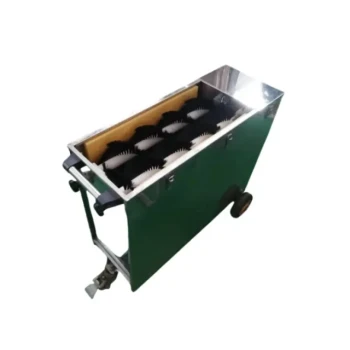
- Commercial Grade Vertical Electric Bee Sweeper for Bee Removal
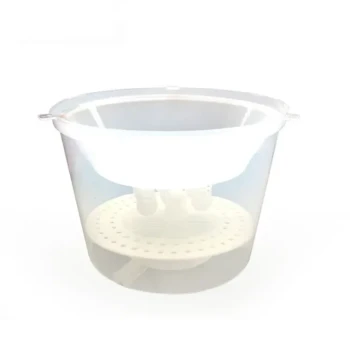
- Professional Multi-Component Bucket Wasp Trap
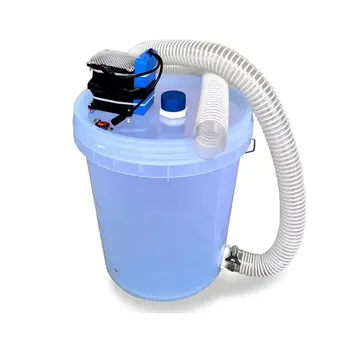
- Portable Electric Bee Vacuum with Lithium Battery and 20L Collection Bucket
- Compact Circular Bee Mite Treatment Dispenser
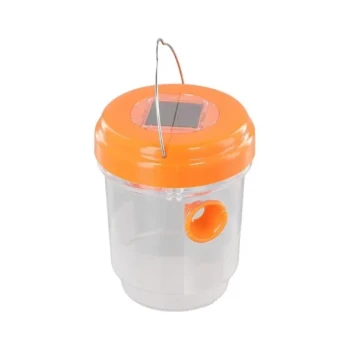
- Solar Powered LED Wasp Trap
People Also Ask
- What are the advantages of using professional bee sweepers? Boost Honey Harvesting Efficiency and Protect Your Hive
- How do standardized frames and professional bee-sweeping equipment contribute to apiary efficiency? Scale Your Harvest
- What are the specific functions of dedicated feeding systems and physical bee removal equipment in organic production?
- What are the benefits of using professional bee removal equipment during honey harvesting? Boost Purity and Efficiency
- What techniques and tools are used to clear bees from supers during honey harvesting? Efficient Solutions for Every Apiary