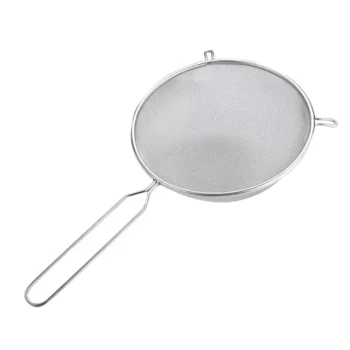
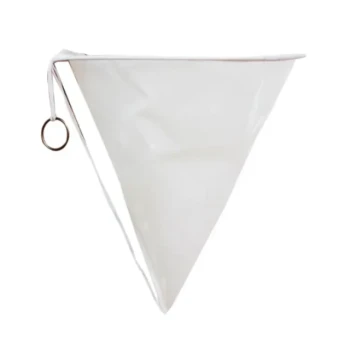
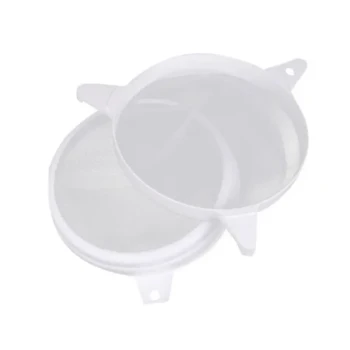
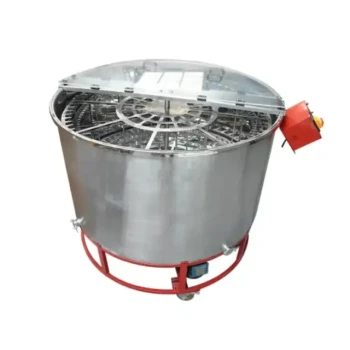
The primary technical objective of industrial honey filtration is to mechanically separate foreign impurities and sediment from raw honey to ensure clarity, hygiene, and shelf stability for large-scale distribution.
This process serves to remove wax cappings, larval debris, and particulate matter that compromise the product's visual appeal and shelf life. Crucially, in compliant industrial operations, this must be achieved without removing essential natural constituents, such as pollen, which are legally required to verify the honey's botanical origin.
The core challenge of industrial honey filtration is strictly controlling the process to maximize purity and clarity while preventing "over-filtration," which strips the product of its natural identity and violates international standards like the EU Honey Directive.
Achieving Physical Purity and Hygiene
Elimination of Macroscopic Debris
Raw honey arrives at the factory containing significant physical contaminants from the extraction process.
Filtration systems serve as the first line of defense, removing beeswax fragments, propolis, and larval debris.
This step is essential for meeting basic food hygiene standards and preparing the liquid for consumer-grade packaging.
Multi-Stage Particle Removal
Industrial systems typically utilize multi-stage filtration with progressively smaller pore sizes.
This technique targets microscopic suspended impurities that escape initial screening.
By systematically reducing particle size, factories ensure a consistent texture and mouthfeel across massive production batches.
Enhancing Stability and Shelf Life
Delaying Natural Crystallization
Unfiltered honey contains high numbers of crystallization nuclei, such as dust, air bubbles, and glucose crystals.
Filtration removes these nuclei, significantly slowing down the solidification process.
This ensures the honey remains in a liquid, pourable state for the duration of its shelf display, which is a key requirement for mass-market retail.
Prevention of Spoilage
Impurities and debris can act as hosts for yeasts that trigger fermentation.
By removing these foreign bodies, combined with moisture control measures, filtration stabilizes the honey.
This processing step is critical for preventing spoilage during the long logistical chains associated with global export.
Marketability and Aesthetic Standardization
Improving Visual Clarity
Consumers generally equate high transparency with quality.
Filtration systems remove fine particles and air bubbles that cause cloudiness or "haze."
This results in the bright, polished aesthetic required to command a price premium in commercial markets.
Enabling High-Efficiency Automation
Manual filtration is impossible at an industrial scale.
Automated filtration systems allow for the continuous processing of honey, facilitating the transition from traditional beekeeping to modern manufacturing.
This machinery integrates with extraction and concentration units to maintain high throughput while adhering to pharmaceutical-grade cleanliness.
Understanding the Trade-offs
The Risk of Over-Filtration
The most critical technical constraint is the preservation of pollen.
While ultra-fine filtration improves clarity, it can inadvertently strip pollen, rendering the honey "non-compliant" under regulations like the EU Honey Directive.
Honey without pollen cannot be traced to a botanical source and may be classified as syrup rather than natural honey.
Balancing Bioactivity vs. Aesthetics
Aggressive filtration often correlates with heat application to lower viscosity.
While this speeds up processing, it risks degrading heat-sensitive bioactive components.
Technical operators must balance the need for a crystal-clear product against the requirement to maintain the chemical integrity of a "natural" product.
Making the Right Choice for Your Goal
When configuring a filtration line, the technical specifications should match your end-market requirements.
- If your primary focus is Mass Market Retail: Prioritize removing crystallization nuclei to ensure the product remains liquid and visually clear on the shelf for extended periods.
- If your primary focus is Export to the EU: Strictly limit filtration pore size to ensure pollen retention, avoiding ultra-filtration to maintain legal compliance as "natural honey."
- If your primary focus is Pharmaceutical Grade: Implement rigorous multi-stage filtration to achieve absolute purity and sterility, prioritizing hygiene over traditional botanical characteristics.
True industrial efficiency is achieved not just by removing impurities, but by precisely defining what must remain in the final product.
Summary Table:
| Objective | Technical Focus | Impact on Quality |
|---|---|---|
| Physical Purity | Removal of wax, propolis, and larval debris | Ensures food hygiene and consumer-grade safety. |
| Crystallization Delay | Eliminating nuclei (dust, glucose crystals) | Keeps honey in a liquid, pourable state for retail. |
| Visual Clarity | Reducing haze and air bubbles | Results in a polished, bright aesthetic for premium pricing. |
| Shelf Stability | Yeast and impurity removal | Prevents fermentation and spoilage during export. |
| Regulatory Compliance | Pollen retention & pore size control | Validates botanical origin and meets EU Honey Directives. |
Scale Your Honey Production with HONESTBEE Machinery
As a dedicated partner to commercial apiaries and distributors, HONESTBEE understands that industrial efficiency requires the perfect balance between purity and product integrity. We provide a comprehensive range of beekeeping tools, honey-filling machines, and high-capacity filtration systems designed to meet international standards.
Whether you are looking to optimize your factory throughput or source premium consumables, our wholesale solutions are tailored to help your business grow.
Ready to upgrade your processing line?
Contact HONESTBEE Today to explore our full spectrum of honey-processing hardware and equipment!
References
- Norberto L. García. The Current Situation on the International Honey Market. DOI: 10.1080/0005772x.2018.1483814
This article is also based on technical information from HonestBee Knowledge Base .
Related Products
- Electric Double Wall Honey Filtering Machine Purifier Equipment for Honey Processing Plant
- Professional Stainless Steel Honey Filtering Machine with Water Bath Heating for Beekeeping
- Professional Stainless Steel Honey Filter with Support Handle
- Honey Concentrating and Filtering Dehumidifier Machine 2T Capacity for Honey
- Professional Honey Filter with Tripod Support Stand
People Also Ask
- What is the process of filtering honey? A Guide to Clean, Pure, and Market-Ready Honey
- What types of equipment are used in honey filtering? Build an Efficient System for Pure, Marketable Honey
- What is the overall importance of using the right equipment in honey filtering? Boost Quality & Marketability
- How should honey filtering equipment be properly maintained? Extend Equipment Life & Protect Honey Purity
- Why is filtering important in honey processing, and what equipment is used? A Guide to Quality & Efficiency