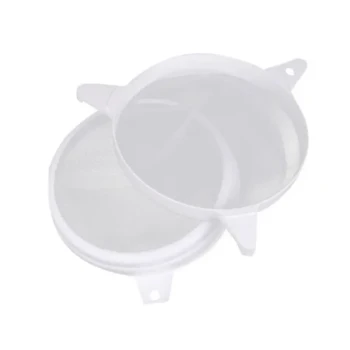
Industrial-grade honey filtration and pressing equipment function as the critical bridge between raw harvest and commercial profitability. Mechanically, these systems utilize physical force and precision screens to separate raw honey from solid impurities such as wax debris, bee remains, and larvae. This process yields "Strained Honey," a product defined by its high visual purity and improved color score, which are the primary drivers for commanding premium pricing in the general retail market.
Core Takeaway By mechanically removing particulate matter to achieve superior transparency and standardized color, filtration equipment transforms variable raw honey into a high-value commercial product that satisfies the aesthetic demands of the majority of consumers.
The Mechanics of Value Creation
Physical Purification
The foundational function of this equipment is the mechanical separation of solids from liquids. Industrial systems apply force to push honey through multi-stage media, effectively removing beeswax residues, bee fragments, and other physical contaminants found in the raw harvest. This creates a baseline of hygiene required for commercial sale.
Enhancing Visual Clarity
Value in the honey market is heavily dictated by appearance. Filtration removes the micro-impurities that make honey appear cloudy or dirty. By achieving a transparent and pure visual appearance, the machinery ensures the product meets the "Strained Honey" standard, which is preferred by a significant portion of the consumer base.
Improving the Color Score
Honey grading often relies on color standards. Mechanical filtration significantly improves the color score of the final product by removing suspended particles that darken the honey's appearance. A lighter, brighter product often commands a higher price point in retail environments compared to dark, turbid raw honey.
Standardization and Commercial Viability
Meeting Consumer Expectations
Data indicates that a majority of consumers (approximately 62.3%) prefer the aesthetics of processed, clear honey. Standardized physical filtration ensures that every jar looks identical on the shelf. This consistency is a prerequisite for entering high-end retail channels and securing large-scale supply contracts.
Extending Shelf Life
Beyond aesthetics, mechanical filtration plays a functional role in preservation. By removing organic debris and pollen clusters, the process delays crystallization and prevents fermentation. This extends the product's shelf life, reducing waste and making the product more attractive to retailers who require long-term stability.
Ensuring Hygiene and Safety
Modern automated pressing and filtration reduce direct human contact with the food product. This mechanization improves food safety standards, ensuring the honey is free from contaminants. High hygiene levels are essential for passing the rigorous quality control audits required by premium market sectors.
Understanding the Trade-offs
Equipment Cost vs. Market Positioning
While filtration increases value for the mass market, it requires capital investment in centrifuges and precision filters. Producers must weigh this cost against their target demographic. High-clarity honey appeals to the broad retail market, but aggressive filtration is unnecessary if your business model relies solely on selling "unfiltered" or "rustic" honey at local farm stands.
The "Raw" vs. "Refined" Distinction
It is vital to note that while filtration increases the "premium" status for general retail, it alters the product's classification. Strained honey is visually superior and cleaner, but it is distinct from "raw" honey that retains wax and pollen. You must ensure your labeling accurately reflects the mechanical process to maintain consumer trust.
Making the Right Choice for Your Goal
- If your primary focus is Mass Market Retail: Invest in multi-stage filtration to achieve maximum transparency and shelf stability, as this aligns with the preference of over 60% of consumers.
- If your primary focus is Boutique/Artisan Sales: Utilize coarse straining only to remove large debris (bee parts) while retaining pollen, marketing the "raw" texture as a unique selling point.
- If your primary focus is Operational Efficiency: Implement automated filling and filtration lines to reduce human contact and standardize packaging, which is essential for scaling production.
The mechanical function of filtration is not just about cleaning honey; it is about refining a raw ingredient into a standardized, high-value commodity.
Summary Table:
| Feature | Mechanical Function | Market Value Impact |
|---|---|---|
| Physical Purification | Multi-stage removal of wax, bee remains, and larvae | Ensures baseline hygiene and food safety standards |
| Visual Clarity | Elimination of micro-impurities and cloudiness | Meets premium retail aesthetic demands (preferred by 62.3%) |
| Color Score Improvement | Suspended particle removal to brighten honey | Commands higher price points in competitive retail markets |
| Stability Enhancement | Delaying crystallization and preventing fermentation | Extends shelf life and reduces inventory waste |
| Standardization | Automated consistency across production batches | Facilitates entry into high-end retail and export channels |
Elevate Your Honey Production with HONESTBEE
Transform your raw harvest into a high-value commercial asset with industrial-grade solutions from HONESTBEE. As a dedicated partner to commercial apiaries and global distributors, we provide the full spectrum of beekeeping technology—from advanced honey-filling machines and multi-stage filtration systems to specialized hive-making machinery.
Whether you are scaling your operation for mass retail or looking to standardize your wholesale output, HONESTBEE delivers the precision hardware and essential industry consumables you need to succeed. Contact us today to explore our wholesale offerings and equipment packages and see how our expertise can drive your business's profitability.
References
- Alemayehu Tolera, Simret Betsha. Honey Marketing Systems and Market Constraints in Horo District Oromia Regional State, Ethiopia. DOI: 10.26855/ijfsa.2021.12.024
This article is also based on technical information from HonestBee Knowledge Base .
Related Products
- Electric Honey Press Machine for Squeezing Honey Comb Press Equipment
- Electric Double Wall Honey Filtering Machine Purifier Equipment for Honey Processing Plant
- Honey Concentrating and Filtering Dehumidifier Machine 2T Capacity for Honey
- Stainless Steel Manual Honey Press with Guard for Pressing Honey and Wax
- Professional Stainless Steel Honey Filtering Machine with Water Bath Heating for Beekeeping
People Also Ask
- What is the pressing honey method? A Guide to Simple, Pollen-Rich Honey Extraction
- What are the steps for extracting honey using a press? Master Traditional Extraction for Pure, Flavorful Honey
- For which type of beekeeping operations is this honey press most suitable? Efficient Solutions for High-Volume Apiaries
- What are some general features of a honey press? Maximize Your Yield with Durable Extraction Tools
- What is the purpose of the raised frame on the honey press? Simplify Logistics and Improve Extraction Workflow