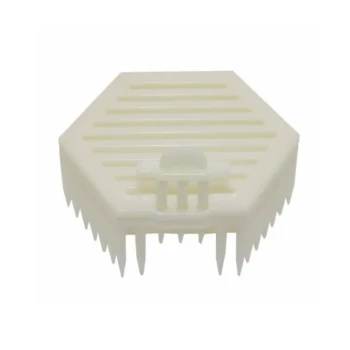
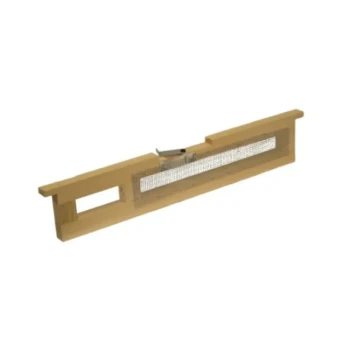
Specialized honeybee rearing cages address the insect's physiological requirements through a combination of permeable materials and modular access points. These cages utilize multi-sided ventilated metal mesh or perforated plastic shells to guarantee essential gas exchange, while simultaneously providing dedicated interfaces for liquid sugar and solid protein to sustain metabolic function.
The most effective rearing designs decouple colony maintenance from physical disturbance, allowing researchers to manage hygiene and nutrition without triggering stress responses in the confined population.
Ensuring Respiratory Health and Environmental Stability
To support the high metabolic rates of honeybees, the physical structure of the cage must prevent the buildup of metabolic gases and humidity.
Maximizing Gas Exchange
Professional cages rely on multi-sided ventilated metal mesh or perforated plastic shells. This design choice ensures that adequate airflow reaches the cluster from multiple angles, preventing stagnant air pockets that can be detrimental to bee health.
Promoting Air Circulation
Standardized hoarding cages often incorporate a metal mesh base. This specific feature facilitates vertical air circulation, which is critical for thermoregulation and waste gas removal within the confinement area.
Facilitating Nutritional Intake
Honeybees in a rearing environment require constant access to carbohydrates and proteins. The cage design must accommodate these distinct food sources without risking contamination or starvation.
Dual-Feeding Interfaces
Cages are engineered with dedicated ports to hold liquid sugar bottles and solid protein feeders. This separation ensures that bees have simultaneous access to both energy sources and the amino acids required for tissue repair and gland development.
Automated Supply Integration
Design features such as side openings facilitate the insertion of plastic feeding tubes. This allows for the automatic supply of nutrients, reducing the manual labor required to feed large numbers of cages and ensuring consistent resource availability.
Minimizing Stress During Maintenance
Physiological health is closely tied to stress levels. Advanced cage features allow for necessary maintenance tasks to be performed without disrupting the colony's social structure.
Non-Disruptive Hygiene Management
Accumulated debris and mortality can breed pathogens. Cages featuring detachable bases allow for the swift removal of dead bees and waste. This maintains a sanitary environment without the need to open the main containment area or agitate the living bees.
Low-Impact Observation
Sliding observation windows provide a clear view of the colony. Researchers can monitor clustering behavior and mortality rates through these portals, or the mesh structure itself, without physically interfering with the bees or altering their immediate environment.
Understanding the Trade-offs
While advanced rearing cages optimize physiological support, they introduce specific operational considerations.
Environmental Dependence
The heavy reliance on ventilated mesh for gas exchange means the cage offers little insulation. The internal environment is highly susceptible to fluctuations in the external lab conditions, requiring precise ambient temperature and humidity control in the surrounding room.
Mechanical Complexity
Features like sliding windows and detachable bases significantly improve bee welfare but increase the complexity of the cage assembly. These moving parts require careful cleaning and handling to ensure they remain secure and functional over repeated uses.
Making the Right Choice for Your Goal
Selecting the appropriate cage configuration depends on whether your priority is long-term physiological study or high-throughput processing.
- If your primary focus is Long-Term Survival Studies: Prioritize cages with detachable bases and sliding windows to maximize hygiene and minimize stress during prolonged confinement.
- If your primary focus is High-Throughput Toxicology: Select cages with standardized side openings that accommodate automatic feeding tubes to streamline dosing and resource delivery.
By aligning cage features with the specific physiological constraints of the honeybee, you ensure data integrity and the ethical treatment of the test subjects.
Summary Table:
| Feature | Physiological Benefit | Component Material/Design |
|---|---|---|
| Multi-sided Mesh | Maximizes gas exchange and prevents CO2 buildup | Ventilated metal or perforated plastic |
| Dual-Feeding Ports | Ensures simultaneous access to sugar and protein | Dedicated interfaces for bottles & tubes |
| Detachable Base | Maintains hygiene and reduces pathogen stress | Removable bottom tray |
| Mesh Base | Facilitates vertical thermoregulation | Standardized wire mesh |
| Sliding Windows | Low-impact observation to minimize stress | Clear acrylic or sliding mesh panels |
Elevate Your Bee Research and Commercial Operations with HONESTBEE
At HONESTBEE, we understand that the health of your colony is the foundation of your success. As a premier partner for commercial apiaries and distributors, we provide a comprehensive wholesale range of professional beekeeping tools, specialized rearing equipment, and essential industry consumables.
Whether you are setting up a high-throughput toxicology lab or managing a large-scale commercial apiary, our portfolio—ranging from precision-engineered honey-filling machines to specialized hive-making hardware—is designed to enhance efficiency and ensure the physiological well-being of your bees.
Ready to scale your production with industry-leading equipment? Contact our expert team today to discuss your wholesale needs!
References
- Geoffrey R. Williams, Robert Brodschneider. Standard methods for maintaining adult<i>Apis mellifera</i>in cages under<i>in vitro</i>laboratory conditions. DOI: 10.3896/ibra.1.52.1.04
This article is also based on technical information from HonestBee Knowledge Base .
Related Products
- Twin Queen Styrofoam Honey Bee Nucs Mating and Breeding Box
- Automatic Heat Preservation 6 Frame Pro Nuc Box for Honey Bee Queen Mating
- Premium Nicot Style Queen Rearing Kit with Hair Roller Bee Cages
- Langstroth Honey Bee Box Hive Boxes for Different Depths
- Professional Multi-Functional Queen Bee Cage
People Also Ask
- What are the benefits of using double nuc boxes in beekeeping? Boost Apiary Resilience & Growth
- What are the practical advantages of a double nuc box? Maximize Efficiency with Standardized Beekeeping Gear
- What is the frame capacity of each side in a double nuc box? Master Queen Rearing & Colony Starts
- What are the advantages of double nuc boxes in winter? Boost Survival Rates & Apiary Resilience
- What is the purpose of exploring double nuc boxes in beekeeping? Boost Apiary Resilience & Growth