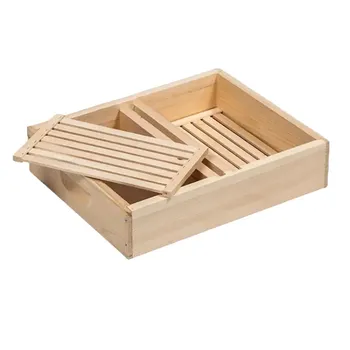
Forage scarcity can damage migratory honey bees more severely than transport alone. When natural nectar and pollen are limited, bees have fewer nutritional resources to neutralize reactive oxygen species, causing oxidative stress and higher cellular damage, measured in part by malondialdehyde levels. Feeding equipment—such as internal feeder inserts, apiary feeders, and systems for syrup, pollen supplements, or solid feed—helps commercial operators maintain nutrition during transport, holding periods, and crop monocultures.
The central issue is not migration by itself, but migration combined with inadequate nutrition. Reliable supplemental feeding can support redox balance, worker longevity, brood development, and colony resilience when natural forage is unavailable.
How Forage Availability Affects Oxidative Stress
Scarce forage increases cellular damage
Forage scarcity deprives colonies of the nectar, pollen, and associated nutrients required for normal metabolism and antioxidant defense. As a result, reactive oxygen species can accumulate more readily within bee tissues.
This is reflected in increased malondialdehyde, a commonly used indicator of lipid peroxidation and cellular oxidative damage. The primary reference indicates that forage shortages may produce an even larger negative effect on this damage marker than physical relocation itself.
Adequate nutrition supports redox balance
When bees have access to abundant, high-quality forage, their nutritional status helps limit the effects of reactive oxygen species. This can reduce the severity of lifespan losses associated with relocation and other migratory pressures.
Nutrition is especially important during early development. Adequate natural forage available to larvae and pupae can improve physiological resistance before adult workers enter demanding transport and foraging conditions.
Migration adds several stressors
Transport can shorten worker lifespan, increase drifting between colonies, and disrupt normal colony behavior. Reported effects include an average adult lifespan reduction of approximately 5%, or about one day, and a foraging lifespan reduction of up to 20%.
Even a small reduction in worker longevity can accelerate population decline. Surviving workers may begin foraging earlier than normal, increasing their exposure to exhaustion, disease, and additional mortality.
Why Feeding Matters in Commercial Operations
Transport and holding periods create nutritional gaps
Colonies may be confined during loading, transit, staging, or holding-yard periods when natural forage is inaccessible. This is particularly risky when holding areas lack sufficient nectar and pollen.
Supplemental feed helps bridge these gaps. It does not eliminate transportation stress, but it prevents nutritional deficiency from compounding the physical and environmental demands of migration.
Monoculture can limit dietary diversity
Pollination contracts often place colonies near large areas dominated by a single crop. Such locations may provide substantial forage during peak bloom but offer limited dietary diversity or insufficient resources before and after flowering.
Feed supplies can help stabilize colony nutrition during these transitions. This is valuable when commercial operations move colonies between crops or when bloom timing does not align perfectly with transport schedules.
Nutrition supports immunity and parasite resilience
Poor nutrition can weaken immune defenses and increase susceptibility to infectious disease. Supplementary feeding therefore serves a broader purpose than maintaining short-term energy: it helps preserve the colony’s ability to withstand migratory, crowding, and parasite-related stress.
The supplementary reference cites modeling in which mite-intensity growth was lower in fed colonies than in unfed colonies, declining from 2.5% to 0.9%. This should be treated as context-specific evidence rather than a universal result, but it reinforces the operational value of adequate nutrition in parasite management.
How Feeding Equipment Assists Commercial Beekeepers
Internal feeder inserts maintain access during confinement
Internal feeder inserts allow colonies to receive syrup or other liquid feed without requiring the hive to be opened repeatedly. This can reduce handling during transport preparation, staging, and recovery.
The appropriate design must be compatible with the hive format and securely positioned to minimize leakage, disturbance, and interference with ventilation.
Apiary feeders support scalable nutrition programs
Dedicated apiary feeding equipment helps operators provide supplemental feed across many colonies in a consistent and repeatable manner. This is important for commercial yards where labor efficiency and uniform feeding schedules directly affect operating reliability.
Equipment can support different consumables, including sugar syrup, pollen supplements, and solid feed, allowing the feeding program to match seasonal and colony-specific needs.
Feeding systems integrate with transport planning
Feeding equipment should be considered alongside secure hive components, ventilation hardware, and loading tools. A feeder that supports nutrition but compromises airflow, stability, or temperature control can create a different operational risk.
For migratory operations, the best solution is an integrated equipment package that protects colonies physically while maintaining access to essential nutrition.
Reliable supply reduces operational interruptions
Distributors and commercial buyers benefit from sourcing feeders, internal inserts, feed consumables, and related hive hardware through a coordinated supply channel. A broad product portfolio can simplify purchasing and reduce the risk of a missing component delaying a transport cycle.
Rapid response, technical product knowledge, and efficient order fulfillment are particularly important when colonies must be moved according to narrow crop-bloom windows.
Managing Migration Beyond Feeding
Rotate transport schedules
Moving only selected subsets of colonies at a time can reduce the number of transport cycles experienced by individual hives. This approach may lower cumulative relocation stress while preserving pollination capacity across contracts.
Scheduling should account for colony strength, brood condition, recovery time, and expected forage at each destination.
Protect ventilation and temperature control
Transport hardware should provide secure hive retention and adequate ventilation. Poor airflow, overheating, and unstable hive components can intensify stress even when feed is available.
Durable hive parts and properly designed transport equipment also reduce physical damage and handling-related disturbance.
Avoid forage-deprived holding yards
A holding yard with insufficient forage can turn a temporary staging period into a significant nutritional challenge. If colonies must remain confined or stationary, operators should plan supplemental feeding before the nutritional deficit becomes apparent.
Understanding the Trade-offs
Supplemental feed is not a complete replacement for forage
Feed can compensate for energy or protein shortages, but it does not fully reproduce the value of diverse natural nectar and pollen. Natural forage remains important for balanced nutrition, brood development, and long-term colony condition.
Feeding should therefore complement forage management rather than justify placing colonies indefinitely in nutritionally poor environments.
Equipment can introduce handling and hygiene risks
Leaking feeders, contaminated feed, poor placement, or inadequate cleaning can create hygiene problems and increase colony disturbance. Equipment selection should include attention to cleanability, secure installation, material durability, and compatibility with existing hive hardware.
Feeding does not remove transport-related risks
Nutrition can help buffer oxidative stress, but it cannot prevent all effects of migration. Drifting, crowding, temperature fluctuations, shortened worker lifespan, disease transmission, and parasite spread remain separate management concerns.
Commercial operations should combine feeding with transport rotation, ventilation, structural security, hygiene, and colony health monitoring.
Product variety must match operational requirements
The cheapest feeder is not necessarily the most economical choice if it leaks, requires excessive labor, or cannot be delivered during a critical pollination window. Buyers should evaluate total operating value, including durability, compatibility, service support, and fulfillment reliability.
How to Apply This to Your Operation
A practical feeding program should be planned around both bee physiology and commercial logistics.
- If your primary focus is oxidative-stress reduction: Prioritize dependable access to appropriate supplemental feed during transport, holding periods, and forage gaps, while preserving access to high-quality natural forage whenever possible.
- If your primary focus is large-scale operational efficiency: Source compatible feeders, internal inserts, consumables, and transport hardware through a coordinated supplier capable of rapid response and consistent fulfillment.
- If your primary focus is colony longevity: Combine nutritional support with rotated transport schedules, adequate ventilation, secure hive equipment, and recovery time between pollination contracts.
- If your primary focus is distributor or reseller value: Build a full-spectrum product offering that covers feeding, hive hardware, handling tools, and transport support rather than treating feeders as an isolated product category.
Well-planned feeding equipment helps commercial beekeepers turn forage shortages from an unmanaged stressor into a controllable operational risk.
Summary Table:
| Factor | Impact | Mitigation |
|---|---|---|
| Forage Scarcity | Increases malondialdehyde (oxidative damage) | Supplemental feeding with syrup, pollen, or solid feed |
| Migration | Reduces adult lifespan by ~5% and foraging lifespan by up to 20% | Feed during transport and holding periods |
| Monoculture | Limits dietary diversity | Provide supplements to bridge nutritional gaps |
| Feeding Equipment | Supports nutrition without opening hives | Use internal feeders, apiary feeders, and proper systems |
At HONESTBEE, we supply commercial apiaries and distributors with a full spectrum of beekeeping equipment, including internal feeder inserts, apiary feeders, and feed consumables. Our one-stop sourcing, rapid response, and dedicated support ensure your colonies stay healthy and productive. Contact us today to optimize your feeding program and reduce oxidative stress in your bees — Get in touch now!
Related Products
- HONESTBEE Entrance Bee Feeder Efficient Hive Front Liquid Feeding Solution for Beekeeping
- Classic Boardman Entrance Bee Feeder Hive Front Feeding Solution
- HONESTBEE Professional Hive Top Bee Feeder Feeding Solution
- Rapid Bee Feeder White Plastic 2L Round Top Feeder for 8 or 10-Frame Bee Hives
- Professional In-Hive Bee Feeder HONESTBEE Frame for Beekeeping
People Also Ask
- What types of bee feeders are available for beginners? Start with the Simple Entrance Feeder
- What are the advantages and disadvantages of using an entrance feeder for bees? Balance Convenience and Hive Security.
- What is a bee entrance feeder and what are its drawbacks? Essential Guide to Hive Security and Feeding Efficiency
- How does a bee entrance feeder work? A Simple Guide to Convenient Hive Feeding
- How to make an entrance feeder for bees? A DIY Guide for Safe & Effective Feeding