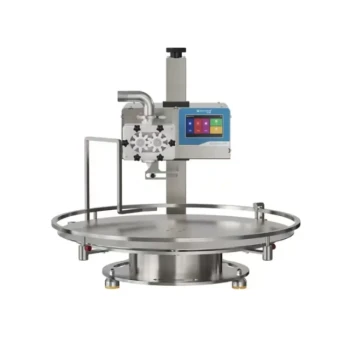
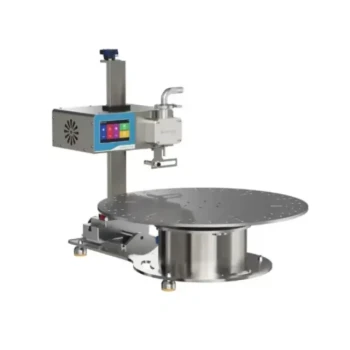
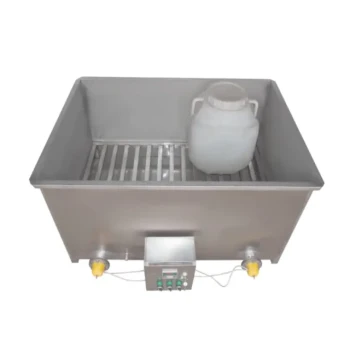
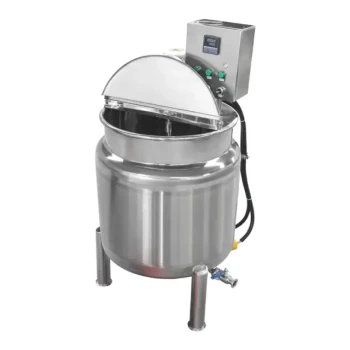
For high-moisture Apis cerana honey, the essential equipment is a low-temperature vacuum dehydrator, temperature-controlled settling tanks, and hygienic precision filling equipment. Honey from tropical and humid regions may contain approximately 20% moisture, increasing the risk of osmophilic yeast fermentation. Processing must therefore reduce moisture without overheating the honey’s heat-sensitive invertase and aromatic compounds.
The preferred setup is a controlled, low-temperature line: extract and filter hygienically, reduce moisture under vacuum at temperatures below approximately 45°C, hold the honey in temperature-controlled tanks, and fill it using corrosion-resistant stainless-steel pumps and precise, low-aeration nozzles.
Why High-Moisture Apis cerana Honey Needs Specialized Equipment
Moisture increases fermentation risk
Honey above approximately 18% moisture is substantially more vulnerable to fermentation by osmophilic yeasts. This makes moisture measurement and reduction central to commercial processing, especially for tropical honey harvested during rainy seasons.
Heat can damage valuable components
High invertase levels are a characteristic consideration for this honey. Excessive heating may accelerate enzyme degradation and reduce the product’s biological and sensory quality, so conventional high-temperature processing is not the preferred approach.
Packaging must prevent reabsorption
Honey can absorb moisture from humid air after processing. Airtight containers, hygienic filling, and reliable sealing are therefore necessary to protect the final moisture level during storage and distribution.
Core Processing Equipment Requirements
Hygienic extraction and filtration equipment
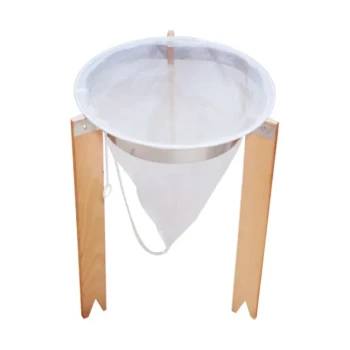
The line should include food-grade extraction equipment capable of handling uncapped or high-moisture honey without introducing contaminants. Filtration equipment should remove wax, debris, and other suspended material before dehydration and filling.
All product-contact surfaces should be suitable for food processing and easy to clean. Stainless steel is generally preferred for tanks, piping, pumps, and valves because it supports sanitation and corrosion resistance.
Moisture measurement and batch control
A commercial operation should verify moisture before and after dehydration. A suitable honey moisture meter or refractometer allows processors to identify fermentation risk, control the dehydration endpoint, and document batch consistency.
Moisture targets should be established according to the intended market, product specification, and applicable regulations. A commonly referenced practical threshold is below approximately 18–18.6%, but this should not replace local regulatory or customer requirements.
Low-temperature vacuum dehydration
The most important equipment is a vacuum dehydrator designed for honey. Vacuum processing lowers the boiling point of water, allowing moisture removal at a lower product temperature than atmospheric heating.
For delicate Apis cerana honey, the equipment should support controlled operation below approximately 45°C. It should provide uniform heat transfer, accurate temperature monitoring, adjustable vacuum control, and short residence time to reduce enzyme and aroma loss.
Temperature-controlled settling tanks
After dehydration, honey should be held in temperature-controlled settling or storage tanks. These tanks allow air bubbles and fine particles to separate before filling while maintaining a stable viscosity for pumping.
The tanks should include:
- Food-grade, corrosion-resistant stainless-steel construction
- Insulated walls or controlled heating jackets
- Accurate temperature sensors and controls
- Tight-fitting or sealed covers
- Hygienic outlets and cleanable internal surfaces
The objective is not to keep honey hot unnecessarily. Temperature should be high enough for reliable transfer and settling, but low enough to limit enzyme degradation.
Filling and Packaging Equipment Considerations
Food-grade stainless-steel pumps
Filling systems should use food-grade, corrosion-resistant stainless-steel pumps selected for honey’s viscosity and the required production rate. Pump sizing should avoid excessive shear, turbulence, and air entrainment.
The pump and pipework should also be designed for complete drainage and cleaning. Dead legs, difficult-to-access joints, and poorly sealed connections can create hygiene risks and complicate changeovers.
Precise volumetric filling nozzles
High-moisture honey may flow more easily than conventional honey, making uncontrolled filling more likely to cause variation, dripping, or container overfill. Precise volumetric nozzles help maintain consistent package weights or volumes.
The filling head should be designed to:
- Handle the product viscosity across the operating temperature range
- Minimize splashing and aeration
- Prevent dripping between containers
- Support rapid cleaning and product changeover
- Accommodate the selected bottle, jar, drum, or pail format
Low-aeration product transfer
Aeration can introduce bubbles and increase the product’s exposure to oxygen and airborne contamination. Pumps, valves, manifolds, and nozzles should therefore be configured for smooth, low-turbulence transfer.
A closed or semi-closed filling line is preferable in humid environments because it reduces exposure to ambient moisture immediately before sealing.
Airtight containers and sealing systems
Packaging should create a reliable barrier against air and moisture. Suitable containers may include food-grade jars, pails, or drums with compatible airtight closures.
For wholesale and distribution applications, the packaging system should also protect against leakage, humidity ingress, and handling damage during storage and transport.
Supporting Equipment for Tropical Processing Lines
Warm-room conditioning before extraction
Where practical, supers can be conditioned in a warm room at approximately 30–35°C with forced air circulation. This may help reduce surface moisture before extraction, but it should be treated as a supplementary measure rather than a replacement for controlled vacuum dehydration.
The warm room should provide uniform airflow and temperature control without exposing the frames or honey to excessive heat.
Dehumidification and humidity control
A dehumidified processing room can reduce the chance of honey absorbing moisture during extraction, dehydration, and filling. This is particularly important in tropical facilities where ambient humidity may be high throughout the production day.
Humidity control should cover the areas where open honey is handled, not only the finished-goods warehouse.
Storage tanks and honey drums
Finished honey should be stored in sealed, food-grade tanks or drums. These containers should be cleanable, corrosion-resistant, and compatible with the expected storage period and distribution conditions.
For distributors and wholesalers, container standardization can simplify palletization, inventory handling, and order fulfillment across different pack sizes.
Understanding the Trade-offs
Lower temperature protects quality but can slow processing
Vacuum dehydration below approximately 45°C better protects invertase, aroma, and other delicate components. However, lower-temperature processing may require more capable vacuum equipment, longer cycle planning, or greater investment than conventional heating.
Excessive heating may improve flow but reduce quality
Heating can reduce viscosity and make pumping easier, but excessive temperature or prolonged holding can degrade enzymes and sensory attributes. The solution is accurate temperature control, not simply increasing heat.
Dehydration improves stability but does not replace hygiene
Reducing moisture lowers fermentation risk, but it cannot correct contamination introduced during extraction, pumping, or filling. Sanitation, closed transfer, cleanable equipment, and effective sealing remain essential.
Blending can reduce moisture but requires traceability
High-moisture honey may sometimes be blended with lower-moisture capped honey to achieve a more stable final batch. This approach requires accurate moisture testing, batch records, compatible quality profiles, and a controlled blending system.
Longer storage requires stricter controls
Even after moisture reduction, storage conditions influence commercial stability. A clear consumption window—often around one year for vulnerable high-moisture products—may be appropriate, subject to validation, packaging performance, and local requirements.
Common Pitfalls to Avoid
Using atmospheric high-heat dehydration
Open-pan or uncontrolled high-temperature heating may remove water but can damage invertase and volatile compounds. It also provides less precise control over the final product.
Filling before the honey has settled
Filling immediately after pumping or dehydration can trap bubbles and fine particles in the package. A controlled settling stage improves appearance and filling consistency.
Ignoring ambient humidity
A well-designed dehydrator cannot fully protect the product if honey is exposed to humid air afterward. The transfer and filling areas should be clean, dry, and appropriately dehumidified.
Selecting equipment only by throughput
A machine rated for a target volume may still be unsuitable if its pump, nozzle, seals, cleaning access, or temperature controls are not appropriate for honey. Product-contact design is as important as nominal capacity.
Making the Right Choice for Your Goal
The best equipment package depends on whether the priority is quality preservation, production scale, or distribution stability.
- If your primary focus is preserving enzymes and aroma: Select a low-temperature vacuum dehydrator operating below approximately 45°C, with accurate temperature and vacuum controls.
- If your primary focus is consistent commercial filling: Choose stainless-steel pumps and precise volumetric nozzles designed for smooth, low-aeration transfer of honey.
- If your primary focus is long-distance wholesale distribution: Combine moisture reduction with airtight food-grade drums or containers, reliable sealing, humidity-controlled handling, and a validated storage window.
- If your primary focus is flexible sourcing and one-stop procurement: Specify the complete line together—extraction, filtration, moisture measurement, vacuum dehydration, settling, pumping, filling, sealing, and storage—so that equipment capacities and hygienic connections are compatible.
With the right low-temperature processing and hygienic filling system, high-moisture Apis cerana honey can be stabilized for commercial packaging without sacrificing its defining quality attributes.
Summary Table:
| Equipment | Key Requirements |
|---|---|
| Extraction & Filtration | Food-grade, stainless steel, easy to clean |
| Moisture Measurement | Refractometer/meter for batch control |
| Low-Temp Vacuum Dehydrator | Below 45°C, uniform heat, vacuum control |
| Settling Tanks | Insulated, temp-controlled, sealed |
| Pumps | Food-grade stainless, low shear |
| Filling Nozzles | Precise, low-aeration, anti-drip |
| Sealing & Packaging | Airtight, moisture-proof, durable |
Ensure your high-moisture honey processing meets quality standards with HONESTBEE's complete line of beekeeping equipment. From low-temperature dehydrators to precision fillers, we supply everything you need for efficient, hygienic production. As a trusted partner for commercial apiaries and distributors, we offer one-stop sourcing, rapid delivery, and expert support. Contact us today to optimize your honey processing and expand your business. Get in touch!
Related Products
- Fully Automatic Honey Filling Packaging Machine for Processing Line
- Manual Honey Filling Machine Bottling Machine for Honey
- Double Nozzle Small Honey Filling Machine Honey Sachet Packing Packaging Equipment
- Small Honey Filling Machine Sachet Packing Equipment Single Nozzle
- Automatic Honey Filling and Filtering Machine for Beekeeping Bottle Filling
People Also Ask
- Why are fully automatic honey filling and packaging lines essential? Boost Your Honey's Market Value and Quality
- What is a fully-automatic honey filler? Streamline Your Production with High-Precision Automation
- How do automated honey filling and packaging machines affect profitability? Boost Margins with HONESTBEE Technology
- How do automated honey filling and packaging machines contribute to the market value of honey products? Maximize Your ROI
- How do industrial-grade automated honey filling and packaging machines mitigate the risk of physical contamination?