To prepare a hive for a nucleus (nuc) bee colony, you must assemble a modular structure starting with a stable bottom board and a hive body that matches the size of your nuc frames. This setup requires completing the box with empty frames, securing the top with a cover system, and installing an entrance reducer to assist the smaller colony in defense.
Successful nuc installation requires more than just a box; the equipment must be compatible with the nuc’s frame depth and positioned on a leveled, elevated stand to ensure the colony’s long-term stability.
The Fundamental Hive Structure
The Base and Foundation
The preparation begins with the bottom board. This serves as the floor of the hive and the primary landing area for the bees.
It is critical that the bottom board does not sit directly on the ground. You must place it on a dedicated hive stand or blocks to protect against moisture and pests, ensuring the setup is perfectly level and secure to prevent comb misalignment.
The Hive Body Configuration
You must install a hive body directly on top of the bottom board. The depth of this box—whether a deep hive body or multiple shallow supers—must correspond exactly to the size of the frames in your nucleus colony.
If you purchase a standard deep nuc, you generally require a deep hive body. If utilizing different equipment, verify that the internal space accommodates the vertical depth of the transfer frames without crushing the bees.
The Roof System
To seal the hive, you require a lid system. This typically involves an inner cover placed over the box, followed by a telescoping cover to protect against weather.
Alternatively, a migratory cover can be used as a single-piece solution. This component is essential for maintaining the internal temperature and keeping rain out of the colony.
Internal Components and Management
Filling the Void with Frames
A nucleus colony typically contains only four or five frames, while a standard hive body holds eight or ten. You must possess enough frames with foundation or drawn comb to fill the remaining space in the box.
Installing these additional frames immediately is necessary to prevent bees from building "burr comb" (rogue honeycomb) in the open empty space.
Nutritional Support
A feeder is an essential piece of equipment for a new nuc installation. New colonies often require sugar syrup to stimulate wax production and draw out the new foundation quickly.
Defense Mechanisms
You must install an entrance reducer on the bottom board, set to its smallest opening. A nucleus colony has a small population and cannot defend a full-sized entrance against robber bees or wasps.
Protection and Safety Preparation
Personal Protective Equipment (PPE)
While not part of the woodenware, protective gear is a necessary prerequisite for the preparation process. At a minimum, have a veil and gloves ready; a full beekeeping suit is recommended for safety during the transfer.
Site Considerations
The physical location functions as an extension of the equipment. Ensure the selected site offers protection from extreme weather and receives adequate sunlight. Clear the immediate area of obstructions to allow for easy future inspections.
Common Pitfalls to Avoid
Mismatched Equipment Sizes
A critical error is attempting to put deep nuc frames into medium supers. This creates a physical incompatibility that prevents the lid from closing and exposes the colony to the elements. Always verify your frame depth before acquiring the hive body.
Neglecting the Entrance Reducer
Failing to restrict the entrance is a primary cause of nuc failure. Without a reducer, a small colony can be quickly overwhelmed and robbed of its resources by stronger hives nearby.
Instability
If the hive structure is not securely positioned and level, the bees will build comb that does not hang straight within the frames. This makes future inspections difficult and can lead to rolling (killing) the queen during manipulation.
Making the Right Choice for Your Goal
To ensure your nucleus colony thrives, align your equipment choices with your specific objectives:
- If your primary focus is rapid colony expansion: Ensure you have an internal feeder ready to provide constant syrup, stimulating the bees to draw out the new frames quickly.
- If your primary focus is long-term equipment durability: Prioritize a telescoping cover with an inner cover and a painted, elevated stand to minimize weather damage.
- If your primary focus is colony survival: Double-check that your hive body depth matches your nuc frames and strictly use the entrance reducer to minimize the defense perimeter.
The most effective preparation combines the correct woodenware dimensions with a stable, defensible environment.
Summary Table:
| Equipment Category | Essential Component | Primary Purpose |
|---|---|---|
| Housing Structure | Hive Body & Frames | Matches nuc frame depth; provides living space |
| Base & Foundation | Bottom Board & Stand | Provides a landing area; protects from moisture/pests |
| Protection | Entrance Reducer | Limits entrance size to help the small colony defend against robbers |
| Nutritional Support | Internal Feeder | Stimulates wax production and rapid comb expansion |
| Roofing System | Inner & Telescoping Cover | Regulates internal temperature and provides weatherproofing |
| Safety Gear | PPE (Veil, Suit, Gloves) | Ensures beekeeper safety during the nuc transfer process |
Scale Your Apiary with HONESTBEE Precision Equipment
Setting up a nucleus colony is the first step toward a thriving apiary. At HONESTBEE, we specialize in supporting commercial apiaries and distributors with the professional tools necessary for success. From high-durability hive bodies and precision frames to advanced honey-filling and hive-making machinery, our comprehensive wholesale offering covers every industry need.
Why Partner with HONESTBEE?
- Full Spectrum Supply: We provide everything from essential consumables to specialized hardware.
- Commercial Grade Quality: Our equipment is designed for the rigorous demands of large-scale operations.
- Industry Expertise: We cater specifically to distributors and large apiaries with tailored wholesale solutions.
Ready to enhance your efficiency and colony survival rates? Contact us today to explore our full portfolio and find out how our beekeeping equipment can add value to your business.
Related Products
- High-Efficiency Pneumatic Bee Hive Making Machine for Rapid Box Assembly
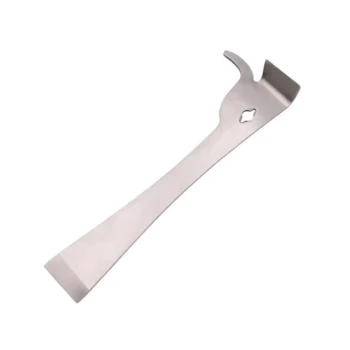
- Professional Stainless Steel Pry-Bar Hive Tool
- Professional Stainless Steel J-Hook Hive Tool
- Professional Multi-Function Stainless Steel Hive Tool
- Stainless Steel J Hook Hive Tool for Beekeeping
People Also Ask
- How does the introduction of professional beehive-making machinery benefit sustainable beekeeping? Scale Your Apiary
- Why is specialized beehive-making machinery critical for low-defense breeding? Enhance Selection with Precision Tools
- How does the introduction of specialized beehive making machinery contribute to increasing the scale of regional beekeeping industries?
- What is the importance of specialized beehive making machinery in a circular bio-economy? Build Local Sustainability
- Why is specialized beehive-making machinery essential? Scale Your Apiary with Precision Industrial Standards